
Qualification of a New Fabricator: Audit, Samples and First Article
Adding a fabricator or an assembler to the supply base is a project with a beginning and an end. Doing it properly costs a few weeks and prevents the months of problems that follow an unqualified supplier.
What Qualification Establishes
It establishes that the supplier can build the product to the drawing, at the required rate, with a documented process and a measurable result.
It also establishes the commercial and administrative relationship: the drawing revision that applies, the deviation procedure, the traceability of the lots and the person who answers a technical question.
Where the product is regulated, the qualification also establishes the documentation that the standard requires. Our fabrication notes checklist describes the manufacturing information that must flow in both directions.
The Paperwork Stage
The initial assessment covers the capability the product requires: the minimum feature, the layer count, the materials available, the finishes offered and the test equipment in the plant.
The supplier’s process capability should be requested as data rather than as a statement of what is possible. A capability figure for a specific feature on a specific stack is more useful than a general claim.
The audit, where used, focuses on the process control rather than on the equipment list. A plant with older equipment and good controls produces more consistent boards than one with new equipment and no controls. Our quality notes describe the controls that matter.

The Sample Stage
The first sample must be built with the production process rather than in a laboratory. A sample built by hand proves nothing about the line.
The sample is then measured against the drawing, with the measurements recorded for the characteristics that matter. The first article inspection results are the evidence.
Where the sample is acceptable, the next step is the process documentation: the flow, the controls and the acceptance criteria that the production lots will use.
The Pilot and the Ramp
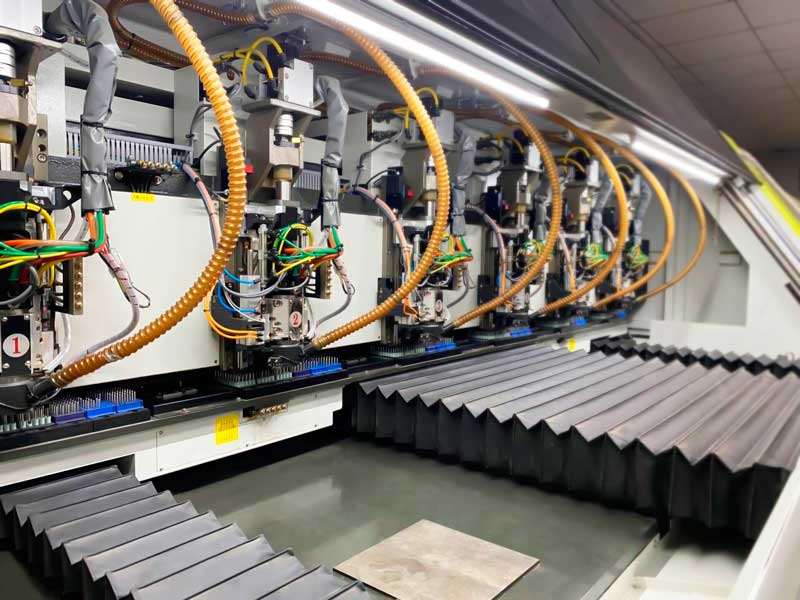
The pilot build runs at production rate with the production documentation and the production equipment. It reveals the differences that a sample cannot.
The capability of the critical characteristics is measured during the pilot and compared against the requirement. A characteristic that is marginally capable will produce a yield problem at volume.
The ramp follows the pilot, with the first production lots inspected more closely than the mature ones. The additional inspection is removed when the data justifies it rather than on a schedule.
Ongoing Monitoring
The qualification is not a one time event. The supplier’s performance is monitored through the incoming inspection results, the yield and the deviation reports.
A change of material, of process or of location by the supplier invalidates part of the qualification and should be notified. Where notification is not reliable, the incoming inspection is the only protection.
The monitoring data should feed back into the supplier review, so that a trend is addressed before it becomes a failure.
What Goes Wrong
The commonest failure is a qualification based on a sample that was made specially. The production boards then differ in a way that nobody detects until the yield falls.
The second is a specification that does not state the critical characteristics, so the supplier optimises what it can measure and the design suffers on what it cannot.
The third is a change that is not notified. The remedy is periodic verification of the characteristics that the design depends on, on production lots rather than on samples.
Process Control and Verification
On a design of this kind, first article is the item that decides how the rest of the board is arranged. Where the requirement is not written down, the shop supplies its own default, and the default is chosen for the process rather than for the design. The measurements that matter are the repeatable ones: conductor width and spacing, annular ring, finished hole size, plating thickness and surface finish are all verifiable on a coupon that travels with the panel.
Running a first article through the same checks as the production panel confirms that the two agree, and that comparison is the cheapest form of process control available at prototype stage. Keeping a sample from the panel turns a dispute into a measurement, because the same coupon can be re-examined by both parties without rebuilding the batch.
Reviewing the design before the data is released is cheaper than correcting it after the panel is in the tank, because every step downstream inherits the decision made at the front end. Documenting the assumption is part of the design work, and a short note on the drawing prevents a question that would otherwise arrive a day later and cost a day of schedule.
The process window is set by the narrowest step in the flow, so an improvement anywhere else shows up as margin rather than as yield until that step is addressed. A short note on the drawing about handling, storage or packaging is often worth more than an extra decimal place on a tolerance.
Related reading: our fabrication notes, board quality and design release notes cover the same ground.
Process Control and Verification
On a design of this kind, first article is the item that decides how the rest of the board is arranged. Where the requirement is not written down, the shop supplies its own default, and the default is chosen for the process rather than for the design. The measurements that matter are the repeatable ones: conductor width and spacing, annular ring, finished hole size, plating thickness and surface finish are all verifiable on a coupon that travels with the panel.
Running a first article through the same checks as the production panel confirms that the two agree, and that comparison is the cheapest form of process control available at prototype stage. Keeping a sample from the panel turns a dispute into a measurement, because the same coupon can be re-examined by both parties without rebuilding the batch.
Process Control and Verification
On a design of this kind, first article is the item that decides how the rest of the board is arranged. Where the requirement is not written down, the shop supplies its own default, and the default is chosen for the process rather than for the design. The measurements that matter are the repeatable ones: conductor width and spacing, annular ring, finished hole size, plating thickness and surface finish are all verifiable on a coupon that travels with the panel.
Process Control and Verification
On a design of this kind, first article is the item that decides how the rest of the board is arranged. Where the requirement is not written down, the shop supplies its own default, and the default is chosen for the process rather than for the design. The measurements that matter are the repeatable ones: conductor width and spacing, annular ring, finished hole size, plating thickness and surface finish are all verifiable on a coupon that travels with the panel.
FAQ
Is an audit necessary? For a critical product, yes. For a simple board from an established supplier, the capability data and the sample may be enough.
How many samples are needed? Enough to cover the process variation, which means material from more than one panel and preferably from more than one day.
What does gopcb provide for qualification? We provide process capability data for the specific stack, first article inspection results with the measurements recorded, a pilot build at production rate, incoming inspection and yield data for the first lots, and a documented change notification process.