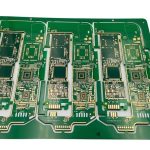
Express Prototype Service: What Changes When the Lead Time Drops
Express service compresses the fabrication into a few days by sharing panels, running small batches and limiting the process steps. It is genuinely useful and it changes what is being built in ways that are worth understanding.
How the Time Is Saved
The panel is shared with other customers’ boards, so the express order does not pay for its own lamination and drilling setup. The order waits for a panel that has room, which is why the delivery date is sometimes approximate.
The process steps are limited to the standard ones, so a non standard material or a non standard finish takes longer than the express time.
Inspection is reduced to the standard checks, which means the additional testing that a production order would include is not performed.
What Panel Sharing Changes
The board is one of several on the panel, so the process parameters are a compromise across the set. A feature that is at the limit of the process on one board may be outside it on another.
The panel is built with the material and the finish of the group, which may not be the exact combination the design specified. The difference is usually acceptable and should be confirmed.
The board outline is cut from the shared panel, so the outline tolerance is the express process tolerance rather than the production one. Our fabrication notes checklist describes the outline requirements.

What Is Not Included
Controlled impedance testing, microsections, ionic contamination and coupon retention are usually not part of an express order unless they are requested and priced separately.
Where the design depends on the impedance being within a tolerance, the express order gives boards whose impedance is not verified. That is a real risk for a first article that will be used for a design decision.
The missing tests are usually the ones that answer the question the prototype was built to ask, which is why the express order is often followed by a second, more complete one. Our quality notes describe the tests that are available.
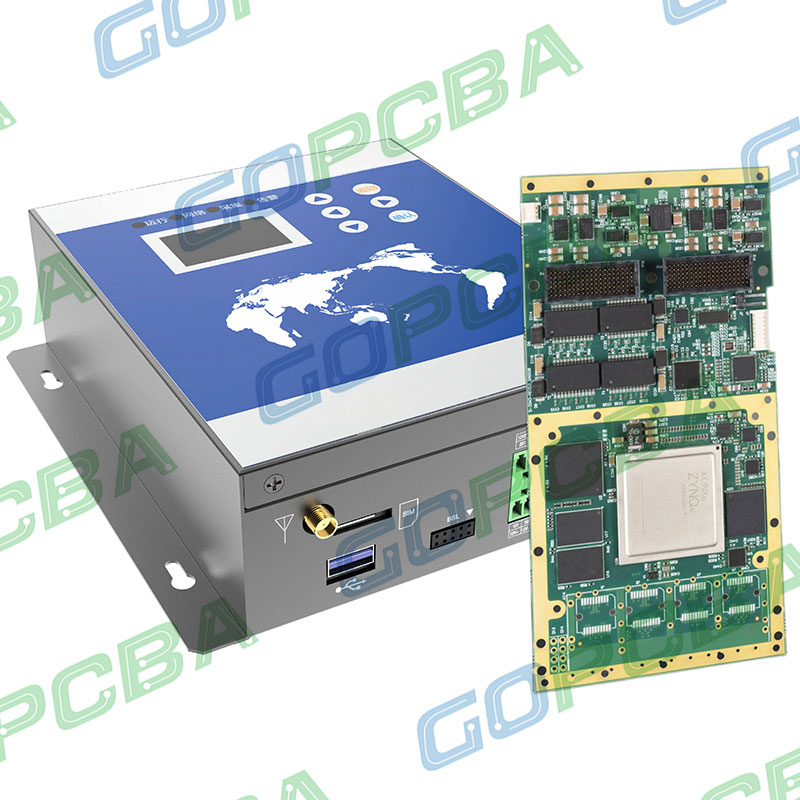
When Express Is the Right Choice
It is right when the board is being used to check a mechanical fit, to bring up a circuit or to evaluate a concept where the electrical performance is not in question.
It is also right when the schedule is the dominant constraint and a delay would cost more than the risk. That decision should be made deliberately rather than by default.
Where the prototype is the evidence for a design decision, the full process is worth the wait. A prototype with an unverified impedance can mislead the design in a way that costs far more than the extra days.
Cost Considerations
The express price includes the shared panel and the reduced process, which is why it is often cheaper than a small dedicated order and more expensive per board than a volume order.
Adding a test to an express order changes it into a different order and usually changes the lead time, so the decision to add a test should be made at the time of ordering.
The comparison should be made between the express order with the tests the design needs and the standard order, rather than between the express base price and the standard price.
Practical Advice
State the requirements that matter on the order even for an express build, so that the fabricator can say whether the express process can meet them.
Ask for the data that the express process does produce: the coupon measurement where a coupon is included, the plating thickness if measured, and the actual stack if it differs from the drawing.
Keep the express board identified as a prototype in the records, so that a later comparison against a production board is not confused by the different process.
Process Control and Verification
On a design of this kind, express is the item that decides how the rest of the board is arranged. A short note on the drawing about handling, storage or packaging is often worth more than an extra decimal place on a tolerance. Where a value sits close to a process limit, the drawing should say so, since the shop can then open the process window rather than working to a nominal figure that carries no tolerance.
A stack-up that is drawn rather than described removes most of the ambiguity from a quotation, and it lets the fabricator price the board against the dielectric and copper weights that will actually be used. Where the requirement is not written down, the shop supplies its own default, and the default is chosen for the process rather than for the design.
The measurements that matter are the repeatable ones: conductor width and spacing, annular ring, finished hole size, plating thickness and surface finish are all verifiable on a coupon that travels with the panel. Running a first article through the same checks as the production panel confirms that the two agree, and that comparison is the cheapest form of process control available at prototype stage.
Keeping a sample from the panel turns a dispute into a measurement, because the same coupon can be re-examined by both parties without rebuilding the batch.
Related reading: our fabrication notes, board quality and design release notes cover the same ground.
Process Control and Verification
On a design of this kind, express is the item that decides how the rest of the board is arranged. A short note on the drawing about handling, storage or packaging is often worth more than an extra decimal place on a tolerance. Where a value sits close to a process limit, the drawing should say so, since the shop can then open the process window rather than working to a nominal figure that carries no tolerance.
A stack-up that is drawn rather than described removes most of the ambiguity from a quotation, and it lets the fabricator price the board against the dielectric and copper weights that will actually be used. Where the requirement is not written down, the shop supplies its own default, and the default is chosen for the process rather than for the design.
Process Control and Verification
On a design of this kind, express is the item that decides how the rest of the board is arranged. A short note on the drawing about handling, storage or packaging is often worth more than an extra decimal place on a tolerance. Where a value sits close to a process limit, the drawing should say so, since the shop can then open the process window rather than working to a nominal figure that carries no tolerance.
FAQ
Is an express board electrically different? It is built with the same materials and the same artwork. The difference is in the inspection and in the process parameters, which affect the tolerance rather than the design.
Can a controlled impedance board be ordered express? It can, and the impedance is provided by design rather than by measurement unless a test is ordered.
What does gopcb provide for prototypes? We provide both express and standard prototype options with the requirements stated, the data that each option produces, and a recommendation of which is appropriate for the decision the prototype is intended to support.