Managing Component Obsolescence and Last Time Buy Decisions
Every product eventually runs into a part that is no longer available. A semiconductor vendor discontinues a package, a connector series is replaced, or a passive component is moved to a different factory with a different end of life date. Handling that event well is a process rather than a fire drill, and the difference between a smooth transition and an emergency purchase is usually decided years before the notice arrives. This article covers how obsolescence appears, how to detect it early, how to size a last time buy, and how to qualify what comes next.
Why Parts Disappear
Components are discontinued for commercial reasons far more often than technical ones. A part with a small annual volume is expensive to keep in production, a wafer fab closes, a package type falls out of favour, or a supplier changes ownership and rationalises its catalogue. The technical reasons, such as a material restriction or an obsolete process, are a minority of cases.
The consequence is that the risk is not distributed evenly across a bill of materials. The parts at risk are usually the oldest, the lowest volume and the most specialised, while the common passives and the mainstream logic devices are rarely the problem. A supplier consolidation or a fab closure can remove an entire family at once, and the window offered for a final order is often measured in months rather than years.
What Obsolescence Costs
The direct cost is the last time buy itself, which ties up cash in inventory that may sit for years. The indirect costs are larger. A redesign consumes engineering time, requires a new qualification and may invalidate certifications. An emergency broker purchase brings counterfeit risk and an unverifiable supply chain. A production stop while a replacement is qualified can be the largest cost of all. Counterfeit parts that enter through the broker channel add a reliability risk that no incoming inspection can fully remove.
Those costs are what justify spending money early. A modest investment in monitoring the lifecycle of the risky parts is far cheaper than any of the outcomes it prevents, and the case is easy to make once the costs are written down.
Detecting Obsolescence Early
Detection starts with the bill of materials. Each line should carry the manufacturer part number, the manufacturer, the lifecycle status, the date the status was last checked and the expected end of life where one is known. Without the last two fields the list is a parts list rather than a risk register.
The status should be refreshed on a schedule, and the schedule should be faster for the parts that matter. A quarterly review is enough for a stable design; a design with long manufacturing life and specialised parts may need a monthly check on the critical lines. Distributor lifecycle notices and manufacturer product change notifications are the two sources that give the earliest warning. The register should also name an owner for each critical line, because a risk register without an owner is a document rather than a process.
Last Time Buy Quantities and Storage
The quantity is a forecast, and it should be built from the production plan plus a service and spares allowance. The service tail is often longer than the production life, and it is the part most often forgotten until a repair cannot be made. Warranty commitments and regulatory requirements for spare parts support should both feed the number.
The quantity also has to be tested against storage. A ten year supply of a part with a two year shelf life is a false comfort unless the storage can be controlled and the parts re-qualified at intervals. The buying decision should also account for the minimum order quantity and the packaging the supplier will ship, since a last time buy offer usually comes in full reel quantities. Our shelf life notes cover how terminations degrade in storage and how a stockpile should be sampled.
Storage Life and Shelf Life of a Stockpile
A last time buy turns a component into an inventory asset with an expiry date. The storage condition should be specified, the packaging should be moisture barrier where the part demands it, and the stock should be rotated so that older material is used first.
The stockpile also needs a requalification rule. A sample from each age band should be solderability tested and, for a critical part, functionally checked, because a supply that has been in store for five years is not the same supply it was when it was purchased.
Qualification of a Replacement Part
A replacement is rarely a drop-in even when the package and the pinout match. The die may be different, the electrical parameters may sit at a different point in the tolerance band, and the thermal behaviour may change. The qualification should cover the parameters that the design actually depends on, plus the assembly process.
Process qualification matters as much as electrical qualification. A part with a different termination finish, a different body material or a different moisture sensitivity level changes the soldering window, and that change has to be reflected in the profile and the storage rules. Our component tolerance notes describe how part selection decisions propagate into reliability.
Redesign as the Long Term Answer
Buying stock defers the problem; redesign solves it. Where the product has a long life, the redesign should be planned while the original part is still available, because a design change made under time pressure is the one that introduces a new failure mode.
The redesign is also an opportunity. A replacement can remove a second sourcing problem, reduce the part count or move to a package that the assembly process handles better. Framing the change as a lifecycle improvement rather than a forced fix tends to produce a better result.
Contract and Documentation Protections
Contracts can shift some of the risk. A clause requiring advance notice of discontinuance, a commitment to a minimum supply period, or an agreement to provide a last time buy opportunity gives the buyer time to act. Those clauses are far easier to negotiate at the start of a programme than after a notice has been issued.
Documentation should record what was qualified and when. A design file that states the exact manufacturer part number, the qualification test result and the date gives the next engineer a starting point rather than a puzzle.
Building the Process Into the Order Flow
The lifecycle check should be a step in the order process, not a separate project. When a design release is prepared, the risky lines should be flagged; when an order is placed, the availability should be confirmed; and when a notice arrives, the response should follow a written path from assessment to qualification to change control. The earlier a notice enters that path the more options remain, because the cheapest replacement is the one qualified without stopping a line.
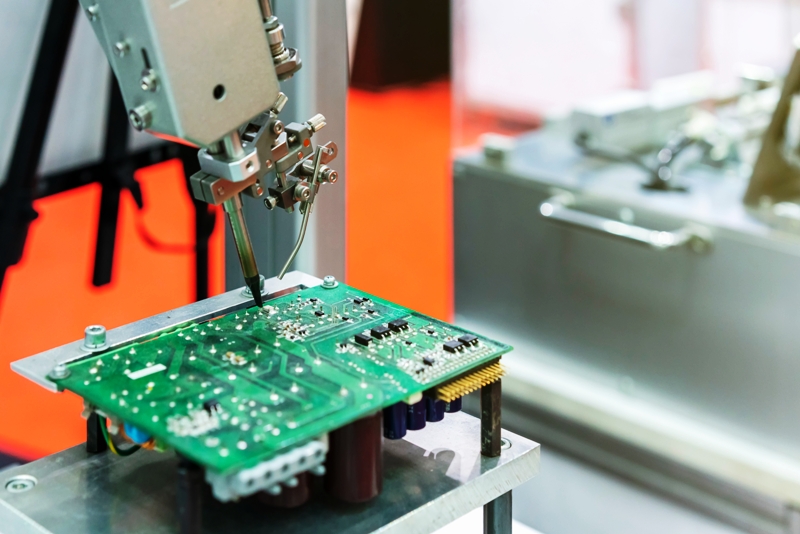
At gopcb the manufacturing side of that flow is captured in our design release checklist and in the production process flow that carries a board from data to shipment. Our quality guide describes how a change to a released product is classified and controlled.
FAQ
How far ahead is obsolescence usually announced? Notice periods vary widely, and the formal notice is often much later than the first signal. Distributor stock levels, product change notifications and lifecycle status changes are the earlier warnings and are worth tracking.
Is a broker purchase ever acceptable? It can be, for a genuine shortfall with no alternative, provided the parts are inspected and tested for authenticity. It should be an exception with a record rather than a routine sourcing route.
How many years of a last time buy should be purchased? Enough to cover the production plan plus the service commitment, adjusted for the storage life of the part and the cost of carrying the stock. The number should be revisited as the forecast changes.