RoHS: Material Compliance Documentation for Assemblies
Every product sold into a regulated market carries a documentation obligation. The materials have to be declared, the exemptions recorded and the evidence kept, and none of it is visible on the board.
What Has to Be Declared
The restricted substance requirements set limits on materials such as lead, cadmium, mercury and certain brominated compounds. The declaration is per homogeneous material, not per part.
Separate obligations cover the registration of substances, the notification of substances of concern in an article, and the reporting of minerals from conflict affected regions. Our component selection notes describe how the declaration enters the part choice.
Exemptions
Some applications are exempt from a restriction, and the exemption is time limited and specific. A high melting point solder used in a power application may be covered by one; the same alloy used elsewhere is not.
The exemption should be recorded against the part and the reason, because the exemption can expire and the design then needs a change rather than a new declaration.
Collecting the Evidence
The evidence comes from the suppliers, and it is only as good as the chain behind it. A declaration from a distributor is a copy of a declaration from a manufacturer, and a copy of a copy should be treated as weaker evidence.
The declarations should be collected at the part level and stored with the bill of materials, with the date so that an old declaration can be identified. Our fabrication notes notes list the records that should be kept.
Where the Risk Sits
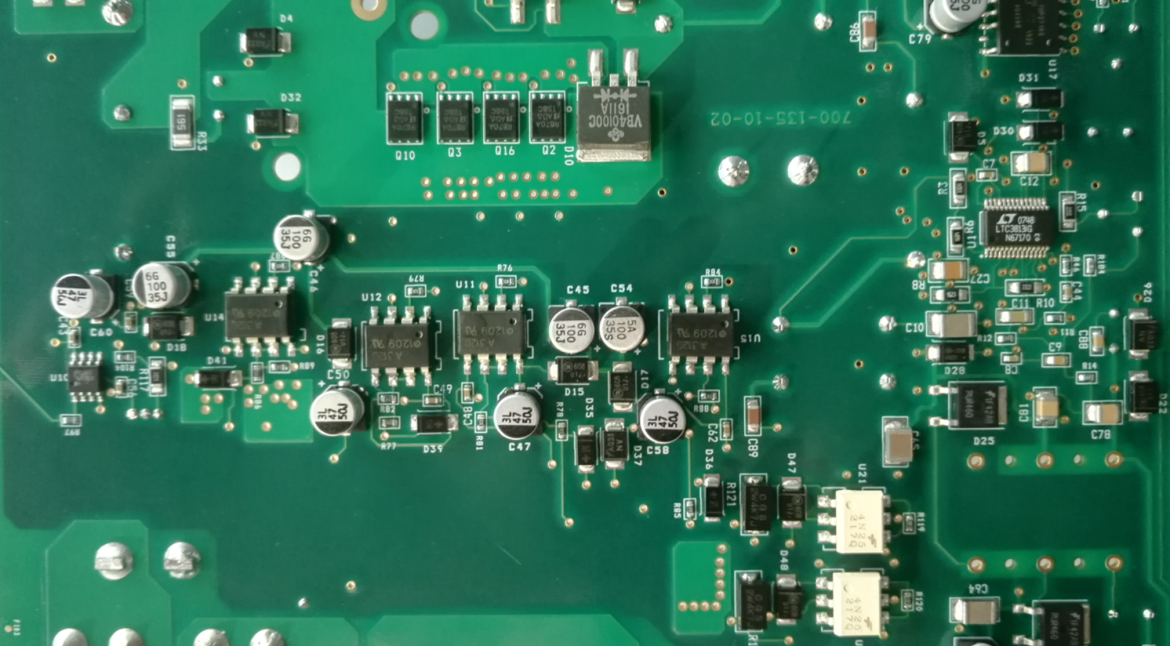
The highest risk parts are the finishes on the board and on the components, the solder alloy, the connectors, the cable insulation and any coating. These are the materials that historically carried the restricted substances.
Recycled content and second source parts add risk because the material composition is less well documented. Our alloy notes describe how the composition of the solder is verified in production.
The Board Itself
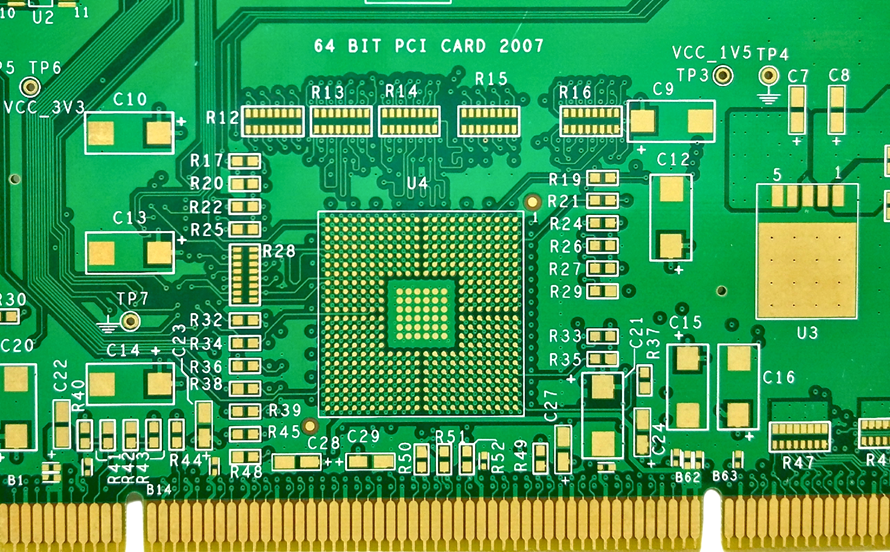
The laminate, the solder mask, the silkscreen and the finish are all part of the declaration. The finish is the item that most often carries an exemption.
A change of fabricator or of material can change the declaration, so the compliance data should be tied to the revision rather than to the part number.
Verification by Analysis
Where the declaration chain is weak, the material can be analysed. X-ray fluorescence screening identifies the presence of a restricted element quickly and it does not distinguish the compound or the location.
A full analysis is expensive and it is usually reserved for a part whose declaration cannot be obtained. The analysis should identify the homogeneous material that was tested. Our failure analysis notes describe how a sample is chosen and documented.
Keeping the Record Current
The declarations should be reviewed when a part changes, when the regulation changes and on a periodic cycle. A set of declarations with no review date is a set that cannot be relied on.
The review should record what changed and what was concluded, so that the compliance status of a revision can be shown rather than asserted.
Process Control and Verification
On a design of this kind, declaration is the item that decides how the rest of the board is arranged. The measurements that matter are the repeatable ones: conductor width and spacing, annular ring, finished hole size, plating thickness and surface finish are all verifiable on a coupon that travels with the panel. Running a first article through the same checks as the production panel confirms that the two agree, and that comparison is the cheapest form of process control available at prototype stage.
Keeping a sample from the panel turns a dispute into a measurement, because the same coupon can be re-examined by both parties without rebuilding the batch. Reviewing the design before the data is released is cheaper than correcting it after the panel is in the tank, because every step downstream inherits the decision made at the front end.
Documenting the assumption is part of the design work, and a short note on the drawing prevents a question that would otherwise arrive a day later and cost a day of schedule. The process window is set by the narrowest step in the flow, so an improvement anywhere else shows up as margin rather than as yield until that step is addressed.
A short note on the drawing about handling, storage or packaging is often worth more than an extra decimal place on a tolerance. Where a value sits close to a process limit, the drawing should say so, since the shop can then open the process window rather than working to a nominal figure that carries no tolerance.
Process Control and Verification
On a design of this kind, declaration is the item that decides how the rest of the board is arranged. The measurements that matter are the repeatable ones: conductor width and spacing, annular ring, finished hole size, plating thickness and surface finish are all verifiable on a coupon that travels with the panel. Running a first article through the same checks as the production panel confirms that the two agree, and that comparison is the cheapest form of process control available at prototype stage.
Keeping a sample from the panel turns a dispute into a measurement, because the same coupon can be re-examined by both parties without rebuilding the batch. Reviewing the design before the data is released is cheaper than correcting it after the panel is in the tank, because every step downstream inherits the decision made at the front end.
Documenting the assumption is part of the design work, and a short note on the drawing prevents a question that would otherwise arrive a day later and cost a day of schedule.
Process Control and Verification
On a design of this kind, declaration is the item that decides how the rest of the board is arranged. The measurements that matter are the repeatable ones: conductor width and spacing, annular ring, finished hole size, plating thickness and surface finish are all verifiable on a coupon that travels with the panel. Running a first article through the same checks as the production panel confirms that the two agree, and that comparison is the cheapest form of process control available at prototype stage.
Keeping a sample from the panel turns a dispute into a measurement, because the same coupon can be re-examined by both parties without rebuilding the batch.
Process Control and Verification
On a design of this kind, declaration is the item that decides how the rest of the board is arranged. The measurements that matter are the repeatable ones: conductor width and spacing, annular ring, finished hole size, plating thickness and surface finish are all verifiable on a coupon that travels with the panel. Running a first article through the same checks as the production panel confirms that the two agree, and that comparison is the cheapest form of process control available at prototype stage.
A first article check confirms that the process and the drawing agree on the points listed above, and that the coupon data supports the values used in the design.
<img src="https://www.gopcba.com/wp-content/uploads/2026/05/家用壁挂式充电桩PCBA.png" alt="XRF screening of a component termination” />
Where a measurement falls outside the expected window, the sample is retained so that the cause can be established before the balance of the batch is released.
FAQ
Is a RoHS declaration enough? It covers the restricted substances and not the registration, notification or mineral reporting obligations. Each has its own evidence.
Does an exemption remove the obligation? It removes the restriction for a stated application and period. The exemption itself must be documented and monitored for expiry.
What does gopcb provide for material compliance? We provide part level declarations collected from the manufacturer with dates, exemption records tied to the application, analysis by XRF screening or full test where the chain is weak, compliance data tied to the design revision, and a periodic review that records what changed.