Conformal Coating Masking: Keeping Critical Areas Bare
Conformal coating protects a finished assembly from moisture, contamination and the ions that would otherwise corrode a joint. It also causes damage if it reaches the wrong places: a coated connector cannot make a reliable contact, a coated test pad cannot be probed, and coating that creeps into a relay or a sensor can change the way it works.
Masking is the operation that keeps the material where it belongs. It is easy to treat as an afterthought, and it is one of the most common sources of rework in coated assemblies, because the error is only discovered after the coating has cured.
Why the Masking Plan Comes First
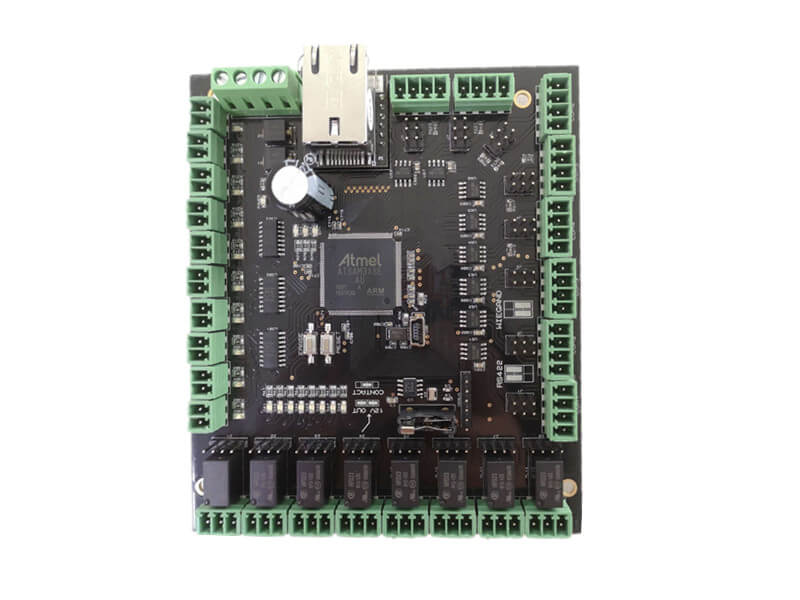
The areas that must stay free of coating are defined by the function of each part, not by the layout. Connectors, switches, relay contacts, optical surfaces, pressure ports, test points, ground pads and any surface that has to transfer heat or make electrical contact all belong on the list.
That list has to be settled before the coating process is chosen, because the masking method, the coating type and the order of operations all follow from it. Adding an item to the list later usually means a change to the fixture, and sometimes a change to the coating material itself.
The Areas That Must Stay Bare
Connectors are the most common requirement, and the masked area should cover the contact surfaces and the mating face rather than the whole body. Coating on the housing is harmless; coating on a contact spring is a defect.
Test points and programming pads belong on the list as well, because a coated pad cannot be probed without damaging the coating around it. Where the product will be tested after coating, the access has to be preserved deliberately rather than assumed.
Masking Methods Compared
Masking tape is the fastest method for flat areas and is applied by hand or by a dispenser. It is accurate and it leaves a sharp edge, and it is difficult to apply around complex geometry or inside a connector that has to be filled. Where the assembly will be coated at volume, the alternative materials described in the guidance on board protection are worth comparing before the process is fixed.
Liquid mask materials are dispensed or printed onto the areas to be protected and peeled away after the coating has cured. They handle irregular shapes and small features better than tape, and they cost more per unit and add a curing step. Plugs and caps are used for holes, threads and connector shells where a moulded part fits.
Masking Tape and Its Limits
Tape has to stay in place through spraying, dipping or selective deposition, and through the cure. A tape that lifts at an edge lets the coating creep underneath, and the resulting defect is a coated pad that looks masked until the tape is removed.
The adhesive is part of the specification. A tape that leaves residue contaminates the surface and can prevent the coating from adhering next to the boundary, and a tape that is too aggressive can damage a solder mask or a component marking. The choice should be qualified on the real assembly rather than accepted from a catalogue.
Liquid Mask and Peelable Materials
A peelable mask is applied where it is needed, cured, and peeled after the coating has been processed. Its advantage is that it conforms to the shape of the parts it protects, which makes it suitable for a connector that has to be filled to a defined depth.
Peeling a peelable mask has to be complete, and the material should be qualified at the thickness the process will use. A residue of the mask left on a contact surface is as bad as the coating itself, and a mask that tears leaves fragments behind. The peel direction, the cure state and the material thickness all affect how cleanly it comes away, and the parameters belong in the process specification.
Coating Thickness and Coverage
The coating thickness is specified per surface, and the masking defines where it has to stop. A common requirement is a defined thickness on the component side and a thinner coverage on the solder side, and the edges of the coated area should be inspected for the thin film that builds up beyond the intended boundary.
Capillary creep is the effect that carries the material under a component or along a lead, and it is difficult to control once the assembly is being coated. The design can help by keeping the distance between a coated area and a keep out area large enough that the creep does not reach it, which is a layout decision rather than a process one. The requirements are usually recorded alongside the board level documentation in the fabrication notes.
Inspection of a Coated Assembly
Inspection has to happen before the coating cures, because that is the only point at which a defect can be corrected without removing the material. Ultraviolet light is the standard aid, since most coatings contain a tracer that makes the coverage visible and shows up thin or missing areas.
After cure, the checks are visual: coverage, thickness if it can be measured, the state of the masked areas, and the absence of coating on the contacts and the mechanical interfaces. Any repair means removing the coating locally and reapplying it, which rarely matches the original coverage, so the first inspection is the one that matters.
Cleaning Before Coating
The coating adheres to what it is applied on. Flux residue, handling oils and mould release agents all reduce adhesion, and the failure appears later as a lifted film or as corrosion under a coating that looked continuous.
The cleaning step and the coating step therefore have to be designed together. A no clean flux may leave a residue that is acceptable electrically and unacceptable under a coating, and the decision to clean should be made with the coating in mind, as described in the notes on the cleaning process.
Records and Rework
Because the process is difficult to verify after the fact, the records carry unusual weight. The material batch, the masking method, the cure schedule and the inspection result should be recorded per batch so that a problem found in the field can be traced to a process condition.
Rework on a coated assembly has to be defined as well. Removing the coating locally, repairing the joint, cleaning the area and reapplying the material is a sequence that has to be written down and qualified, because an uncontrolled repair leaves a joint that is neither protected nor inspected.
FAQ
Can the coating be applied by hand? Yes, with a brush, for small volumes. It is difficult to control the thickness and the boundary, so the process is usually qualified with a sample and checked visually.
Is masking always necessary? Only where the function requires it. Every masked area adds labour and a risk of residue, so the list is kept as short as the design allows.
What happens if coating reaches a connector? The contact resistance becomes unreliable and intermittent faults appear under vibration. The part has to be replaced or cleaned, which is far more expensive than the masking that would have prevented it.