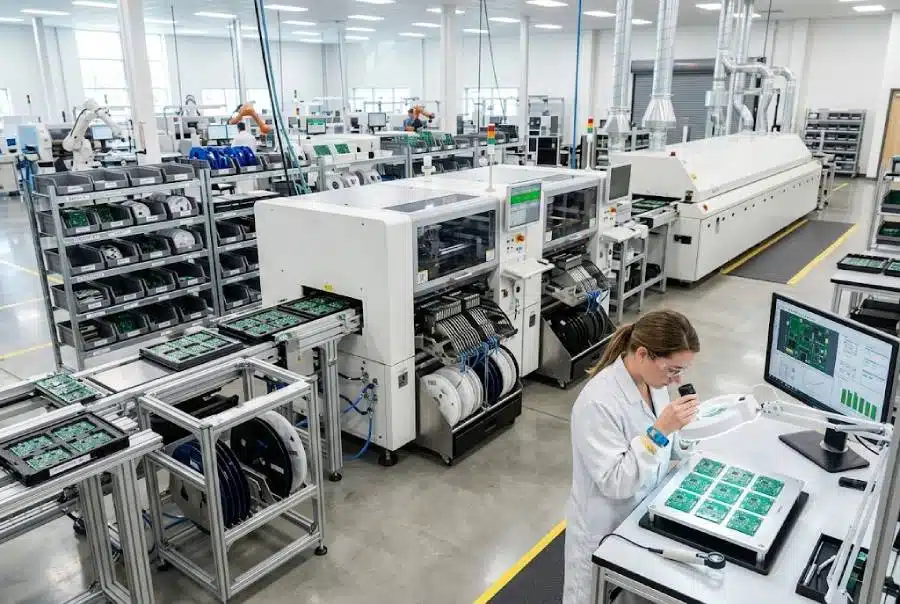
Process Control for Prototype and Low Volume Assembly
Small volumes and prototypes are built with the same processes as production and without the process control that volume pays for. The result is a first article that is not representative of what will follow.
What Is Different at Low Volume
At low volume the setup cannot be amortised, so either the setup is skipped or the cost per board is very high. In practice some of it is skipped, and the difference shows up in the first production run as a set of changes that should have been made earlier.
The components are also different: parts bought in small quantities arrive in cut tape and tubes, which changes the handling and the feeder setup. Our odd form notes describe the handling that results.
Which Controls Still Apply
The paste condition, the stencil and the profile apply at any volume, and they are the cheapest to maintain. Storing paste correctly and profiling the oven cost little and they remove the largest source of variation.
The inspection can be reduced rather than removed, with the sample taken from the positions where the process is least favourable. Our sampling notes describe how the positions are chosen.
Manual Assembly and Its Records
Where the assembly is partly manual, the record becomes more important rather than less. The operator, the tool and the settings should be recorded so that the next build is comparable.
A prototype built twice by different people is two different products, and the difference is invisible in the results. Our workmanship notes describe the standard that keeps them comparable.
The First Article as a Process Record
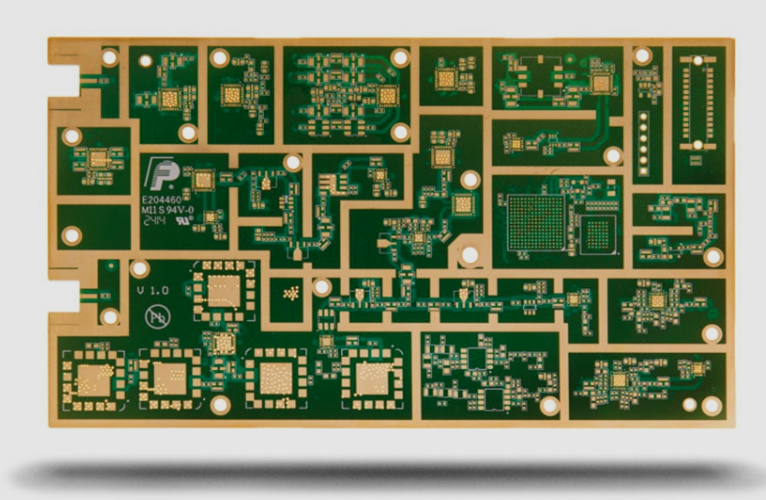
The first article should produce a record of what was actually done: the paste batch, the stencil, the profile, the placement settings, the inspection result and the deviations.
That record is the input to the production setup. Without it, the production setup becomes a fresh development exercise with a schedule attached.
Deviations and Their Disposition
Deviations are normal at prototype stage and they should be recorded with a disposition rather than left in the unit. A board that was reworked five times is not a board that can be used to judge the design’s yield.
The disposition should distinguish between a deviation that affects the function and one that affects only the documentation. Our change control notes describe how the records feed the change.
Transferring to Production
The transfer is a comparison of what the prototype record says with what the production process can do. The differences are the changes that have to be made, and they are cheaper to find here than on a production line.
The comparison should be a documented review rather than a conversation. Our manufacturability review notes describe the review structure.
Verification
The verification is the first production build, measured against the prototype record. Where a result differs, the cause should be identifiable from the record rather than guessed.
Where the prototype record is incomplete, the first production build becomes the reference by default, which is a poor basis for a process. Our yield notes describe how the reference is used.
Process Control and Verification
On a design of this kind, first article is the item that decides how the rest of the board is arranged. Keeping a sample from the panel turns a dispute into a measurement, because the same coupon can be re-examined by both parties without rebuilding the batch. Reviewing the design before the data is released is cheaper than correcting it after the panel is in the tank, because every step downstream inherits the decision made at the front end.
Documenting the assumption is part of the design work, and a short note on the drawing prevents a question that would otherwise arrive a day later and cost a day of schedule. The process window is set by the narrowest step in the flow, so an improvement anywhere else shows up as margin rather than as yield until that step is addressed.
A short note on the drawing about handling, storage or packaging is often worth more than an extra decimal place on a tolerance. Where a value sits close to a process limit, the drawing should say so, since the shop can then open the process window rather than working to a nominal figure that carries no tolerance.
A stack-up that is drawn rather than described removes most of the ambiguity from a quotation, and it lets the fabricator price the board against the dielectric and copper weights that will actually be used. Where the requirement is not written down, the shop supplies its own default, and the default is chosen for the process rather than for the design.
Process Control and Verification
On a design of this kind, first article is the item that decides how the rest of the board is arranged. Keeping a sample from the panel turns a dispute into a measurement, because the same coupon can be re-examined by both parties without rebuilding the batch. Reviewing the design before the data is released is cheaper than correcting it after the panel is in the tank, because every step downstream inherits the decision made at the front end.
Documenting the assumption is part of the design work, and a short note on the drawing prevents a question that would otherwise arrive a day later and cost a day of schedule. The process window is set by the narrowest step in the flow, so an improvement anywhere else shows up as margin rather than as yield until that step is addressed.
A short note on the drawing about handling, storage or packaging is often worth more than an extra decimal place on a tolerance.
Process Control and Verification
On a design of this kind, first article is the item that decides how the rest of the board is arranged. Keeping a sample from the panel turns a dispute into a measurement, because the same coupon can be re-examined by both parties without rebuilding the batch. Reviewing the design before the data is released is cheaper than correcting it after the panel is in the tank, because every step downstream inherits the decision made at the front end.
Documenting the assumption is part of the design work, and a short note on the drawing prevents a question that would otherwise arrive a day later and cost a day of schedule.
Process Control and Verification
On a design of this kind, first article is the item that decides how the rest of the board is arranged. Keeping a sample from the panel turns a dispute into a measurement, because the same coupon can be re-examined by both parties without rebuilding the batch. Reviewing the design before the data is released is cheaper than correcting it after the panel is in the tank, because every step downstream inherits the decision made at the front end.
A first article check confirms that the process and the drawing agree on the points listed above, and that the coupon data supports the values used in the design.
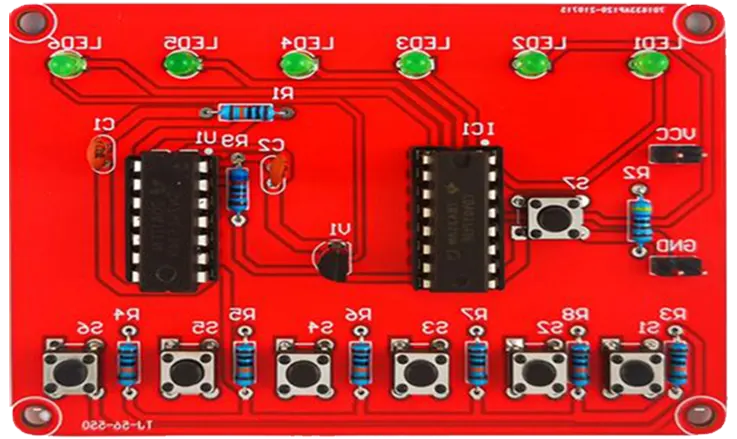
Where a measurement falls outside the expected window, the sample is retained so that the cause can be established before the balance of the batch is released.
FAQ
Should a prototype be built with production processes? The processes that are available should be used, and the ones that are not should be recorded as a difference to be resolved at transfer.
How much inspection is enough for a prototype? Enough to establish that the process works at the positions that are least favourable, which is a small sample rather than a full inspection.
What does gopcb provide for low volume assembly? We provide paste and stencil control and profiling at any volume, sampling at the least favourable positions, assembly records covering the operator, the tool and the settings, a first article record that becomes the production setup input, recorded deviations with dispositions, and a documented transfer review.