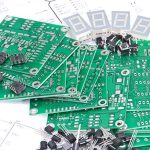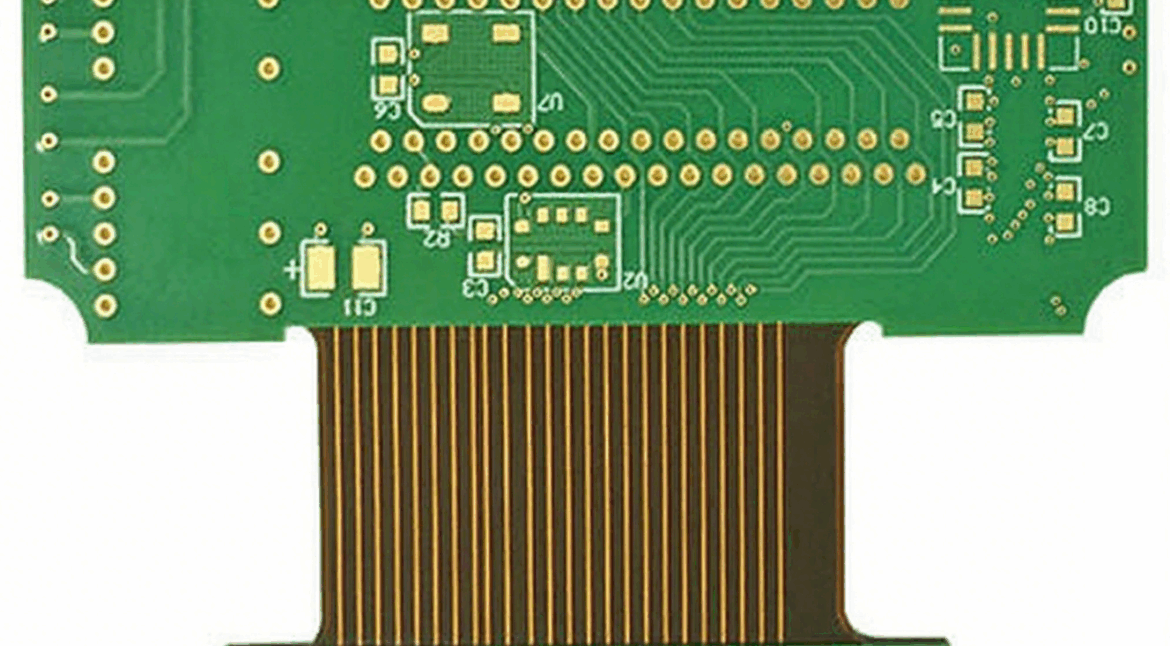
Moisture Bake Schedules for Boards Before Assembly
Laminate absorbs water from the air, and the amount it holds depends on the resin system, the storage history and the humidity of the room. When that water is heated quickly it turns to steam, and steam inside a board has nowhere to go except through the resin, which is how a delamination or a blister begins.
A bake schedule is the controlled release of that water before the heat of assembly arrives. It is a short, cheap step that prevents a defect which cannot be repaired, and it is one of the few process steps where the cost is measured in hours rather than in equipment.
Where the Moisture Comes From
A bare board leaves the fabricator dry and is then exposed to air at every step that follows: inspection, packing, shipping, receiving and kitting. Each exposure adds moisture until the board reaches equilibrium with its surroundings, and equilibrium in a humid climate is far wetter than most specifications assume.
Thin boards, boards with a high resin content and boards stored without a moisture barrier reach that equilibrium quickly. A polyimide or a high glass transition laminate in a humid warehouse can absorb enough water in a week to matter at reflow, even though nothing about the board has visibly changed.
What Heat Does to Trapped Water
Water in a laminate is not free liquid, it is distributed within the resin. As the board heats, the water diffuses toward the surface, and if the heating rate is slow enough it leaves as vapour without causing damage. The damage occurs when the internal vapour pressure rises faster than the resin can relieve it.
The pressure required to open a resin to copper interface is modest at reflow temperatures, and once the interface separates, the copper foil no longer has anything to adhere to. The separation is invisible from the outside until it reaches a drill or a pad and the plating cracks, which is why the problem surfaces as an open circuit rather than as a surface blemish.
Popcorning and Delamination
Popcorning is the audible version of the same event, where a package or a laminate region swells and ruptures as the vapour escapes. On a plastic package the crack usually propagates from the die pad corner, and on a board it appears as a blister between the resin and the copper.
Delamination is the slower form, where the interface separates without a visible bulge. It reduces the dielectric strength of the region and it changes the impedance of any trace that runs through it, so a board that passes an optical check may still fail electrically once the separation grows in service.
Bake Temperature and Time
The bake schedule is defined by a temperature and a duration, and the pair is chosen so that the board is dry without being altered. Standard schedules for ordinary FR4 laminates sit in the range of 120 to 125 degrees Celsius for between four and twenty four hours, with the length selected from the measured moisture content rather than assumed.
Higher temperatures shorten the time and risk oxidation of the copper surface, so a board baked at 150 degrees will need the surface treated again before soldering. The bake oven should be vented and dedicated where possible, because a board that shares an oven with a process that produces volatiles can pick up contamination as readily as it loses water.
Boards That Already Carry Components
A board that has been assembled once cannot simply be baked on the same schedule, because the temperature limit is now set by the weakest component or by the solder joints. Reflowed joints at a bake temperature are below the alloy melting point but still hot enough to grow intermetallic, and an electrolytic capacitor will lose life at a rate that is rarely quoted to the buyer.
Where a second assembly pass is required after a long storage interval, the standard approach is a low temperature bake over a much longer period, with the limit taken from the most sensitive part on the board. The scheduling has to be planned before the first pass, not after the boards have been stored for a month.
Packaging and Storage
Moisture barrier bags with a desiccant and a humidity indicator card are the standard protection, and the indicator is the part that makes the system work. A card that shows a high reading tells the operator that the bag was compromised, whether by a poor seal, a puncture or a long time above the storage threshold.
Once a bag is opened, the floor life clock starts, and the clock is measured in the same way for boards as it is for the packages described in moisture sensitive handling. Boards that exceed their floor life are baked, not discarded, and the bake is recorded so that the next process step knows the board is dry.
Verifying That the Bake Worked
The direct verification is a weight measurement before and after the bake on a sample, since the mass lost is the water removed. A simpler proxy is a controlled weigh and re-weigh after a fixed cooling period, with the result recorded against the batch.
The indirect verification is an absence of defects at reflow, on a coupon that has been deliberately saturated and then baked. Where a process has a history of blistering on thick copper areas, the coupon is the cheapest way to demonstrate that the schedule is adequate for that product rather than for the laminate in general.
Planning the Bake Into the Build
A bake is only useful if it finishes before the assembly line needs the boards, and the timing has to be planned with the same care as the purchase of the laminate. A board that finishes a twenty four hour bake two hours before the print step has to be handled and stored in that interval, which reintroduces the exposure the bake was meant to remove.
The practical sequence is to bake immediately before the build, to keep the boards in a warm dry environment while they cool, and to kit them straight to the line. Where the build is large, the bake is split into batches that match the loading rate, so that no board waits in the open for longer than the schedule allows.
Cost and Scheduling Effects
The cost of a bake is the energy, the oven capacity and the labour to load and unload, which together are small compared with the value of the boards being protected. The real cost is the floor space and the schedule discipline, since an oven that is occupied cannot serve another product.
Where a plant processes many products, the bake schedule is worth recording in the same way as the oven parameters recorded for manufacturing processes. A written schedule turns a step that depends on one experienced operator into a step that any shift can perform correctly.
Additional Considerations for This Build
Practical attention to moisture bake pays for itself here, because it decides whether the finished board behaves as the drawing intended. Where the requirement is not stated on the fabrication drawing or in the assembly notes, the shop has to assume a default, and that default is rarely the value the design was simulated with. Stating moisture bake explicitly, together with the tolerance that applies, removes the assumption and keeps the result predictable from batch to batch.
Related reading: our fabrication notes, board quality and design release notes cover the same ground.
A first article check confirms that the process and the drawing agree on the points listed above, and that the coupon data supports the values used in the design.

Where a measurement falls outside the expected window, the sample is retained so that the cause can be established before the balance of the batch is released.
A first article check confirms that the process and the drawing agree on the points listed above, and that the coupon data supports the values used in the design.
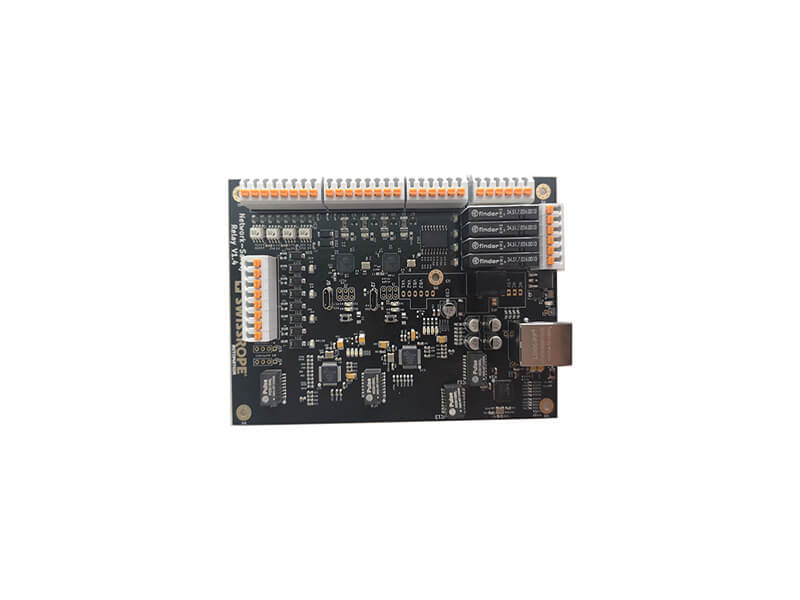
Where a measurement falls outside the expected window, the sample is retained so that the cause can be established before the balance of the batch is released.
FAQ
Does every board need a bake? No. A board removed from a sealed bag within its floor life and processed immediately normally does not, while a board stored in the open or held beyond its floor life does.
What is the risk of baking too long? Surface oxidation and, at higher temperatures, a change in the resin that raises the dielectric loss, so the schedule should be the shortest one that reaches the target moisture content.
Can a baked board be stored again? Yes, but the floor life restarts, and the board should be returned to a barrier bag rather than left in the open between the bake and the assembly pass.
Should the bake be done before or after the surface finish is applied? After, because the finish is applied by the fabricator and the bake belongs to the assembly stage, so a board arrives finished and is dried before processing.
How is the moisture content measured? By mass loss on a sample dried to a constant weight, which gives the percentage of water removed and is the number the schedule should be validated against.