
PCB Document Control Guide
Document control is the discipline that makes sure the version of a document being used is the version that the shop intends. In a board shop that means the drawing, the stackup, the drill program, the work instruction, the setup sheet and the inspection criteria all agreeing with each other at the moment of production. Where they agree, the shop builds what it intended; where they do not, the intent of the change is lost somewhere between the file and the machine. When they disagree, the shop builds to the wrong revision, and the failure is discovered by a customer rather than by an inspection.
What Document Control Protects
The purpose of document control is to prevent the use of superseded information. It protects against the drawing that was revised while the drill program was not, the work instruction that still describes the previous stencil, and the inspection criteria that were updated in a file rather than at the machine. Each of these is a small inconsistency with a large consequence, and each is prevented by the same discipline of one current version in one controlled place.
It also protects the record of what was actually done. Production documents carry the batch number and the revision, and that combination is what allows a shop to answer a question about a shipment six months later. Without it, the answer is a reconstruction from memory, and the reconstruction is usually wrong in exactly the detail that matters.
Revision Control That Works
Revision control works when a change produces a visible consequence rather than a silent one. A new revision number on the document is necessary but not sufficient; the change has to reach the point of use, which means the old copy has to be removed and the new one has to be delivered to the machine. Systems that rely on people printing the new version when they get around to it always have a period during which both versions are in circulation.
The most reliable arrangement is a small number of controlled locations where documents live, and a rule that any document found elsewhere is not valid. In practice this means laminated sheets at each workstation and a controlled electronic master that only named people can change. Printed copies of drawings should carry a revision and a date, and any print without a date should be treated as a draft rather than as a controlled document.
Work Instructions That Get Used
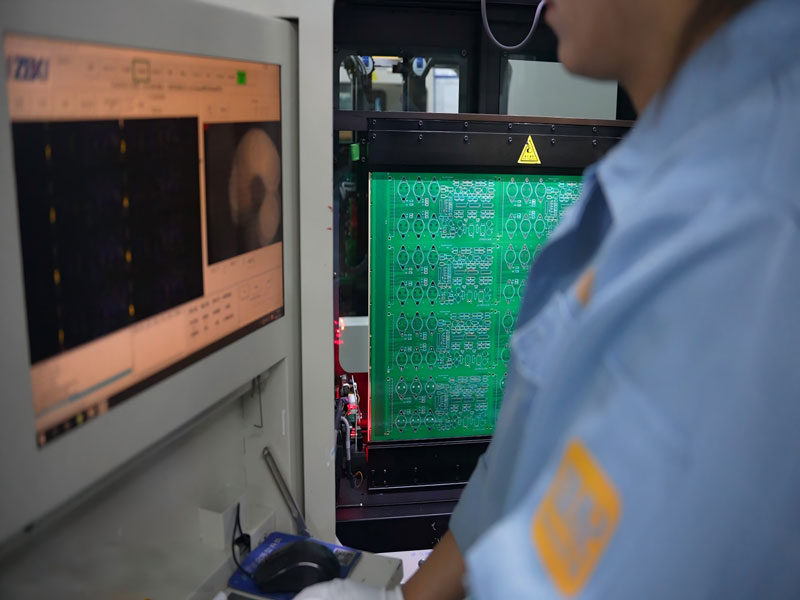
A work instruction has one purpose, which is to make the task produce the same result whoever performs it. It achieves that when it is specific about the key points, short enough to be read at the machine, and illustrated where a picture is faster than a paragraph. Instructions written to satisfy an auditor rather than to guide an operator are usually long, generic and unread, and their existence provides no protection at all.
The instruction should also state the reason for the critical parameters, because that is what allows an operator to recognise an unusual condition that the instruction did not foresee. It should be written with the people who perform the task, tested by asking someone else to follow it, and revised whenever the practice changes. The process flow is a useful index for these documents, because every instruction belongs to a step and a step that has no instruction is a gap worth noticing. An instruction that has never been revised is usually an instruction that nobody has needed to consult.
Change Notices
Every change to a controlled document should be raised as a change notice that identifies what is changing, why, and which other documents are affected. The last part is the most important and the most often neglected: a change to a stackup affects the drawing, the material specification, the drill program and possibly the impedance coupon, and a notice that does not list them will leave several of them behind.
The notice should also state when the change takes effect, in terms of a batch or a date, and what happens to work already in progress. A change applied to part of a batch produces two different products with the same batch number, which is a traceability problem that no amount of record keeping can repair afterwards. The safe rule is to apply the change at a boundary that can be seen, such as the start of a panel or the beginning of a shift. The effective point should therefore be a boundary that can be enforced.
Records Retention
Records retention is decided by three things: what the customer requires, what the product lifetime demands and what the shop needs to investigate problems. Board records are usually retained for several years, and the practical questions are where they are kept and whether they can be found. A storage room full of boxes that cannot be searched is not a record system.
The retention period should be defined document by document rather than by a single blanket rule. Batch records, inspection results and material traceability need the longest period because they support a customer question about a shipped product. Internal working documents, draft revisions and routine correspondence need much less, and keeping them indefinitely makes the important records harder to find.
Keeping the System Alive
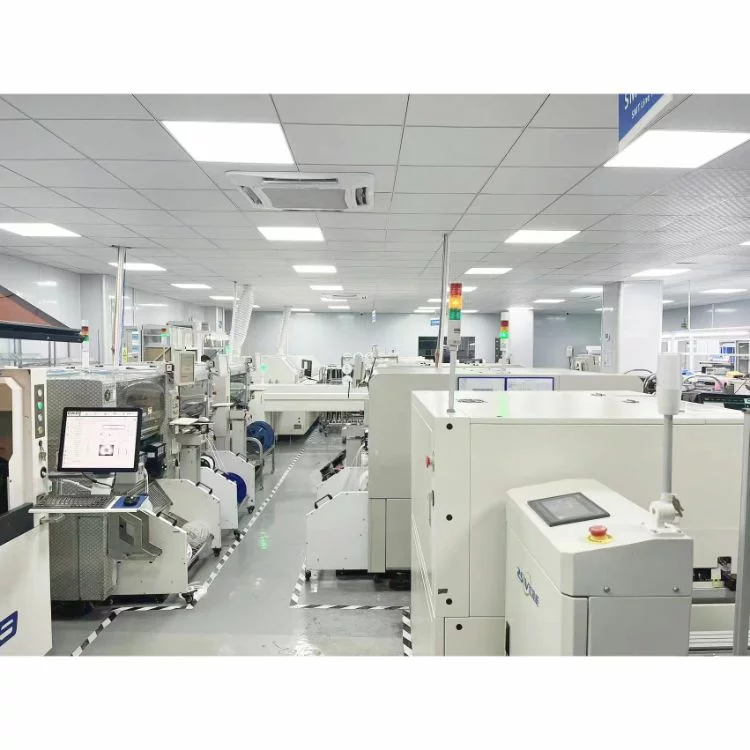
A document system decays quietly. New documents are created without being registered, old ones are revised in place without a change notice, and the register gradually stops describing reality. The remedy is a periodic review that compares the register against the documents actually in use on the floor, and it takes an afternoon rather than a week.
The review should be performed by someone who has a reason to care about it, and its findings should be treated as real. Documents that are no longer used should be withdrawn and marked as such rather than left in circulation, and the withdrawal should be recorded with the batch records they related to. A document that has been withdrawn but is still on the wall is indistinguishable, to an operator, from one that is current.
Practical Rules
Keep one controlled master for each document, deliver changes to the point of use, and remove superseded copies rather than leaving them in place. Write instructions that an operator can follow at the machine, and raise a change notice that lists every affected document with an effective point.
Review the register against the floor once a year, retain records according to a written rule, and treat every discrepancy as a finding rather than a nuisance. Document control is not administration; it is the mechanism that makes the quality criteria mean the same thing on every shift and in every year that the product is made.
FAQ
What is the core rule of document control? One current version in one controlled location, with superseded copies removed. Everything else supports that rule.
How long should batch records be kept? For the period the product lifetime and the customer require, which is usually several years. Retention should be defined per document type.
Why raise a change notice for a small change? Because most small changes affect more than one document. The notice is what ensures the others are updated at the same time.