Taping And Reel Requirements For SMT Components
Components arrive at the placement machine on carrier tape wound onto a reel. The tape is part of the packaging, but it is also part of the feeding system, and a defect in either role stops the line. Requirements for taping therefore sit between the component specification and the machine capability.
The essential parameters are the tape width and pitch, the pocket dimensions, the cover tape peel force and the reel geometry. Each has a standard behind it, and each has to be confirmed before a part number is released to production.
Why Tape And Reel Specifications Matter
A placement machine indexes the tape by one pitch for each pickup, using the sprocket holes as its timing reference. If the pitch varies, the component does not stop under the nozzle, and the machine either misses the part or picks it off centre. Both faults reduce the placement yield and are usually blamed on the machine rather than on the tape.
The tape also protects the component from the moment it is packed to the moment it is placed. Pocket depth and cover tape sealing determine whether a part can move, rotate or be damaged in transit. Specifications exist so that the packaging, not luck, keeps the component in position. The assembly sequence that consumes the reel is described under PCBA development process.
Carrier Tape Construction
Carrier tape is made from a polymer chosen for stiffness and dimensional stability, with a conductive or dissipative grade used for static sensitive parts. The pockets are formed by a thermoforming or embossing process, and the tolerance on the formed pocket matters more than the tolerance on the flat tape.
The cover tape is sealed to the carrier along two parallel lanes. Seal strength has to be high enough to hold the component through vibration and low enough that the peel force stays inside the feeder capability. Peel force is measured at a defined angle and speed, typically 300 mm per minute.
Pocket Dimensions And Component Fit
Pocket dimensions are specified as a nominal size plus a tolerance in length, width and depth. The component should sit with a small clearance on all sides, enough to allow it to settle without being able to rotate. A pocket that is too tight can damage the part during insertion or prevent it from seating; one that is too loose allows the part to tilt and to be picked off centre.

Depth is usually set so that the component sits just below the tape surface, which allows the cover tape to close over the pocket without touching the part. For thin chip components the pocket may be shallow, and the risk of the part sticking to the cover tape during peel becomes significant.
Reel Size, Pitch And Sprocket Holes
Reels are defined by their diameter, the hub diameter, the tape width they accept and the number of components they carry. Standard diameters such as 178 mm, 330 mm and 380 mm cover most feeders, and the reel must be rigid enough not to warp under the weight of a full winding.
Pitch is the distance between successive pockets and must match the component size, typically 2 mm, 4 mm or 8 mm. Sprocket hole spacing is fixed by the standard and is the timing reference for the machine. A reel with a damaged or misaligned sprocket edge will feed erratically at high index speed.
Feeder Pickup And Peel Force
Feeder pickup depends on the component being presented at a consistent height and position. The tape must not ride up in the feeder, which happens when the tape is too stiff or the reel tension is wrong. The nozzle then meets the part at an angle and picks it with a lateral offset that appears later as a placement defect.
Peel force must be inside the window defined by the feeder and by the component mass. Too high, and the tape drags the component out of the pocket or the feeder stalls; too low, and the cover tape lifts in transit and parts are lost. The relationship to placement quality is described under placement order and pad positioning.
Inspection, Storage And Moisture Sensitivity
Incoming inspection of taped components covers the tape width, the pocket dimensions on a sample, the peel force, the sprocket hole condition and the count. A plain tape gauge and a peel force tester are enough for most lines, and the results should be recorded against the reel label.
Storage is controlled by the moisture sensitivity level of the component. Reels sealed in a moisture barrier bag can be kept for the stated shelf life; once opened, the floor life applies and the remaining time is tracked. Reels returned to store should be resealed with desiccant and labelled with the exposure already accumulated, as described under SMT component shift causes.
Process Control and Verification
On a design of this kind, reel is the item that decides how the rest of the board is arranged. Keeping a sample from the panel turns a dispute into a measurement, because the same coupon can be re-examined by both parties without rebuilding the batch. Reviewing the design before the data is released is cheaper than correcting it after the panel is in the tank, because every step downstream inherits the decision made at the front end.
Documenting the assumption is part of the design work, and a short note on the drawing prevents a question that would otherwise arrive a day later and cost a day of schedule. The process window is set by the narrowest step in the flow, so an improvement anywhere else shows up as margin rather than as yield until that step is addressed.
Process Control and Verification
On a design of this kind, reel is the item that decides how the rest of the board is arranged. Keeping a sample from the panel turns a dispute into a measurement, because the same coupon can be re-examined by both parties without rebuilding the batch. Reviewing the design before the data is released is cheaper than correcting it after the panel is in the tank, because every step downstream inherits the decision made at the front end.
Documenting the assumption is part of the design work, and a short note on the drawing prevents a question that would otherwise arrive a day later and cost a day of schedule.
A first article check confirms that the process and the drawing agree on the points listed above, and that the coupon data supports the values used in the design.
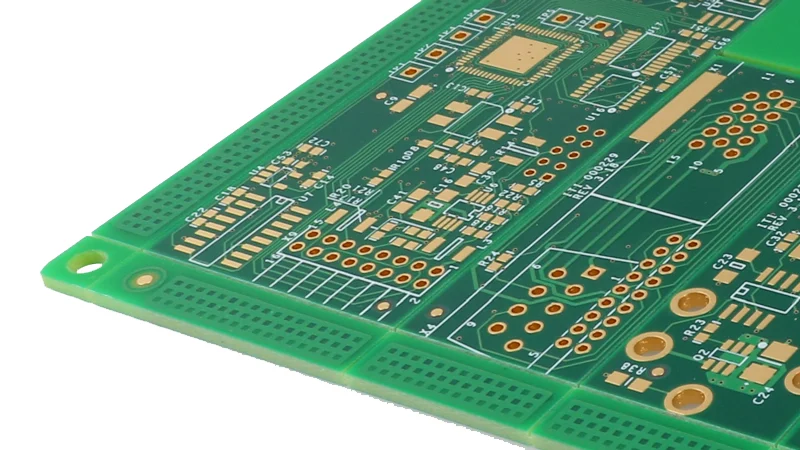
Where a measurement falls outside the expected window, the sample is retained so that the cause can be established before the balance of the batch is released.
FAQ
Can a damaged reel be rewound onto a new one? Yes, if the tape is intact and the operation is done on a proper rewinder with the correct tension. Hand rewinding usually damages the sprocket edge and introduces slack that causes feeding faults.
How is peel force measured? A length of cover tape is peeled at a controlled angle and speed while a force gauge records the load. The average and the peak are both reported, and the peak is the value compared with the feeder limit.
Does pocket tolerance apply to every pocket? The specification applies to the tape as a whole, but sampling is spread across the reel because forming tools wear. A drift in pocket depth along a long reel is a sign that the tool needs attention.