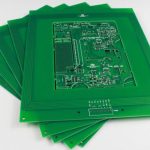
Coupon Design for PCB Fabrication
A test coupon is a piece of the panel that is not part of a product and exists to be measured. It is the evidence that the board was built to the specification, and it is what allows a customer to verify an impedance, a plating thickness or a material property without destroying a board. A coupon design that is planned with the panel costs little; one that is added afterwards usually proves less than it should.
What a Coupon Can Prove
The most common use is impedance. A coupon carries traces of the same width and on the same layers as the product, and a measurement gives the actual impedance of that geometry on that panel.
The second use is plating and hole quality. A coupon carries plated through holes that can be sectioned to measure the copper thickness and to inspect the barrel, and it can carry a daisy chain for a thermal stress test.
The third use is material and process evidence: the dielectric thickness, the layer registration, the solder mask adhesion and the finish thickness can all be checked on a coupon rather than on a product board.
Where the Coupon Goes
A coupon is normally placed in the panel border, in a strip that can be broken off after the panel has been processed. The position should be chosen so that the coupon sees the same process as the product. The border width sets the size of coupon that will fit, which is another reason to settle the panel dimensions before the coupon set is drawn.
A coupon at the edge of the panel sees a different plating current density, a different etchant flow and a different lamination pressure from a coupon in the middle. Where the process varies across the panel, the coupon should represent the position of the product rather than the easiest place to put it.
For a critical product, coupons are placed at several positions or a separate test panel is built and processed with the production panels. The test panel approach gives more coupons and more data at the cost of a panel.
Impedance Structures
An impedance coupon carries a single ended trace and a differential pair for each combination of layer and geometry that the design uses. Each structure should be long enough for the measurement method and should be terminated in a way that allows a probe or a connector.
The coupon should include the same reference plane arrangement as the product. A coupon that measures a microstrip while the product uses a stripline proves nothing about the product.
The structures should be labelled on the coupon so that the measurement can be matched to the layer and the geometry without a drawing. A coupon whose traces cannot be identified is a coupon that will be measured incorrectly. A label on a silkscreen layer is usually enough and it costs nothing, and it should carry the work order number as well as the layer.
Plating and Hole Structures
A plating coupon carries holes of the smallest, the largest and a typical diameter in the design. The holes are sectioned and the copper thickness is measured at several points around the barrel.
The coupon should also carry a daisy chain that connects a number of holes in series, so that a thermal stress test can be applied and the resistance measured before and after. A change in resistance indicates a cracked barrel.
The coupon should be built from the same laminate and the same stack as the product. A coupon made from a different material batch proves the process but not the material.
Material and Process Coupons
A material coupon can carry a section that shows the layer build up and the dielectric thickness, and it can be used for a glass transition measurement or a decomposition test if the customer requires one.
A process coupon can carry a pattern for the solder mask adhesion, a set of fine lines for the etch factor and a surface for the finish thickness measurement. Those checks are quick and they give evidence that would otherwise require a product board.
The coupon set should be defined once and reused across the product family. A coupon that is designed per product multiplies the work without adding information.
Design Rules for Coupons
The coupon should be separated from the product by a route or a score line that allows it to be removed without touching the boards. The separation should not create a burr that interferes with the assembly.
The coupon should carry an identification that links it to the panel and to the work order. Without that link the measurement cannot be attributed to a batch, and the value of the coupon falls to nothing.
The coupon area should be excluded from the assembly program. A coupon that is printed and populated because the program did not exclude it wastes material and can obstruct the conveyor. It also has to be depaneled and disposed of, and it can confuse an optical inspection program that expects a known board outline.
Measurement and Records
The impedance measurement should be made with a calibrated instrument and a defined method, and the result should be recorded against the coupon identification and the layer.
The plating measurement is made on a section and should record the thickness at several points around the barrel and at the surface, because the distribution around the hole is not uniform.
The records should be kept with the panel data so that a customer question about a batch can be answered with a measurement rather than a statement. That is the purpose of the coupon and the reason it is worth designing properly.
Common Mistakes
A coupon that is too small to measure wastes the space it occupies. A structure that is shorter than the measurement method requires gives a result that includes the effect of the probe.
A coupon that is not identified cannot be traced. A coupon that is measured once at the start of a run describes the beginning of the run and nothing else.
A coupon that does not represent the product geometry gives a comfortable number that has no connection to the board. That is worse than no coupon, because it produces false confidence.
Practical Rules
Place the coupon where it sees the product process, include the layer and geometry combinations the design actually uses, and identify it so the measurement can be traced. Measure through the run rather than once.
Record the coupon data with the build records and the test coupon practice, and review the impedance coupon design and the plating thickness guide when the coupon set is defined.
FAQ
What does an impedance coupon prove? The impedance of a specific geometry on the layers of that panel, measured on a structure built with the same process as the product.
Where should a coupon be placed? Where it sees the same process as the product. A coupon at the panel edge sees a different plating current and etchant flow from one in the middle.
Why identify the coupon? So the measurement can be attributed to a panel and a work order. An unmarked coupon cannot be traced and its evidence is worth nothing.