Spray Coating: Selective Coating Methods Compared
Selective coating applies protection where it is wanted and leaves the rest clear. The methods differ in how they build the film and in what they can reach, and the choice follows the board rather than the cost per board.
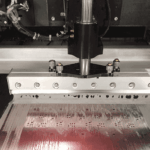
Spray Coating
A spray builds a film by accumulating droplets, and the film follows the geometry so that edges and shadows receive less than flat areas. It reaches most assemblies and it needs masking where the pattern must be exact.
The pattern and the overlap decide the uniformity. Our coating program notes describe the setup.
Dip Coating
Dipping coats everything below the immersion line, which is efficient where the whole board should be covered and unsuitable where a connector must stay clear. The withdrawal speed sets the film thickness.
The meniscus at the immersion line is the characteristic defect. Our coating notes describe the process family.
Brush and Dispense Coating
A brush or a dispense needle places material exactly and slowly. It suits repairs, small batches and areas that a spray cannot reach without heavy masking.
The film build depends on the operator, which is why it is used least in volume production. Our floor control notes describe the records that keep it consistent.
Selective Film and Lamination
A dry film that is laminated and trimmed covers large areas quickly and it is free of solvent. It cannot conform to a dense assembly the way a liquid does.
The choice follows the geometry rather than the chemistry. Our component selection notes describe the wider trade.
Keep Out and Masking Burden
The method with the best pattern control needs the least masking, and masking is usually the largest labour item in the process. That is often what decides between spray and dip.
The keep out should be drawn for every method considered. Our masking notes describe the arrangement.
Thickness and Coverage Measurement
The cured thickness is measured on a witness piece and at a component edge, because the edge is where the film is thinnest and where protection matters most.
Our coating inspection notes describe the technique.
Verification
The verification is a method chosen against the geometry and the keep out, a cured thickness measured on a witness piece and at a component edge, and an ultraviolet inspection that shows thin areas and pinholes.
Our first pass yield notes describe how the results are recorded.
Process Control and Verification
Where a value sits close to a process limit, the drawing should say so, since the shop can then open the process window rather than working to a nominal figure that carries no tolerance. A stack-up that is drawn rather than described removes most of the ambiguity from a quotation, and it lets the fabricator price the board against the dielectric and copper weights that will actually be used.
Where the requirement is not written down, the shop supplies its own default, and the default is chosen for the process rather than for the design. The measurements that matter are the repeatable ones: conductor width and spacing, annular ring, finished hole size, plating thickness and surface finish are all verifiable on a coupon that travels with the panel.
Running a first article through the same checks as the production panel confirms that the two agree, and that comparison is the cheapest form of process control available at prototype stage. Keeping a sample from the panel turns a dispute into a measurement, because the same coupon can be re-examined by both parties without rebuilding the batch.
Reviewing the design before the data is released is cheaper than correcting it after the panel is in the tank, because every step downstream inherits the decision made at the front end. Documenting the assumption is part of the design work, and a short note on the drawing prevents a question that would otherwise arrive a day later and cost a day of schedule.
Checks Before Release
The checks that matter are the ones performed on the product rather than on a sample kept for the purpose, because a coupon that travels with the panel is the only evidence about that panel. Where a requirement can be measured, it should be measured at the point of manufacture and recorded against the board or the lot it applies to.
A parameter that is set once and never re verified drifts, and the drift is usually discovered by a defect rather than by the record. The tooling, the material and the profile form one system, and a change to any of them should be assessed against the other two before it is released.
Where the process window is narrow, the measurement resolution has to be better than the window, or the data cannot distinguish a good part from a marginal one. A record that identifies the operator, the date and the settings is worth more than a record that identifies only the result.
The acceptance criteria should be written before the work starts, so that the decision is made by the specification rather than by the person inspecting.
FAQ
Is spray always the best choice? It is the most flexible and it needs the most masking. Where the whole board is to be coated, dipping is often faster and more uniform.
Does the method change the material? The same chemistry behaves differently in each method, so the material and the method should be qualified together.
What does gopcb provide in coating selection? We provide a method chosen against the geometry and the keep out, a masking burden considered in the choice, a cured thickness measured on a witness piece and at a component edge, and an ultraviolet inspection that covers shadows and edges.