Foreign Object and Debris Control in PCBA Assembly
Foreign objects and debris cause failures that are difficult to explain because the object is usually gone by the time the failure is investigated. A metal fragment inside a housing, a solder ball in a connector or a stray fibre on a coating is enough to produce an intermittent fault that no test predicts.
Where Debris Comes From
The sources are the process itself and the people in it. Solder balls come from reflow, swarf comes from depanelling and drilling, tape and paper come from packaging, and fibres come from clothing and from wipe material.
Each source has a different control, so the useful starting point is a list of what is actually found rather than a general instruction to keep the area clean. Our cleanliness measurement notes describe how that list is compiled.
Depanelling and Swarf
Cutting and routing produce particles, and a router produces a fine dust that travels. The panel is separated from the array at this step, so the particles appear at the moment the board becomes a product.
Vacuum extraction at the cutter, a controlled separation method and an inspection of the edges before the board moves on are the practical controls. Our board quality notes describe how the edges are judged.
Solder Balls and Reflow
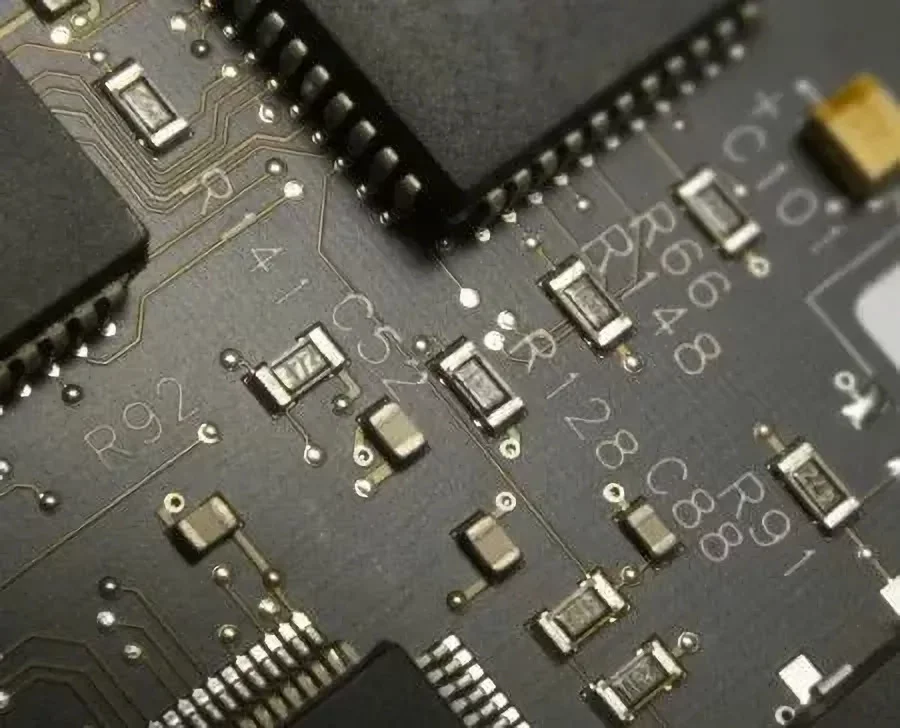
Solder balls are a normal by product of paste reflow when the paste sputters or when a deposit is placed where the mask does not contain it. They are harmless where they are encapsulated and a risk where they are free to move.
Reducing them is a paste and profile activity, and removing them is a cleaning activity. Where they cannot be removed, the design should ensure they cannot reach a moving part or a connector cavity.
Inspection for Objects That Should Not Be There
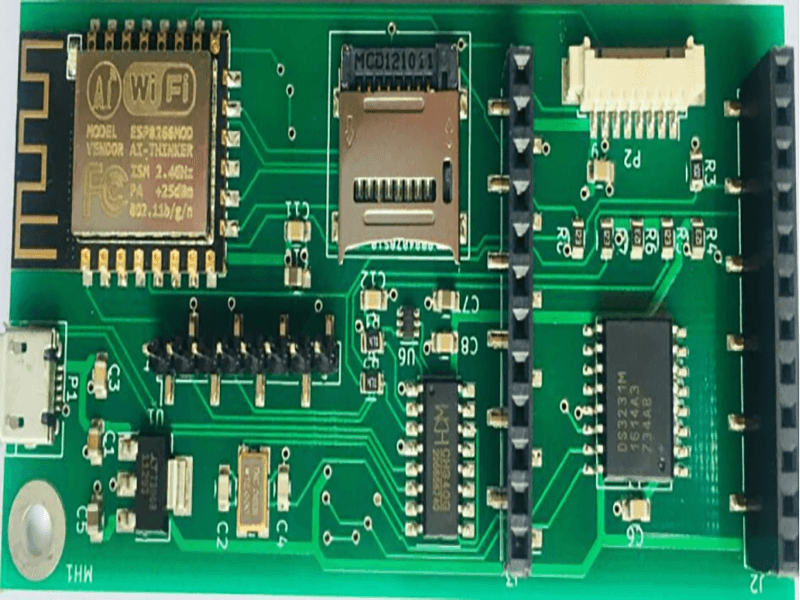
Inspection for foreign objects is done by the operator, by automatic optical inspection and by X-ray, and each sees a different class of object. Optical inspection sees a surface object; X-ray sees a dense object inside an assembly; the operator sees the large ones that the machines were not taught.
The inspection is only as good as the instruction. Telling an inspector to look for foreign objects produces a different result from giving a list of the object types that have been found before. Our AOI notes describe how the machine side is programmed.
Handling and Packaging
Boards are protected from the moment they are separated from the panel, because the packaging is one of the debris sources. Paper that sheds fibre, foam that crumbles and bags that carry dust all deposit material on the product.
The packaging that is specified for the product has to be qualified as a source rather than assumed to be clean. A change of packaging supplier is a process change and is treated as one.
Cleanliness Zones and Traffic
Cleanliness is controlled by separating the areas in which the product is exposed from the areas in which particles are produced. The separation is by wall, by curtain or by distance, and it is the reason depanelling is often placed away from the assembly area.
Traffic matters as much as the process, because a person walking through a clean area distributes what is on the floor. Where the product is exposed, the routes through the area are defined rather than left to convenience.
Detection of an Escape
Where a foreign object reaches a customer, the response is to identify it, to trace it to a process, and to change that process. A containment that only sorts the product leaves the source producing more.
The identification is worth doing properly even where the object is small, because the material usually narrows the source to one step. Our first pass yield notes describe how the data is used once the source is known.
Process Control and Verification
The measurements that matter are the repeatable ones: conductor width and spacing, annular ring, finished hole size, plating thickness and surface finish are all verifiable on a coupon that travels with the panel. Running a first article through the same checks as the production panel confirms that the two agree, and that comparison is the cheapest form of process control available at prototype stage.
Keeping a sample from the panel turns a dispute into a measurement, because the same coupon can be re-examined by both parties without rebuilding the batch. Reviewing the design before the data is released is cheaper than correcting it after the panel is in the tank, because every step downstream inherits the decision made at the front end.
Documenting the assumption is part of the design work, and a short note on the drawing prevents a question that would otherwise arrive a day later and cost a day of schedule.
Checks Before Release
The checks that matter are the ones performed on the product rather than on a sample kept for the purpose, because a coupon that travels with the panel is the only evidence about that panel. Where a requirement can be measured, it should be measured at the point of manufacture and recorded against the board or the lot it applies to.
A parameter that is set once and never re verified drifts, and the drift is usually discovered by a defect rather than by the record. The tooling, the material and the profile form one system, and a change to any of them should be assessed against the other two before it is released.
FAQ
Is a solder ball inside a board always a defect? It is a defect where it can move or where it bridges. An encapsulated ball that is contained by mask is normally accepted by a defined criterion.
Does a cleanroom solve foreign object problems? It reduces them. The main sources in electronics assembly are the process and the packaging rather than the ambient air.
What does gopcb provide for foreign object control? We provide separation of depanelling from assembly, extraction at the cutting step, a defined list of object types for inspection, packaging qualified as a source, controlled routes and cleanliness zones, and identification and traceability when a suspect object is found.