
Powder Grade Choice: Type 4 or Type 5 Solder Paste
Solder paste powder is graded by size, and the grade decides how the paste behaves on the smallest apertures of a board. Moving from a Type 4 to a Type 5 powder can rescue a marginal fine pitch print, but it also changes oxide content, cost and the reflow window. This article explains what the powder grade controls and how to decide which one a particular assembly actually needs.
Why Powder Grade Matters on Fine Pitch Apertures
An aperture can only release paste if enough particles fit through it. As the opening shrinks, the ratio between the largest particles and the aperture width becomes the limiting factor, and a paste whose powder is too coarse will bridge across the opening or clog it entirely.
The usual rule of thumb is that the aperture width should be at least five times the largest particle diameter, and some processes prefer seven. Below that ratio, release becomes erratic and volume falls away on the very apertures that matter most.
What the Type Number Actually Describes
The type number describes the powder size distribution rather than a single diameter. Type 4 covers particles up to about 38 micrometres, Type 5 up to about 25, and Type 6 up to about 15, with each grade also covering a stated percentage below the maximum.
Because the specification is a distribution, two pastes with the same type number can behave differently. The percentage of particles near the upper limit, and the presence of a small number of large outliers, matter more at fine pitch than the nominal figure suggests.
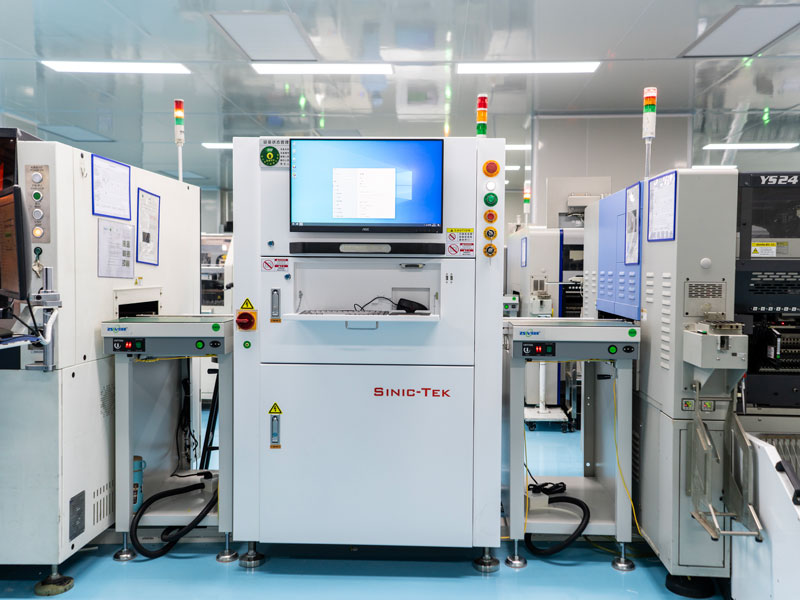
Powder is produced by atomising molten alloy, and the manufacturing yield falls as the grade gets finer, which is the underlying reason for the price difference between types.
Paste Release and Aperture Area Ratio
Powder grade interacts directly with aperture area ratio. An aperture with a low area ratio struggles to release paste whatever the powder size, but a finer powder widens the process window and makes a marginal opening printable rather than impossible.
That does not mean the finest powder always wins. Finer powder has more surface area for the same mass, so it carries more oxide and needs a more active flux to wet properly during reflow, which can increase residue and change the cleaning requirement.
Oxide Content and Solder Ball Risk
Every particle carries an oxide skin, and the total oxide grows as particle size falls because the surface to volume ratio rises. Paste manufacturers compensate with flux chemistry, but the balance is delicate and it shifts the behaviour of the paste in ways that show up at reflow.
Solder balls and beading are the visible symptom of an oxide or flux imbalance. Where they appear after a powder grade change, the cause is usually the interaction between the finer powder and a flux that was formulated for a coarser one rather than the powder itself. Treat the appearance of new defects as a quality signal and investigate it before the next production run.
Viscosity, Slump and Print Definition
Finer powder produces a paste with different flow characteristics at the same metal loading. Viscosity rises, which improves print definition and reduces slump after printing, but it also changes how the paste rolls on the stencil and how quickly it recovers after the squeegee passes.
Print speed and separation settings often need adjustment when the grade changes, because the shear behaviour is different. Treat the change as a process change rather than as a drop-in substitution, and re-run the print trial that qualified the original paste.
Reflow Behaviour and Voiding
Finer powders melt more evenly and often produce fewer large voids, because the alloy is distributed more uniformly through the deposit and the flux has less distance to travel. That is an advantage on thermal pads and on joints where voiding is specified.
The counter effect is that finer powder oxidises more during the reflow ramp, which can affect wetting on heavier joints. Where a board carries both fine pitch devices and large thermal pads, the compromise is usually to keep the powder grade moderate and adjust the stencil rather than to push to the finest grade available.
Cost and Supply Considerations
Finer grades cost more per kilogram, and the difference is not small. The premium reflects the lower atomising yield and the tighter handling requirements, including more careful storage because fine powder is more sensitive to moisture pick-up.
Supply is also a factor. Where a product will run for years, confirm that the grade will remain available and that more than one supplier can provide an equivalent distribution, so a single source does not become a schedule risk.
Choosing Between Type 4 and Type 5
Type 4 handles the majority of fine pitch work and is the default on most production lines. Type 5 becomes worthwhile when the smallest aperture falls below roughly 0.3 millimetres, or when area ratios sit near the practical limit and print variations are already visible.
Above that point the question is usually not the powder but the stencil. A change in foil thickness, aperture taper or coating often produces a larger improvement than a grade change, and it costs less. Evaluate the geometry first and the powder second.
Qualifying a New Powder Grade
Qualifying a new grade means running a print trial with measurement, not a visual check. Print a board with the smallest apertures on the product, measure the deposits and compare volume, area and height against the incumbent paste using paste inspection data, with enough samples to show the distribution rather than a single reading.
gopcb asks customers to confirm the powder grade when a stencil is ordered, because the aperture design and the paste specification should be chosen together and recorded in the fabrication notes. A grade change made without revisiting the stencil usually produces a print that is better in one place and worse somewhere else.
Powder grade is only one of several variables that decide print quality, and it is rarely the first one that should change. Stencil thickness, aperture taper, foil coating, squeegee condition and print speed all influence release, and a change in any of them can make a grade switch unnecessary or, worse, counterproductive. Diagnose the print before substituting the material.
Where a grade change is genuinely needed, record it against the paste lot number and the stencil revision so the combination can be reproduced later. Paste and stencil form a system, and changing one without noting the other is a common source of drift that takes weeks to trace. Keeping the two records together is a small habit with a large payoff.
FAQ
Is Type 5 always better than Type 4 for fine pitch? No. It releases better from very small apertures but costs more, oxidises faster and narrows the flux window. Use it where the aperture size genuinely requires it.
Do I need a new stencil when I change powder grade? Not always, but the stencil should be reviewed. Print speed, separation and foil thickness may all need adjustment to suit the new flow behaviour.
Why did solder balls appear after switching to a finer powder? Finer powder carries more oxide and interacts differently with the flux. Check that the flux is formulated for that grade, and review the reflow profile before changing anything else.