Counterfeit Component Control: Incoming Inspection and Traceability
Counterfeit components are a supply chain problem that is solved on the receiving dock rather than in the assembly area, because once a part is on a reel and in a feeder, nothing downstream will distinguish it from a genuine one. The controls that work are documentary, physical and statistical, and they are applied in proportion to the risk of the part rather than uniformly. This article sets out those controls and the records that make them effective.
How Counterfeit Parts Enter a Line
Counterfeit components reach production through the broker market, through returns that re-enter the supply chain, and through parts rejected at the original factory and sold on through other channels. Each route leaves a different signature at incoming inspection.
The risk follows scarcity rather than value, which is why obsolete and long lead time parts are the most frequently counterfeited. A line buying only from authorised distribution still needs incoming inspection for parts transferred between contracts or supplied by a customer.
Documentation and Traceability
The first control is documentary: a certificate of conformance naming the manufacturer and the lot, a traceable chain from the manufacturer to the delivery, and packaging that matches the manufacturer’s specification rather than an approximation of it.
Documents are compared against the manufacturer’s published formats rather than accepted at face value, because a convincing certificate is easy to produce. Where a part is bought through a broker, the chain has to reach the original manufacturer, or the part is treated as suspect.
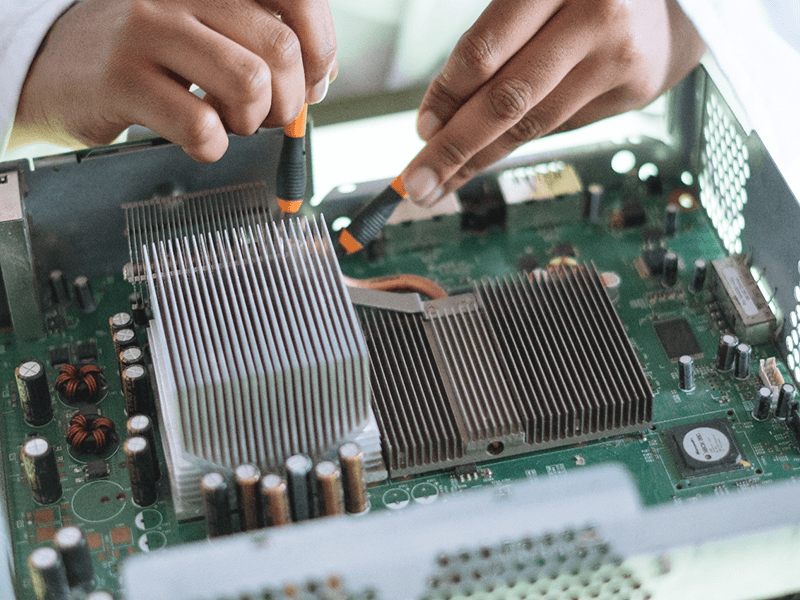
A broken chain of custody is the strongest single indicator of risk, and it is visible on paper before any part is examined.
Packaging and Marking Checks
Packaging carries more information than most inspectors read: the reel or tube, the label format, the date code system, the quantity and the orientation of the parts in the carrier. A changed font or two date codes on one reel is a signal rather than a cosmetic issue.
Marking on the part is compared with the manufacturer’s current format under magnification, including the etch style, the pin one indicator and the depth of the character. A re-marked part often shows a character that is slightly larger or less well defined than the original.
Electrical and Physical Test
Electrical test compares a sample against a reference part and has to include parameters that are difficult to copy, such as leakage at temperature or the exact input threshold. A simple functional test passes on many counterfeit parts.
Physical checks include X-ray of the lead frame and die, decapsulation of a sample where the risk justifies the cost, and a check of the lead finish. X-ray is particularly effective because the internal construction of a substitute rarely matches the original.
Sample Size and Acceptance
Sampling follows the risk. A delivery from authorised distribution may need only a visual check, while a broker delivery of an obsolete part justifies a larger sample and destructive analysis. The sample size follows from the failure rate that has to be detected.
Acceptance criteria are written before the parts arrive, so the decision is made by the specification rather than by the inspector. Where a lot is rejected, the disposition is recorded, because a returned lot that re-enters the market is a known route back to the line.

The acceptance criteria and the sample size belong to the part number rather than to the delivery, so the same rule applies every time the part is bought.
Authentication Programmes
For parts that are known counterfeiting targets, manufacturer programmes provide a database of images, a marking guide and sometimes a scan code. Using them is cheaper than decapsulation and the databases are updated as counterfeits change.
The programme is used at incoming inspection rather than after a problem appears, and the record of the check is kept with the lot. Where the manufacturer offers third party testing, it is worth using on the first delivery rather than the tenth.
Controls in the Warehouse and on the Line
Free issue and customer supplied material is the hardest to control, because it arrives outside the normal purchase trail. Those parts are quarantined and inspected under the same procedure as purchased material, and they are never mixed with production stock.
On the line the control is segregation: suspect material in a marked area, an identified disposition and a record of what was consumed. A rejected reel returned to the shelf by mistake produces a defect months later with no link to its cause.
When Counterfeit Parts Are Found in Product
Where a suspect part has been built into product, the exposure is established from the lot traceability, which is why the lot is recorded when the part is consumed. The investigation covers every assembly that used the lot, not only the assemblies that have failed.
The decision to screen or to recall follows from the failure mode and the safety consequence, and it is taken with the customer rather than by the assembler alone. The evidence behind it is the inspection record, the traceability and the failure analysis of a returned part, judged with the methods in our board quality guide.
Writing the Purchasing Requirement
The purchasing specification should name the source restriction, the traceability required to the manufacturer, the inspection performed on receipt and the disposition of non conforming material. Without those four items the control depends on the buyer’s judgement on the day.
It also needs a clause for obsolete parts, where the risk concentrates: either a lifetime buy from authorised stock with a storage plan, or a documented redesign. Buying from the open market to keep a line running is the decision that creates the problem. Inspection methods for the parts themselves are described in our X-ray and AOI guide.
Supplier approval is the foundation of everything that follows, because a supplier whose chain of custody is known reduces the inspection burden to a routine check. The audit covers the purchase trail, the storage of returns and the way the supplier handles parts that fail its own incoming inspection.
A supplier that cannot show where a batch came from is not necessarily fraudulent, but it is unverified, and unverified material is treated as suspect until a sample has been tested. Buying from such a source is a business decision with an inspection cost attached, and both should be visible when the order is placed.
Risk scoring allocates inspection effort. A part with a long lead time, an obsolete status, a history of counterfeiting and a high price scores higher than a commodity resistor from authorised stock, and the inspection plan follows the score rather than the invoice value.
In-process checks catch the case where a suspect part reached the line despite the dock inspection. Component marking is visible under the microscope at the first article, so a first article that compares the part against the drawing catches a substituted device before the run continues.
Quarantine discipline is part of the control, because a rejected lot left on an open shelf beside approved stock will eventually be consumed. The quarantine area is physically separated, the material is identified as non conforming, and the disposition is recorded when the lot leaves it.
Training keeps the paperwork honest. An inspector who has seen a genuine example and a re-marked example side by side under the microscope applies the standard far more consistently than one who has only read the procedure.
Documents are compared against the manufacturer’s published formats rather than accepted at face value, because a convincing certificate is easy to produce. Where a part is bought through a broker, the chain has to reach the original manufacturer, or the part is treated as suspect.
Marking on the part is compared with the manufacturer’s current format under magnification, including the etch style, the pin one indicator and the depth of the character. A re-marked part often shows a character that is slightly larger or less well defined than the original.
FAQ
Is buying from authorised distribution enough? It removes most of the risk, but customer supplied and transferred material still needs inspection because its history is outside the manufacturer’s chain.
What is the strongest single indicator? A broken chain of traceability to the manufacturer. It is visible on paper before any part is opened or tested.
How large should the sample be? Large enough to detect the failure rate that matters, which for an obsolete part from a broker means destructive analysis rather than a visual check.