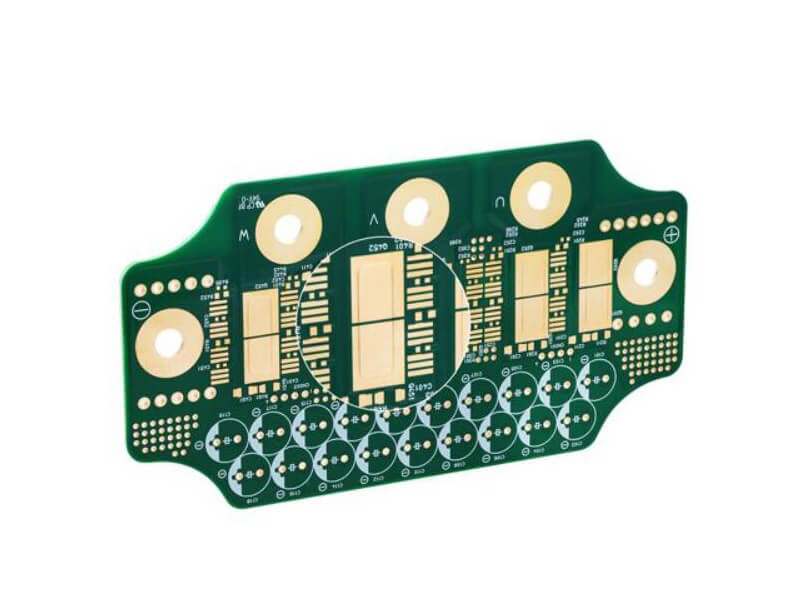
Incoming Inspection: Design Rules and Process Limits
Laminate and prepreg carry the properties that decide impedance, thermal behaviour and press cycle, and they arrive with a certificate rather than with a guarantee. Incoming inspection exists to confirm that the delivery matches the certificate, that the material has been stored as it should have been, and that the lot can be traced into the panels it becomes. This article covers the checks and the records that make them useful.
What Arrives and Why It Is Checked
Laminate and prepreg arrive with a certificate describing the material, the resin content, the flow and the gel time, and inspection confirms that the delivery matches the certificate rather than an idealised version of it. The differences that matter are small but measurable.
The properties that reach the finished board are the dielectric constant and loss, the glass transition temperature, the resin content and the volatile content, and every one of them is affected by storage and by age. Inspection is therefore a check on the delivery and on its history at the same time.
Documentation and Lot Identity
The delivery is identified by manufacturer, material type, lot and date of manufacture, and that identity is carried through to the finished panels so that a field problem can be traced to a material batch rather than to the whole product line.
Where material from two lots is used on one panel, the record says so, because a mixed build is the hardest case to analyse when a property falls outside its band. Mixing lots is avoided outright where the material is used for controlled impedance, unless the two lots have been shown to match.
Resin Content, Flow and Gel Time
Resin content is measured by burning the resin off a sample and weighing the glass, flow by pressing a known mass between platens under a standard cycle, and gel time on a hot plate at a defined temperature. All three are simple tests with published methods.
All three change with storage, and prepreg in particular has a shelf life counted from manufacture under controlled conditions. Material stored at the wet end of its range flows differently from material stored dry, and the press cycle that was qualified on the dry material will not reproduce it.
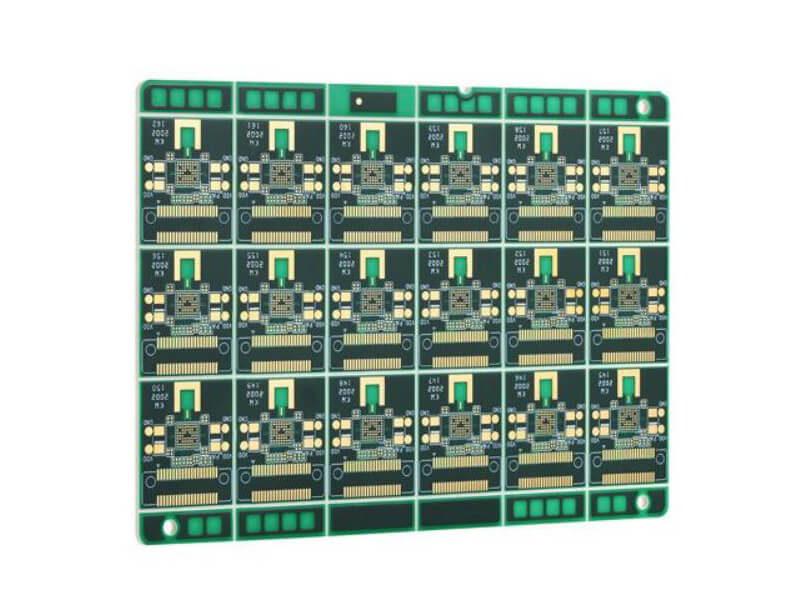
Gel time and flow are the two tests that most directly predict whether the press cycle will work on the material as delivered, rather than as specified.
Dielectric Properties and Their Verification
The dielectric constant of a laminate is verified on a coupon from the same lot, because the data sheet value is nominal and its tolerance is wide enough to move a controlled impedance by several ohms. The measurement is described in our laminate material notes.
Where the design depends on a tight impedance band, the coupon measurement is taken before production and the trace widths are confirmed against it. Adjusting the width afterwards is possible but costs a fabrication cycle and a new set of artwork.
Storage of Prepreg
Prepreg is stored sealed in a controlled environment, and the storage time is counted from the date of manufacture rather than the date of receipt. Beyond the manufacturer’s limit the material is either rejected or qualified by a test build rather than released to production.
Freezer storage extends the life and adds a requirement of its own: the material has to reach room temperature inside its sealed bag before the bag is opened, or condensation forms on the surface and changes both the flow and the volatile content of the outer plies.
Handling, Cutting and Contamination
Laminate is cut on a guillotine or a router, and the cut edge is inspected for delamination and exposed glass. Prepreg is cut in a controlled area with gloves, because oils from the skin change the adhesion between plies at the point of contact.
Contamination on a prepreg surface is invisible at the time and becomes a delamination after lamination, which is why the lay-up area is separated from the machining area and why material is handled on clean surfaces. The processing side is covered in our multilayer processing guide.
Verification of the Finished Panel
The finished panel is matched to the material that went into it by a coupon that received the same lamination cycle, carrying the copper pattern, the resistance test and any impedance structure the customer requires.
Where a property is out of band on the coupon, the panel is suspect and the traceability back to the material lot is what makes a disposition possible. Without the lot record the only safe disposition is to scrap, which is the cost that the record exists to avoid.

The coupon is only evidence if it travelled with the panel through the same press cycle, so its position on the panel is part of the procedure rather than an afterthought.
Supplier Qualification and Change Control
A supplier is qualified by a first delivery that is tested in full, followed by a reduced routine once the process is stable. Any change of material, resin system or manufacturing site triggers a re-qualification rather than a notification.
The change control clause belongs in the purchase agreement, because a laminate that behaves identically at room temperature can behave differently at its glass transition temperature, which is exactly where the press and the reflow profile both operate.
Records That Make a Batch Traceable
The records that matter are the manufacturer lot, the certificate, the incoming test result, the storage location and dates, the coupon result from the lamination and the panel serial numbers built from that material.
Those records turn a field failure into an investigation with a boundary. Where they are missing, the assumption has to be that the entire delivery is suspect, which is a far more expensive conclusion than the inspection would have been.
Thickness and copper weight are verified on the delivery as well as on the finished panel, because a laminate at the low end of its thickness tolerance changes the dielectric spacing and therefore the impedance of every controlled net. The measurement is taken at several points across a sheet, since thickness varies across a panel.
Warpage in the delivered sheet is checked before cutting, because a sheet that has taken a set during storage laminates into a panel with a bias that no press adjustment removes. The check is a sheet on a flat table with a straight edge, or a bow measurement taken against the panel diagonal.
The glass transition temperature is confirmed on a coupon from the finished panel where the customer requires it, because that property sets the press and reflow windows. Material at the low end of the specified range softens earlier during assembly, and the movement appears in the finished board rather than in the store.
Prepreg volatile content is measured as weight loss on heating, and it is the property that drifts most with storage. A high volatile content produces voids and delamination in the laminated panel, which is why the check belongs at goods inwards rather than at the press.
Resin flow is verified with a test press where the material is critical to the process, because flow describes behaviour during the press cycle rather than at room temperature. The test is destructive and slow, so it is applied to new lots and to material near its shelf life limit.
The inventory system carries shelf life as a property of the lot rather than as a note on the bag, so material approaching its limit appears on a report before it is issued to production. That is what turns storage control into a decision taken in advance rather than a rejection discovered at the press.
FAQ
Does a certificate of conformance remove the need to test? No. The certificate describes the material the supplier intended to ship, and the tests confirm what actually arrived and how it was stored.
Why is dielectric constant measured on a coupon? Because the tolerance on the nominal value is wide enough to move a controlled impedance by several ohms, and the coupon is from the same lot.
Can material past its shelf life be used? Only after a qualification build that includes the press cycle, and the decision is recorded rather than assumed from the material’s appearance.