
Black Pad: 5 Causes Behind a Failed Joint
Black pad is the name given to a joint failure that begins in the nickel layer of an electroless nickel immersion gold finish. The pad looks dark under the gold, the solder joint that forms on it is weak, and the fracture that follows runs through the nickel rather than through the alloy.
It is a finish defect rather than a soldering defect, and that is what makes it dangerous. The boards pass visual inspection, the joints look acceptable after reflow, and the failure appears later under mechanical or thermal load, often in a product that has already been delivered.
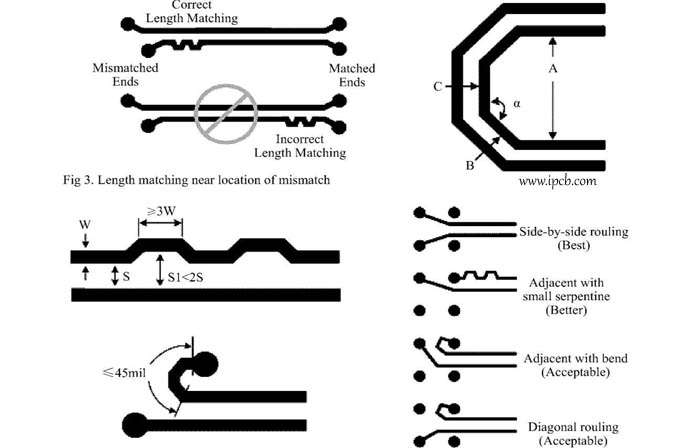
What Black Pad Looks Like in a Failed Joint
The classic appearance is a dark, glassy pad surface visible where the solder has been peeled away, with the fracture running along the interface between the nickel and the alloy. A section through the joint shows a crack that follows the pad rather than a normal ductile failure through the solder.
The failure is brittle, which means there is little deformation before it breaks. A joint that survives handling and test can still fail in a drop, a vibration or a thermal cycle, so the absence of early failures is not evidence that the lot is sound.
The Nickel Layer Where It Starts
The nickel is deposited electrolessly and forms the structural part of the finish, so its thickness, its phosphorus content and its corrosion resistance all matter. Where the deposit is thin, porous or heavily stressed, the gold that follows does not seal it and the corrosion has a route in.
The phosphorus level is a common variable. A deposit with an unusual composition is more susceptible to the attack that produces the defect, and the composition is set by the bath chemistry rather than by the process operator. Our board finish notes compare this finish with the alternatives.
Immersion Gold Chemistry and the Corrosion Route
The immersion gold bath is a displacement chemistry, and it attacks the nickel as part of its normal operation. Where the bath is out of balance, or where the panel stays in it for too long, that attack goes beyond the surface and corrodes along the nickel grain boundaries.
The result is a layer of nickel oxide and a weakened structure just below the gold. Solder does not bond to it, and the joint that forms is connected to a substrate that has already been damaged before the board reaches the assembly line.
Fracture Surface and the Evidence It Holds
The fracture surface is the evidence that settles the question. A ductile joint fails through the solder with a rough, torn appearance, while a black pad failure shows a smooth, flat fracture with corrosion products on the nickel side and very little alloy attached.
That difference is why sectioning and opening a failed joint is worth the effort. An argument about a finish without a fracture surface is an argument about appearance, and our board quality notes describe how such evidence is collected and recorded.
Joints That Fail in Test Rather Than in the Field
Where the problem is severe, joints fail at the assembly stage, usually as a low yield on one particular component or a joint that breaks loose during handling. When the same component fails across a whole lot, the finish is a more likely explanation than the profile.
A less severe case fails in the thermal cycle or the drop test, and some lots never fail at all because the load they see in service is modest. That variability is what makes the defect so difficult to manage, and it is why the control has to be in the bath rather than in the test.
Process Controls That Prevent It
The controls are conventional plating discipline: correct nickel thickness, controlled phosphorus content, clean rinses between the steps, and a gold bath that is analysed and dosed rather than topped up on a schedule. Each of them removes one of the routes to the defect.
The sequence matters as much as the parameters. A rinse that is too short carries nickel into the gold bath, a panel that is left wet between tanks oxidises, and a bath that is run hot to increase throughput attacks the nickel more aggressively than the specification assumes.
Bath Maintenance and the Analysis Schedule
The gold bath should be analysed for its gold content and for dissolved nickel, because the second figure is the one that reveals how much the bath has been attacking the deposit. A bath that is dosed on gold alone can be well inside its specification while its contamination level is far outside it.
Bath life should be planned rather than discovered. Replacing a bath on a schedule derived from the analysis gives a consistent deposit, while running until a defect appears guarantees that a batch of panels is produced under the worst conditions the bath ever sees.
Inspection, Sampling and the Acceptance Question
A visual check cannot see the problem, because the gold covers the evidence. The practical controls are a solderability test on a sample, a bend or a pull test on a coupon joint, and a periodic section of a finished joint to confirm that the interface is sound.
The acceptance question should be answered with data on the process rather than on appearance. Our dip and look notes cover the wetting test that gives a quick signal, and joint quality checks on assembled boards give the slower but more complete picture.
Rework Limits on a Suspect Lot
Rework on a suspect lot is risky. Resoldering a joint on a corroded nickel layer produces another weak joint, and repeated reflow exposes the finish to more thermal load. Where the finish is confirmed as the cause, the lot belongs in quarantine rather than at a rework station.
Where rework is unavoidable, the joints should be inspected and tested afterwards, and the number of rework cycles should be recorded. A limit on reflow cycles belongs in the work instruction for every product, not only for the difficult ones.
Records and Supplier Discussions
A finish complaint should carry the panel identity, the bath analysis for the suspected period, the thickness measurements and the fracture evidence. With those four items a finisher can compare with other customers and reach a conclusion instead of a defence.
The comparison across customers is often what identifies a bath that was pushed too far on one line, and it is only possible when the batch identity is recorded at the finish stage. The IPC finish standards define the tests and the acceptance criteria for the discussion.
FAQ
Can black pad be detected before assembly? Not by eye, because the gold hides the corrosion. It can be detected by a solderability test on a sample, by a bend test on a coupon joint, or by a section, and the sampling plan should be based on the risk of the product.
Is the defect limited to a single bath? The cause is usually local to one line or one bath, so the same design from another supplier may be entirely sound. That is why the panel identity and the finish house both have to be part of any investigation.
Does a nitrogen reflow help? It improves wetting and reduces oxide, which can make a marginal joint look better, but it does not repair a corroded nickel layer. The underlying defect remains, and the joint will still fail when it is loaded.