Inkjet Legend: 5 Rules for PCB Markings
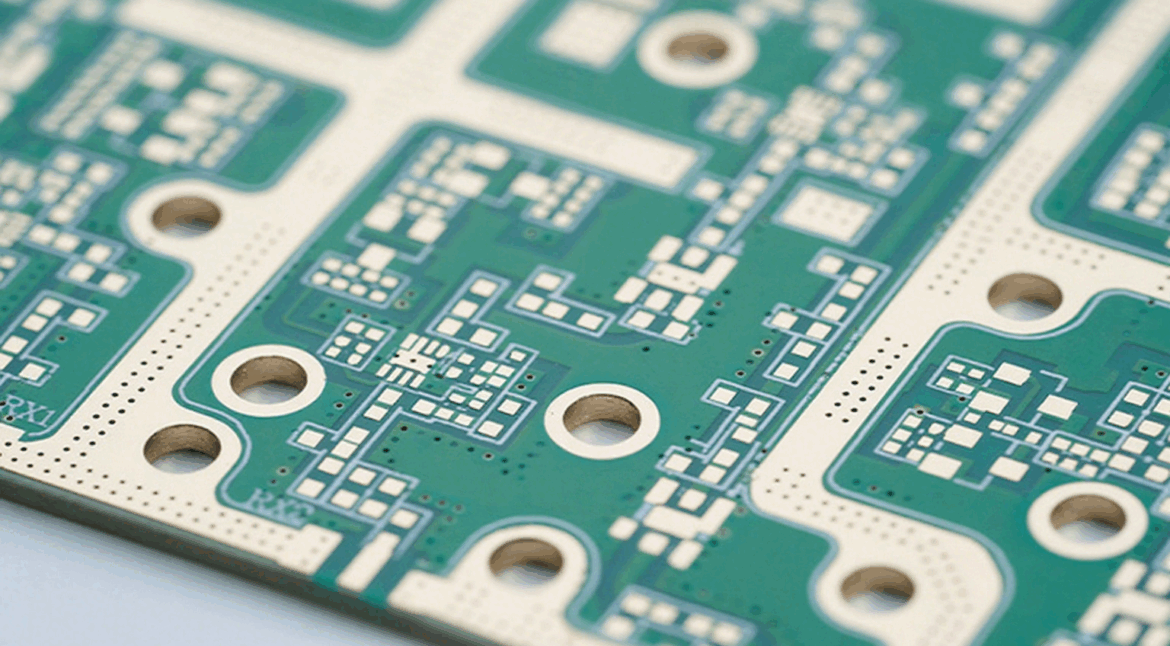
An inkjet legend is the printed marking on the surface of a circuit board, applied by a print head that deposits drops of ink instead of pushing ink through a screen. It replaces the traditional silkscreen step for anything that does not need a thick, raised mark. The advantage is that the legend printing data comes straight from the CAD file, so a revision change costs nothing but a new file.
That flexibility is only useful when the ink stays where it was put. Ink adhesion depends on how clean the surface is and on how well the solder mask underneath was cured, while the final cure temperature and the print resolution decide whether the text is legible after assembly. A legend that flakes in the reflow oven or smears into a pad opening is worse than no legend at all.
What Inkjet Legend Printing Changes
Screen printing needs a stencil per revision and a setup that is measured in hours. Inkjet needs a file. That difference matters most for prototyping and for products with frequent revisions, where the legend is often the last artwork to be finalised. It also removes a wet process from the floor, which simplifies the effluent and the chemical handling.
The trade is thickness and speed. A screen printed mark sits proudly on the surface and reads easily from any angle, while an inkjet mark is thinner and sits closer to the mask. Throughput is also lower per panel on many machines, so the choice is usually made on revision count rather than on unit cost alone.
Ink Chemistry and Substrate Match
Most production inkjet legends use a UV curable ink that is pinned with a UV lamp immediately after printing and then given a final cure. The ink has to wet the mask without bleeding into open features, and it has to survive the thermal excursion of reflow without changing colour or lifting at the edges.
The match that matters is between the ink and the mask, not between the ink and bare laminate. A mask with a low surface energy can reject the ink and produce a mark with pinholes, while a mask that is under cured can absorb solvent from the ink and swell. The ink supplier and the mask supplier should be told about each other before the combination is released.
Print Resolution and Text Height
Legibility is set by the drop size and by the minimum feature the head can place. Very small text is possible in theory, but it stops being readable after the board has been assembled and cleaned. A practical minimum for reference designators is a character height of about eight tenths of a millimetre with a stroke width that keeps the character open.
Resolution also decides how well the machine can hold the character shape. Condensed fonts and serifs lose their detail first, which is why a simple sans serif face is preferred for legend. Where the available space is tight, it is better to reduce the amount of text than to shrink it below the readable limit.
Adhesion, Surface Energy and Cleanliness
Adhesion follows the same rules as any other coating. The surface has to be clean, dry and free of silicone, flux residue and handling oils. A fingerprint is invisible but it changes the surface energy locally, which is exactly where the ink will repel and form a crater.
Cleanliness has to be measured rather than assumed. The mask surface should be checked for ionic residue and for organic contamination before legend printing, and the surface energy should be verified with a dyne test on a sample panel. Where a mark lifts in patches that follow the operator’s handling pattern, contamination is the cause. Surface preparation and its effect on the mask are covered in the mask application notes.
Cure Temperature and Profile
The UV lamp pins the ink so that it does not run, but it does not complete the reaction. The final cure is what builds the adhesion and the chemical resistance, and its temperature has to stay below anything that would soften the mask. A profile that is too cool leaves the ink soft and easy to smear; one that is too hot can wrinkle the mask beneath it.
Cure temperature should be verified on the board rather than read from the oven display, because the ink layer is thin and follows the surface temperature closely. A thermocouple bonded beside a test legend gives the real number. Where the legend is cured in the same pass as the mask, the two requirements have to be reconciled rather than averaged.
Registration to Pads and Mask Openings
Legend has to avoid every opening in the mask. Ink that crosses an opening sits partly on the mask and partly on bare copper, and that bridge breaks off during reflow. Registration tolerance on the printing machine therefore has to be smaller than the smallest gap between a legend feature and a mask opening.
The CAD data should keep legend away from pads by a margin that reflects the machine capability, and the check belongs in CAM review rather than on the shop floor. Clipped legend that touches a pad is a design error, not a printing error, and it should be fixed before the file is released.
Contrast, Colour and Readability
Contrast is what makes a legend useful. White ink on a green or black mask gives good contrast, while white on white is invisible. Where the mask is light, the legend may have to change colour, and that decision should be made with the assembly drawing in mind rather than for appearance.
Colour also affects cure behaviour. Some pigments absorb UV more strongly than others, so a white ink and a black ink from the same supplier can need different pinning energy. Where two colours run on the same machine, each should have its own verified recipe instead of sharing the settings of the one that was qualified first.
Defects: Wicking, Smear and Flaking
Wicking is ink that travels into a mask opening or along the side of a trace. It comes from too much ink, from a surface energy that is too low, or from a mask opening that is wider than the data assumed. Smear is ink that is transferred after printing, usually because the board was handled before the ink was pinned.
Flaking appears after reflow as small flakes of legend on the board or in the oven. The usual cause is incomplete cure or contamination under the ink. Where flakes are found, the first check is the cure profile, and the second is the cleaning step, and the order matters because changing the profile will not fix a contaminated surface. Legend that lifts from the mask follows the same mechanism described in the solder mask peeling article.
Inspection and Legibility Checks
Inspection should confirm that the mark is present, that it is in the right place and that it is readable at the magnification the operator will actually use. An automated optical inspection system can check presence and position, but legibility is best judged against a boundary sample that is kept for the purpose.
Lighting determines whether the check is meaningful. A mark that is faint but present can pass under strong light and fail under the lighting used at the assembly bench. The AOI lighting setup should therefore be chosen for the contrast that the human inspector sees, not only for what the camera needs. The IPC marking requirements give the minimum content that has to be present.
First Article and Records
The first article should record the ink lot, the mask type and cure state, the pinning energy, the final cure profile and a photograph of the finished legend. Where the product has small text, the photograph should be taken at a magnification that shows the smallest character, not the largest one.
The record should also include the adhesion result, which is usually a tape test on a coupon printed at the same time as the panel. A legend that passes the tape test on a coupon but flakes on the product usually indicates a difference in cure position on the conveyor rather than a difference in the ink.

FAQ
Is inkjet legend as durable as screen printed legend? A properly cured inkjet mark survives reflow, cleaning and normal handling, and it is adequate for reference designators and part outlines. Screen printing still gives a thicker mark with better contrast from a low angle, so it remains the better choice where the marking has to be read in service or where it must resist abrasion.
Why does the legend flake off after reflow? Flaking is nearly always a cure or cleanliness problem rather than an ink problem. If the ink is not fully cured before the board enters the oven, or if the mask surface carries contamination, the bond is incomplete and the thermal cycle finishes the job. Check the profile first and the surface preparation second.
Can legend be printed over a pad? It should not be. Ink that sits partly on bare copper and partly on mask forms a bridge that breaks during soldering and can leave debris on the joint. The way to fix it is to move the legend in the CAD data and to keep a margin that matches the printing machine’s registration tolerance.