Immersion Gold Bath: 4 Checks for a Reliable ENIG Finish
The immersion gold bath is the last wet stage of an ENIG finish, and it works by displacement rather than by reduction. Gold ions in solution take electrons from the nickel beneath them, so the gold deposits as the nickel dissolves, and the reaction stops on its own once the surface is covered. The layer it leaves is thin by design, because the gold exists to protect the nickel rather than to provide wear resistance.
That self-limiting behaviour is what makes the process controllable, and also what makes it fragile. The bath depends on the nickel surface being receptive, on the gold concentration being held, and on the solution staying free of the metals that earlier steps can carry in.
What the Immersion Gold Bath Does
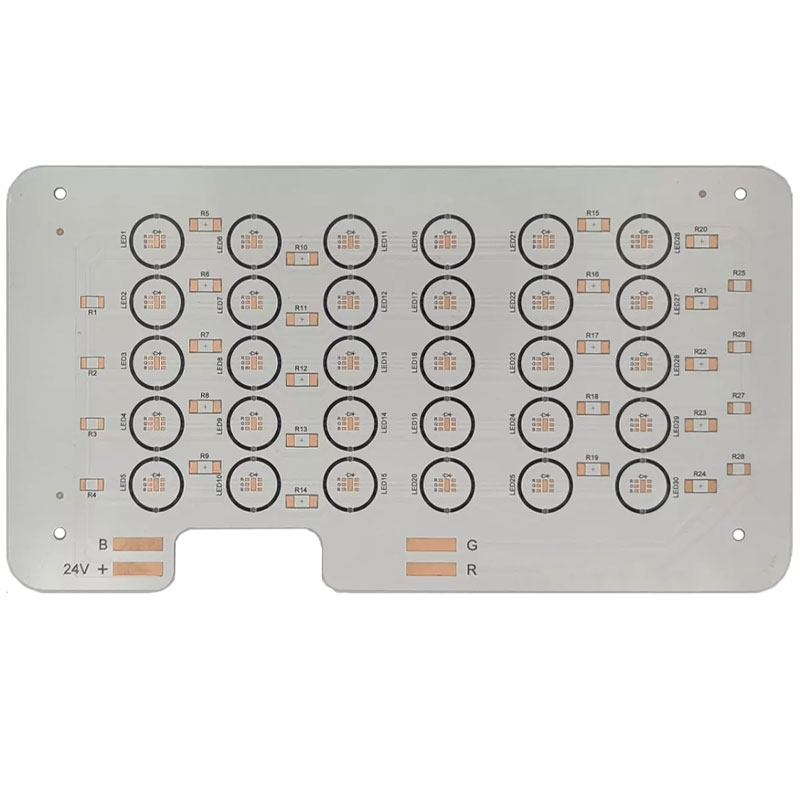
Immersion gold protects the nickel layer from oxidation between fabrication and assembly, and it provides a surface that solder wets readily. The thickness is thin compared with an electrolytic gold, typically a small fraction of a micron, because the reaction stops when the nickel is covered.
Because the coating is thin and the mechanism is chemical, the result depends on the state of the nickel rather than on a current setting. A nickel surface that has oxidised, been passivated or been contaminated will not accept gold evenly, however well the gold bath itself is maintained. For that reason the gold tank is judged together with the nickel tank that precedes it, and the two are qualified as a pair.
Gold Concentration and Make-Up
Gold is the most expensive component in the tank, and its concentration is the parameter that most directly controls the deposition rate. As panels pass through, gold is consumed and nickel dissolves into the solution, so both the gold content and the specific gravity have to be watched.
Make-up is by analysis rather than by rule, and the gold concentration is normally held inside a narrow band. Running low slows the reaction and leaves a thin, porous layer, while running high wastes metal and can drive the exchange faster than the nickel can support it. An immersion gold bath that is topped up without analysis tends to run rich, because the volume lost to drag-out is replaced with solution that also carries gold.
Time, Temperature and Gold Thickness
Time and temperature set how far the displacement reaction proceeds. Warmer solution and longer dwell both give a thicker coating, but the reaction self-limits, so the gain flattens as the dwell extends and further time is largely wasted. A dwell that is too short leaves the nickel only partly covered, and the bare areas oxidise before the board reaches assembly.
Target gold thickness is usually quoted as a minimum for solderability and a maximum for cost. Coupons plated with the load are the practical way to confirm that the thickness is inside the band, and the wider question of bath temperature is covered in plating bath temperature control.
The Nickel Surface Beneath the Gold
Gold does not deposit on nickel that is already coated with oxide or with residues, so the interval between the nickel tank and the gold tank matters. A panel that sits in a rinse too long, or that dries between steps, presents a surface the gold bath cannot cover evenly.
The phosphorus content of the nickel also influences the reaction, because it changes the electrochemical potential of the surface. A nickel layer that has drifted outside its qualified window will accept gold differently even when the gold bath is unchanged. Because the reaction depends on the nickel, the immersion gold bath cannot compensate for a surface that has been left to oxidise.
Contamination and Metal Build-Up
Immersion gold baths are poisoned by the metals they displace. Nickel is the expected product of the reaction, but copper, palladium and organic residues from upstream steps also accumulate, and each one affects the exchange in a different way. Regular analysis for foreign metals is therefore part of the bath routine rather than an occasional investigation.
Copper is particularly damaging because it changes the potential at which the gold deposits, and palladium carried over from the activator can plate out as a separate layer. Carbon treatment and careful rinsing upstream are the usual defences, as described in carbon treatment of a plating bath.
pH and Stabiliser Balance
The bath pH controls both the deposition rate and the stability of the solution. Outside its window the reaction slows, the deposit becomes patchy and the gold can begin to plate out on the tank fittings instead of on the panels.
Stabilisers and complexers hold the gold in solution and keep the reaction on the surface. Over-dosing slows the bath and can leave a smeared deposit, while under-dosing risks spontaneous decomposition of a solution that represents a large amount of metal.
Black Pad and Interface Failures
Black pad is the failure that follows a nickel surface which has been attacked rather than protected. The interface darkens, the gold layer loses adhesion, and a solder joint made on it fractures at the boundary instead of at the bulk of the joint.
The cause is usually upstream of the gold bath, in an over-active nickel or in contamination that changed the surface, but the bath can contribute when its pH or its loading is out of control. Because the defect is invisible after plating, it is normally found by a pull test or by a microsection of a soldered joint.
Drag-Out, Rinsing and Tank Condition
Gold drag-out is a cost problem before it is a quality problem. Solution carried out on the panels is metal that has to be replaced, and the rinse that follows has to remove the residue without leaving salts that stain the surface. Drip time, a drain board and a dedicated recovery rinse help capture part of the loss, and they protect the rinse stages that follow.
The condition of the tank, its heaters and its fittings matters as well. Gold that plates out on a scratched heater sheath or on an exposed metal part is lost from the bath, and the same deposits can later flake and contaminate the panels.
Verification and Records
Verification combines thickness measurement with a check on the deposit appearance. Coupons measured by X-ray fluorescence give the gold thickness, while a microsection or a solderability test shows whether the interface is sound.
The record should carry the gold concentration, the pH, the temperature and the dwell for each lot, together with the coupon results and the loading of the bath since its last make-up. The supporting analysis practice is described in plating bath analysis, and the coverage underneath comes from electroless copper bath control. Reference methods are published by IPC.

FAQ
Why does the gold thickness stop increasing with longer dwell? Because the reaction is a displacement that stops when the nickel is covered. Beyond that point the bath cannot deposit more gold, and extra time only adds risk.
Can a thin gold layer still be acceptable? It can, provided it is continuous and covers the nickel. A very thin layer that is porous will oxidise and lose solderability even though the measured thickness is inside the stated range.
What causes gold to plate out on the tank instead of the panels? Spontaneous plating usually follows a pH excursion, a stabiliser imbalance or heavy contamination, and it should be treated as a bath fault rather than a cleaning problem.