



Plating Tank Heater: 4 Checks for Uniform Temperature
A plating tank heater does more than raise the bath to temperature. It has to hold the whole working volume at one value, from the surface to the bottom and from one end of the tank to the other, because the deposition rate follows the temperature at the panel rather than at the sensor.
Most heater faults are not failures. They are slow changes in distribution: a layer of scale, a partly blocked pump or a sensor that reads a few degrees high, each of which leaves the bath uneven while the controller shows the correct value.
What the Heater Has to Do
The first task is to bring the bath from cold to the working temperature in a reasonable time. The second, and the one that matters in production, is to replace the heat that the tank loses while it is working.
Heat is lost from the surface, from the tank walls and through every panel and rack that enters and leaves. A tank with heavy throughput loses far more heat than a static one of the same size, and the heater has to be sized for the working condition.
Uniformity is the final requirement. A bath that is correct at the sensor and cool at the far end plates differently at the two ends of the same panel.
Sizing and Heat Loss
Sizing starts with the volume of the bath and the temperature rise required, and it continues with the losses during operation. A heater sized only for the initial warm-up will struggle to hold temperature once the line is running.
The surface area of the tank, its insulation and the temperature of the room all influence the loss. An uncovered tank in a cool room loses a surprising amount of heat from the surface alone, particularly where the bath runs hot.
A margin on the calculated duty is normal practice, and it also gives the heater a longer working life, because it does not have to run flat out all day.
Immersion, External and Heat Exchanger Types
Immersion heaters sit inside the tank and transfer heat directly to the solution. They are simple and efficient, but they occupy tank volume and their surfaces are the hottest point in the bath, which can affect the chemistry locally.
External heaters circulate the solution through a heated chamber and return it to the tank. They keep the tank clear and are easier to maintain, but they depend on a pump and on pipework that can leak or block.
Heat exchangers transfer heat from a separate medium, often hot water or steam, and are used where the bath must not see a hot element. Their performance depends on flow on both sides, so a fouled exchanger loses duty quietly.
Placement, Hot Spots and Circulation
Where the heat is delivered decides how it spreads. An immersion heater placed in a corner without circulation will heat that corner and leave the rest of the tank behind, which is measured as a temperature difference across the bath.
Circulation is what turns a local heat source into a uniform bath. Pumps, air sparging and eductor nozzles all move solution past the heater and around the tank, and their flow rates belong in the process specification.
Panels should not sit directly in front of a heater outlet, because the local temperature there is higher than the bath average. Rack positions should be chosen with the flow pattern in mind rather than only for convenience.
Sensors, Controllers and Set Point
The sensor measures one point in the tank, and the controller acts on that measurement. If the sensor is in the wrong place, or if it is coated or reading high, the whole bath is held at the wrong temperature.
Sensors should be calibrated against a reference at intervals, and their position should be recorded so that it does not change between shifts. A sensor that has been moved during maintenance changes the bath without any change in the set point.
The controller also needs a sensible dead band. Too narrow and the heater cycles rapidly, which shortens its life; too wide and the bath drifts across the working window.
Materials and Chemical Compatibility
The wetted materials have to survive the chemistry. Sheath materials that resist an acid copper bath may not resist an alkaline cleaner, and a heater used in the wrong tank will corrode at the sheath and eventually fail.
Corrosion products from a failing heater contaminate the bath. Metals that leach from the sheath are exactly the kind of impurity that changes the deposit, and the fault is often diagnosed as a bath problem before the heater is suspected.
Where a tank runs more than one chemistry, the heater specification should cover all of them rather than the one that happens to be in use.
Maintenance and Scale
Scale on a heating surface acts as insulation. It reduces the heat that reaches the solution and raises the temperature of the element itself, which is both inefficient and hard on the heater.
Immersion heaters and heat exchanger surfaces should be cleaned on a defined interval, and the interval should be set from the condition found rather than from a fixed calendar that nobody reviews.
Water hardness, the drag-in of salts and the temperature of the bath all affect how quickly scale forms, so a soft-water supply or a scale inhibitor can extend the interval considerably.
Symptoms of a Heater Fault
The first symptom is usually a slower warm-up or a bath that cannot hold its set point during a heavy shift. The deposit then becomes thinner and duller, and the response is often to extend the plating time. Extending the time corrects the thickness while leaving the distribution as it was, which is exactly the wrong correction. The relationship between time, current and thickness is described in plating current density control.
A temperature difference across the tank shows as a thickness difference across the panel, which looks like a racking or a current problem until the bath is mapped. Measuring the temperature at several points is the quickest way to prove it.
Rapid heater cycling or a burnt smell points at the element or the controller, and the bath should be checked for contamination before the next lot is run.
Records and Verification
The record should carry the set point, the measured bath temperature and the position of the sensor, together with the maintenance history of the heater and the exchanger.
Verification is a map rather than a reading. Measuring the temperature at several points around the working volume, at the start and after a period of production, shows whether the distribution is holding.
Where thickness varies across a panel with no other explanation, the temperature map is the first check, and the wider control of the bath is described in plating bath temperature control, with the analysis that supports it in specific gravity control and reference methods published by IPC.
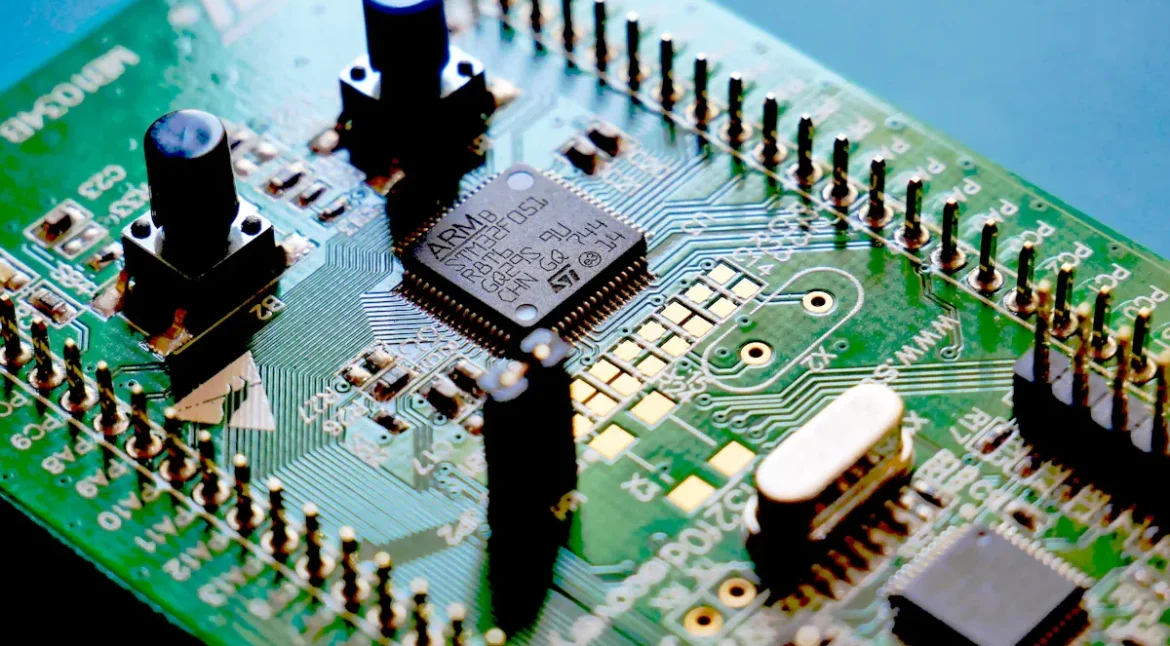
<img src="https://www.gopcba.com/wp-content/uploads/2026/08/electronic-components.jpg" alt="Temperature uniformity checked across a heated plating tank” />
FAQ
Why does the bath read correctly but plate unevenly? Because the sensor measures one point. A bath can be correct at the sensor and several degrees different at the far end of the tank.
How often should immersion heaters be cleaned? On an interval set by the scale that actually forms, checked at the first clean. Hard water and hot baths need shorter intervals.
Can a failed heater contaminate the bath? Yes. When the sheath corrodes, metals leach into the solution, and the resulting deposit problem is often traced to the heater only after the bath has been analysed.


1 Comment
Plating Tank Air Extraction: 5 Rules For Mist Control
[…] the check with the wet line maintenance schedule. Tank hardware such as plating tank heater control affects the plume size, and plating filter pump selection affects how much air is entrained into […]