
Selective Soldering Nozzle Alignment and Maintenance
Selective soldering applies molten solder to one joint at a time through a small nozzle, and it exists because a wave soldering step is unsuitable for a board that already carries surface mount parts on the same side. The nozzle is what makes the process local, and its alignment with the joint is the variable that most often decides the result.
Three inputs have to be controlled together: flux applied to the joint, heat applied to the joint, and solder delivered to the joint. Alignment links the last two, because a nozzle that is off centre heats and fills unevenly. All three are set in the program, and all three drift with the condition of the machine.
How Selective Soldering Works
A solder fountain drives solder from a pot through a nozzle, and the nozzle forms a small standing wave. The board is positioned above the wave so the joint enters it, and solder fills the barrel from below while flux and preheat make the surface wet. The solder is at a fixed temperature, so the joint sees a source that does not cool between cycles.
The cycle is short and it repeats for every joint on the board. A board with several hundred selective joints is therefore a sequence of several hundred small processes, and the repeatability of each matters more than the capability of any single one. A single misaligned joint produces a defect on one board and a defect rate on a thousand.
Nozzle Types and Selection
Nozzles differ in diameter, in the shape of the opening and in whether the flow is single or multi-headed. A nozzle that is too small heats slowly, while one that is too large floods the area and can wet a neighbouring joint. A multi-headed nozzle solders several joints at once and requires the spacing between them to match.
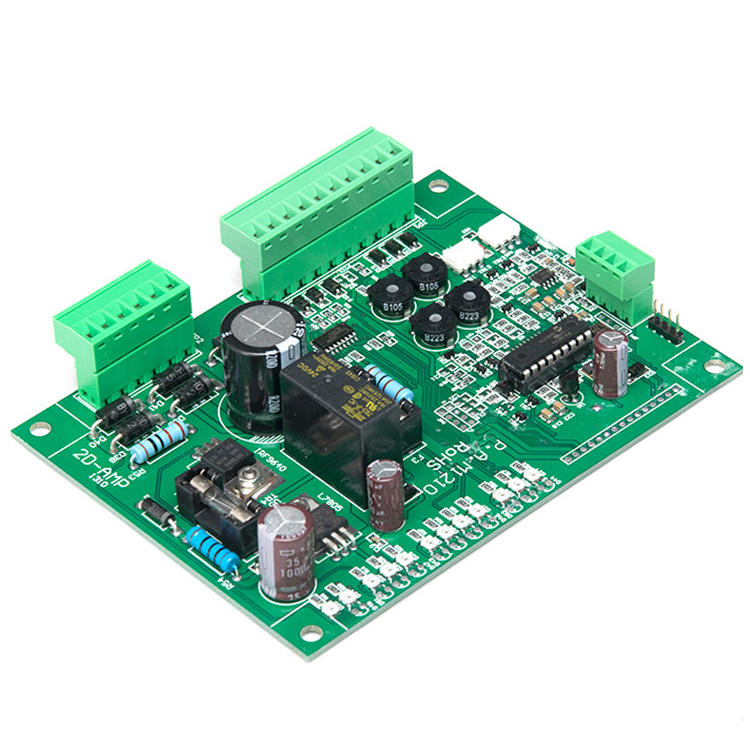
Selection is made against the joint rather than against the component. The diameter has to be larger than the barrel and small enough that the wave does not touch adjacent pads, and the margin between those two limits is the process window. It is measured on the board rather than calculated, because the mask and the paste deposits affect wetting.
Nozzle Alignment to the Joint
Alignment is set in the program and verified with a dry run or with a camera. An error of a few tenths of a millimetre moves the joint off the centre of the wave, which changes both the heat transfer and the fill. The check is repeated after any change to the fixture that holds the board.
The error also changes with temperature, because the machine frame and the nozzle expand as the pot warms. A program taught on a cold machine can be slightly wrong for the first hour of production, and the offset is repeatable enough to be measured. An offset that is measured can be compensated, while one that is not becomes an unexplained defect.
Fountain Height and Contact
The height of the wave above the nozzle decides how deeply the joint enters it. A wave that is too low touches only the bottom of the barrel, while one that is too high climbs the component lead and can reach the body. Depth is measured from the board surface to the top of the wave rather than from the nozzle.
The height is set by the pump and drifts as the nozzle wears and as the solder level in the pot falls. Nozzle condition therefore shows up as a height change before it shows up as a fill defect, and height is easy to check.
Flux Application and Preheat
Flux is applied to the joint before soldering, either by spray or by a small dispenser aimed at the same point. The volume has to be enough to reduce the oxide and small enough that residue does not travel to a neighbouring area. Too little flux leaves an oxide that the wave cannot break through in the contact time available.
Preheat raises the board to a temperature that lets the wave complete the joint in a short contact time. Without it the contact must be longer, and a longer contact exposes the surrounding mask and components to more heat. Preheat also reduces the thermal shock a cold board receives when it meets the wave.
Thermal Profile for a Local Joint
The profile that matters is the one at the joint rather than the one at the board. Contact time and solder temperature together set the peak, and the peak has to be high enough for the barrel to fill and low enough for the mask and nearby parts. The profile is measured with a sensor attached to the barrel rather than to the surface of the board.
A barrel in a thick board takes longer to fill than one in a thin board, so contact time is a function of the product. The fill that results is described in the notes on barrel fill.
Nozzle Maintenance and Cleaning
The nozzle collects oxide and dross on its inner surface, and that deposit changes the shape of the wave. Cleaning is scheduled, and the interval is set by the solder alloy and by the atmosphere above the pot. Dross forms faster when the wave is exposed to air, which is one argument for a nitrogen blanket.
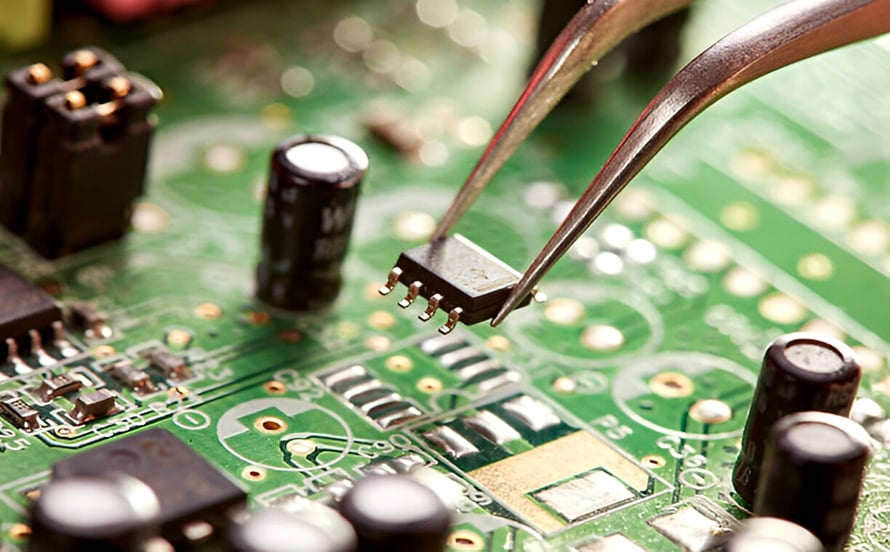
A nozzle cleaned aggressively can be damaged at the lip, and that damage produces a wave that is not symmetric. The shape is checked by looking at the wave directly rather than by inspecting the joints.
Common Defects and Their Causes
Incomplete fill at the top of the barrel points to insufficient heat or to a wave that is too low. Solder on the surrounding mask points to a wave that is too high or to a nozzle that is too large for the spacing. The two failures are corrected in opposite directions, which is why the distinction is worth making.
Bridging between adjacent pins follows from a nozzle that reaches both at once, and it is a spacing problem rather than a thermal one. The solder itself can also cause defects, and the checks are described in the notes on solder bar purity.
Records and Verification
Verification covers the alignment position, the wave height, the pot temperature, the contact time and the fill on a sample. A first article across the range of joint types on the board is more useful than one taken on a single joint. The fill is inspected from the solder side and confirmed by a section on the first article.
Alignment and height are rechecked after a nozzle change and after any work on the pump. The contact between wave and joint is the same question as in wave soldering, and it is described in the notes on wave height and contact.
FAQ
Does a larger nozzle fill faster? It delivers more heat and it also reaches further, so it can wet a neighbouring joint. Size is chosen against the spacing, not against the fill time.
Can the alignment be set on a cold machine? It can be taught cold and it should be verified hot, because the frame and the nozzle expand as the pot warms.
How often should a nozzle be cleaned? On a schedule set by the alloy and the pot atmosphere, and whenever the shape of the wave changes.