What Is an Alumina PCB?
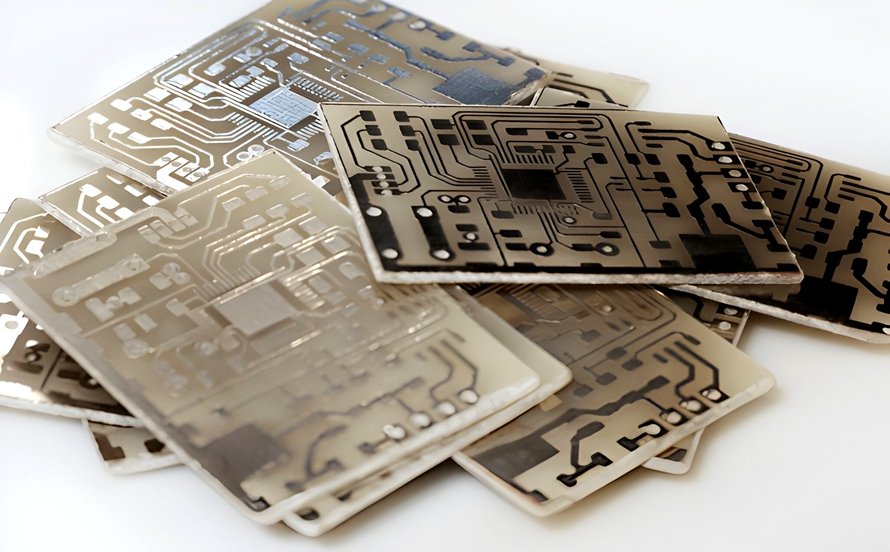
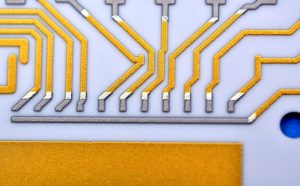
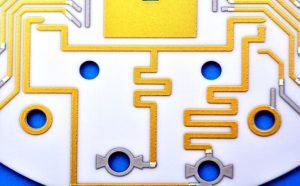
An Alumina PCB is a type of ceramic printed circuit board that uses aluminum oxide (Al₂O₃) as its primary substrate material. As one of the most widely used ceramic materials, alumina provides an effective balance of thermal performance, electrical insulation, chemical resistance, mechanical stability, and cost.
Compared with conventional FR-4 circuit boards, an Alumina PCB is particularly suitable for applications that require high thermal conductivity, stable electrical performance, elevated-temperature operation, or resistance to demanding environmental conditions.
Alumina ceramic substrates are commonly available in different purity grades, with 96%, 99%, and 99.6% alumina being widely used options. Higher purity does not automatically mean better performance for every application, so the appropriate grade should be selected according to thermal, electrical, mechanical, and manufacturing requirements.
Types of Alumina PCBs
96% Alumina PCB
96% alumina is one of the most commonly used ceramic substrate materials. It provides a good balance between thermal conductivity, mechanical strength, electrical insulation, manufacturability, and cost.
Because of its relatively good availability and cost-effectiveness, 96% alumina is widely used in LED modules, power electronics, sensors, industrial equipment, and general ceramic circuit board applications.
99% Alumina PCB
99% alumina provides higher material purity than standard 96% alumina. Depending on the material system and manufacturing process, it can provide improved electrical insulation, dimensional stability, and material consistency.
It is generally selected for applications with more demanding electrical or mechanical requirements where the additional material cost is justified.
99.6% Alumina PCB
99.6% alumina is a high-purity ceramic substrate used for specialized electronic applications. Its high purity provides excellent electrical insulation, chemical stability, and dimensional consistency.
Because higher-purity alumina generally involves higher material and processing costs, it is normally selected when the application requires specific performance characteristics rather than simply choosing the highest purity available.
Key Properties of an Alumina PCB
An Alumina PCB offers a combination of ceramic properties that makes it suitable for high-power, high-temperature, RF, industrial, and other demanding electronic applications.
High Thermal Conductivity
Alumina typically provides thermal conductivity in the approximate range of 20–30 W/m·K, depending on purity, formulation, and manufacturer. This is substantially higher than conventional FR-4, which typically has thermal conductivity around 0.2–0.4 W/m·K.
The higher thermal conductivity of an Alumina PCB allows heat generated by power components to move more efficiently through the substrate, helping reduce thermal accumulation and improve system reliability.
Excellent Thermal Stability
Alumina maintains good dimensional, mechanical, and electrical stability over a wide temperature range. Its relatively low coefficient of thermal expansion also helps reduce dimensional changes caused by temperature fluctuations.
The actual operating temperature of a finished Alumina PCB depends on the entire system, including the ceramic substrate, copper metallization, solder materials, components, surface finish, and assembly process.
Very Low Moisture Absorption
Alumina ceramic has extremely low moisture absorption. This helps maintain stable dielectric properties and electrical insulation in humid or environmentally demanding applications.
Low moisture absorption can also contribute to long-term dimensional stability and reliability.
High Mechanical Strength
Alumina has good compressive strength and excellent dimensional stability. However, unlike FR-4 and flexible PCB materials, alumina is a rigid and brittle ceramic.
Therefore, the PCB design and assembly process must minimize excessive bending, impact, and mechanical stress.
High Density
The density of alumina is generally around 3.6–3.9 g/cm³, depending on the material grade. This is considerably higher than the typical density of FR-4, which is approximately 1.8–1.9 g/cm³.
Although the higher density may increase the weight of an assembly, it is accompanied by excellent thermal and electrical properties.
Excellent Chemical Resistance
Alumina is chemically stable and resistant to many solvents and corrosive environments. This makes an Alumina PCB suitable for industrial applications where exposure to chemicals, moisture, or harsh operating conditions is possible.
High Dielectric Constant
The relative dielectric constant of alumina is generally around 9–10, depending on material grade and measurement conditions. This is higher than that of conventional FR-4.
A high dielectric constant can be useful in certain compact and high-frequency circuit structures. However, designers must evaluate impedance, dielectric thickness, trace geometry, frequency, and signal propagation together rather than treating dielectric constant as an independent performance indicator.
Low Dissipation Factor
Alumina can provide relatively low dielectric loss, which is beneficial for selected RF and microwave applications. The actual dissipation factor depends on substrate composition, purity, frequency, temperature, and test conditions.
Low dielectric loss can help reduce signal attenuation and support stable high-frequency performance.
Benefits of Using an Alumina PCB
Excellent Thermal Management
One of the most important advantages of an Alumina PCB is its ability to transfer heat efficiently. Alumina provides a much more thermally conductive path than conventional organic PCB materials.
This makes it particularly useful for power semiconductors, high-power LEDs, power converters, sensors, and other heat-generating electronic components.
High Thermal Stability
An Alumina PCB can maintain its structural and electrical characteristics under elevated temperatures and repeated thermal cycling.
This characteristic is especially valuable for applications where conventional organic substrates may experience greater thermal expansion or degradation.
Excellent Electrical Insulation
Alumina combines good thermal conductivity with strong electrical insulation. This is an important advantage for high-power electronics because the substrate can help transfer heat while maintaining electrical isolation between conductive structures.
Suitable for High-Power Applications
High-power electronic systems require efficient heat dissipation and reliable electrical insulation. Alumina PCBs can meet these requirements in many power electronics applications.
They are commonly considered for power modules, converters, inverters, semiconductor assemblies, and high-power LED systems.
Good Dimensional Stability
The relatively low coefficient of thermal expansion of alumina helps maintain dimensional stability during temperature changes. This can contribute to reliable interconnections when the PCB, components, and assembly materials are properly matched.
Strong Chemical and Environmental Resistance
The low moisture absorption and chemical stability of alumina allow Alumina PCBs to operate in many demanding industrial environments.
They can be considered for equipment exposed to humidity, solvents, temperature fluctuations, and other environmental stresses.
Suitable for RF and Microwave Applications
The stable dielectric characteristics and relatively low dielectric loss of alumina make it suitable for selected RF and microwave circuit designs.
An Alumina PCB can be used in RF modules, microwave circuits, communication equipment, sensors, and other high-frequency electronic systems.
Long-Term Reliability
The combination of thermal stability, chemical resistance, low moisture absorption, and electrical insulation can provide excellent long-term reliability when the PCB is correctly designed, manufactured, and assembled.
Limitations of an Alumina PCB
Despite its advantages, an Alumina PCB is not suitable for every electronic application.
Higher Cost Than FR-4
Alumina ceramic substrates are generally more expensive than standard FR-4 materials. The higher material cost and specialized manufacturing processes can increase the overall PCB cost.
For ordinary consumer electronics and cost-sensitive products, FR-4 may remain the more economical choice.
More Complex Manufacturing
Alumina PCB Manufacturing requires specialized equipment and processes. Depending on the circuit structure, manufacturers may use thick-film, thin-film, DBC, DPC, or other ceramic metallization technologies.
These processes require careful control of material preparation, metallization, thermal treatment, circuit formation, and inspection.
Brittle Substrate
Alumina is rigid and brittle. Excessive mechanical stress, bending, impact, or improper handling can cause cracks or substrate damage.
Designers should therefore pay close attention to mounting structures, board handling, hole locations, thermal stress, and mechanical loads.
More Challenging Large-Panel Processing
Compared with conventional organic PCB laminates, ceramic substrates can be more challenging to process in large panel formats. Material handling, thermal processing, dimensional control, and metallization requirements can affect manufacturing efficiency.
Lower Thermal Conductivity Than Aluminum Nitride
Although alumina provides good thermal conductivity, it does not match the thermal performance of some advanced ceramic materials.
For example, aluminum nitride (AlN) can achieve thermal conductivity well above 100 W/m·K in suitable grades. Therefore, AlN may be a better choice for extremely high-power applications where maximum heat dissipation is the primary requirement.
Alumina PCB Manufacturing Process
The specific Alumina PCB Manufacturing process depends on the ceramic grade, circuit structure, metallization technology, and application requirements.
A typical process may include the following steps:
1. Ceramic Substrate Selection
The manufacturer selects the appropriate alumina purity, thickness, and material grade based on thermal conductivity, dielectric requirements, mechanical requirements, and operating conditions.
2. Substrate Preparation
The ceramic surface is cleaned and prepared to provide a suitable surface for metallization and circuit formation.
3. Metallization
A conductive metal layer is formed on the ceramic substrate. Depending on the application, manufacturers may use thick-film printing, thin-film deposition, Direct Bonded Copper (DBC), Direct Plated Copper (DPC), or other metallization technologies.
4. Circuit Pattern Formation
The required circuit pattern is created through processes such as screen printing, photolithography, etching, plating, or other pattern-forming techniques.
The selected process determines the achievable conductor width, spacing, copper thickness, and circuit density.
5. Via and Hole Processing
If the design requires holes or vias, ceramic-compatible drilling or laser processing may be used.
The achievable feature size depends on the substrate thickness, ceramic material, manufacturing technology, and production requirements.
6. Surface Finish
A suitable surface finish may be applied depending on the final assembly process. The surface finish can affect solderability, wire bonding, corrosion resistance, and long-term reliability.
7. Inspection and Testing
The finished Alumina PCB should undergo appropriate visual, dimensional, electrical, and reliability inspections.
For high-power or high-frequency products, additional thermal and electrical verification may also be required.
Alumina PCB vs. FR-4 PCB
The choice between an Alumina PCB and an FR-4 PCB depends on the application’s thermal, electrical, mechanical, and cost requirements.
| Feature | Alumina PCB | FR-4 PCB |
|---|---|---|
| Substrate | Alumina ceramic | Glass-reinforced epoxy laminate |
| Thermal conductivity | High | Relatively low |
| Electrical insulation | Excellent | Excellent |
| Moisture absorption | Very low | Higher than ceramic |
| Temperature stability | Excellent | Application-dependent |
| Mechanical behavior | Rigid and brittle | More mechanically tolerant |
| Cost | Higher | Lower |
| High-power suitability | Excellent | Requires additional thermal design |
| RF/microwave suitability | Good for selected applications | Depends on material grade |
| Manufacturing complexity | Higher | Mature and economical |
For general-purpose electronic products, FR-4 remains a highly economical PCB material. For thermally demanding, high-power, high-temperature, and specialized RF applications, an Alumina PCB can provide important performance advantages.
Applications of an Alumina PCB
The combination of thermal conductivity, electrical insulation, chemical resistance, and temperature stability makes Alumina PCB Applications particularly diverse.
LED PCB Applications
High-power LEDs generate significant heat during operation. If this heat is not effectively dissipated, excessive junction temperature can reduce LED efficiency and service life.
An Alumina PCB can provide efficient heat transfer while maintaining electrical insulation, making it suitable for high-power LED modules, lighting equipment, optical systems, and specialized illumination products.
High-Power Electronics
High-power electronics require efficient thermal management and reliable electrical insulation.
Alumina PCB Applications include power converters, inverters, semiconductor modules, power supplies, and other high-power electronic systems where thermal performance is a major design consideration.
Automotive Electronics
Automotive electronic systems can experience high temperatures, vibration, thermal cycling, and mechanical stress.
An Alumina PCB can be considered for selected automotive sensors, power electronics, engine-related electronics, and other applications requiring strong thermal and environmental stability.
RF and Microwave Applications
Ceramic substrates are widely used in selected RF and microwave applications because of their stable dielectric properties and relatively low dielectric loss.
Typical Alumina PCB Applications include RF modules, microwave circuits, communication equipment, sensors, and specialized wireless systems.
Industrial Electronics
Industrial equipment may operate continuously in environments involving elevated temperatures, humidity, chemicals, vibration, or other environmental stresses.
The chemical stability and thermal performance of alumina make it suitable for selected industrial control systems, sensors, instrumentation, and power electronics.
Semiconductor and Power Modules
An Alumina PCB can serve as a thermally conductive and electrically insulating substrate in selected semiconductor packaging and power module applications.
This combination is valuable when electrical isolation and heat dissipation must be achieved within a compact structure.
How to Select the Right Alumina PCB
When selecting an Alumina PCB, engineers should evaluate the complete application rather than choosing the substrate only by ceramic purity.
Important factors include:
- Alumina purity and ceramic grade
- Substrate thickness
- Thermal conductivity
- Dielectric constant and dissipation factor
- Coefficient of thermal expansion
- Copper thickness
- Minimum trace width and spacing
- Via and hole requirements
- Operating temperature
- Power density
- Heat dissipation requirements
- Surface finish
- Assembly technology
- RF impedance requirements
- Mechanical dimensions
- Mounting and mechanical stress conditions
- Required reliability level
The best substrate is the one that provides the required electrical and thermal performance while maintaining manufacturing feasibility and acceptable cost.
Kingda: Professional Alumina PCB Manufacturing Support
Reliable manufacturing is particularly important for ceramic circuit boards because material selection, metallization, dimensional control, and thermal processing can directly affect final product performance.
Kingda provides professional PCB manufacturing and engineering support for customized ceramic circuit board requirements. Our approach focuses on manufacturability, process control, material selection, and consistent product quality.
For Alumina PCB Manufacturing projects, Kingda can support customers in evaluating substrate requirements, circuit structures, thermal considerations, metallization options, and production requirements.
Whether the project involves an LED module, power electronics system, automotive electronic product, RF circuit, microwave device, or industrial application, selecting the correct ceramic substrate and manufacturing process is essential for achieving reliable performance.
Conclusion
An Alumina PCB combines high thermal conductivity, excellent electrical insulation, chemical resistance, low moisture absorption, dimensional stability, and good high-temperature performance.
These characteristics make alumina one of the most practical and widely used ceramic substrate materials for demanding electronic applications.
Although an Alumina PCB generally costs more than FR-4 and requires more specialized manufacturing processes, its thermal and environmental performance makes it particularly valuable for high-power electronics, LED systems, automotive electronics, industrial equipment, RF and microwave circuits, and semiconductor applications.
With proper material selection and professional Alumina PCB Manufacturing, designers can achieve a balanced combination of thermal performance, electrical reliability, mechanical stability, and manufacturing efficiency.
Kingda can provide professional support for customized ceramic PCB projects and help customers select an appropriate solution based on their specific application requirements.