What Is a Control PCB?
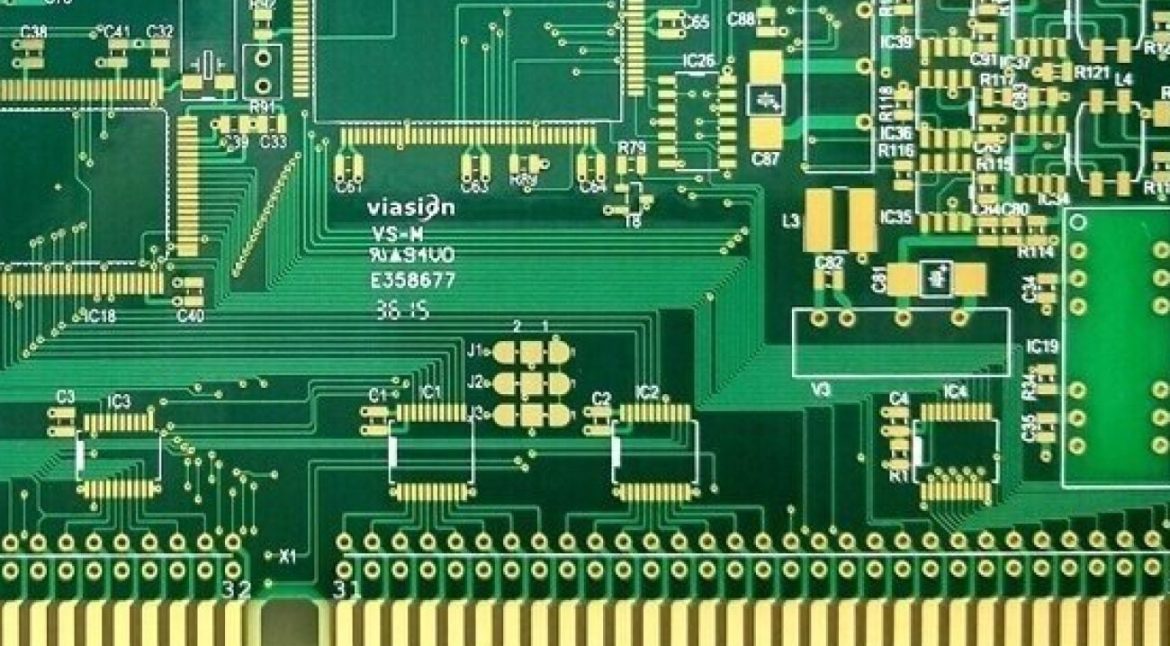
A Control PCB, also known as a control printed circuit board, is a specialized circuit board designed to control, monitor, and regulate electronic systems and equipment. It serves as the central electronic platform that receives input signals, processes data, and sends control commands to other components.
In many modern electronic products, the control PCB functions as the “brain” of the system. It can manage sensors, motors, switches, displays, communication interfaces, power circuits, and other functional modules.
A typical control PCB consists of conductive copper layers separated by insulating dielectric materials. Electrical connections are established through copper traces, vias, pads, and soldered components. Depending on the complexity of the application, control boards may range from simple single- or double-sided PCBs to sophisticated multilayer boards.
Many control applications use 2- to 8-layer PCBs. More complex products may require 10-, 12-, or even 20+ layer boards with fine-pitch traces, microvias, blind vias, buried vias, and other high-density interconnect technologies. In demanding applications, an HDI PCB can provide greater routing density while reducing the overall board size.
A Controller PCB can integrate microcontrollers, processors, memory, sensors, power-management circuits, communication interfaces, and other electronic components onto a compact platform. This integration simplifies system architecture and can improve reliability, manufacturing efficiency, and product scalability.
Customized control PCBs are widely used because different applications have different voltage, current, processing, communication, mechanical, and environmental requirements.
Advantages of Control PCBs
Control PCBs provide several important advantages in modern electronic systems.
Improved Reliability
A properly designed Control Circuit Board provides stable electrical connections and organized component integration. Appropriate material selection, PCB layout, component quality, and manufacturing controls can improve long-term reliability.
Reduced Power Consumption
Control PCBs can incorporate efficient power-management circuits, voltage regulators, switching devices, and intelligent control functions.
By optimizing the power architecture, designers can reduce unnecessary energy consumption and improve overall system efficiency.
Enhanced Functionality
A controller PCB can integrate multiple functions into a single electronic platform.
For example, one board may simultaneously handle sensor data acquisition, motor control, user input, communication, power management, and system diagnostics.
Flexible Design
PCB technology provides considerable flexibility in component placement, board dimensions, layer configuration, circuit architecture, and interface design.
This allows manufacturers to develop customized control solutions for products with different mechanical and electrical requirements.
Compact System Integration
Multilayer and HDI technologies allow designers to accommodate more circuitry within a smaller area.
This is particularly important for portable electronics, automotive systems, medical equipment, and industrial control products where available space is limited.
Easier Manufacturing and Maintenance
Integrating multiple control functions onto a PCB can reduce wiring complexity and simplify assembly.
With standardized connectors, test points, and modular board structures, maintenance and troubleshooting can also become more efficient.
Applications of Control PCBs
Control PCBs are used across consumer electronics, industrial equipment, automotive systems, medical devices, building automation, and many other industries.
Automotive Control Systems
Automotive electronics rely heavily on control PCBs.
They can be used in:
- Engine control systems
- Transmission control systems
- Battery management systems
- Electric vehicle control systems
- Lighting systems
- Infotainment systems
- Sensor modules
- Charging systems
- Driver-assistance systems
- Safety and body-control systems
Automotive control boards must often withstand vibration, temperature fluctuations, electrical transients, humidity, and long operating periods.
Consumer Electronics
Control PCBs are found in many everyday electronic products, including:
- Smartphones
- Televisions
- Game consoles
- Laptops
- Smartwatches
- Wireless headphones
- Smart-home devices
- Household appliances
- Remote-control systems
These boards coordinate different electronic functions and enable communication between sensors, processors, user interfaces, and actuators.
Industrial Automation
Industrial automation is one of the most important application areas for Controller PCB technology.
Control boards can be used to operate and monitor:
- Motors
- Pumps
- Fans
- Valves
- Robotic systems
- Conveyor systems
- Industrial sensors
- Programmable control systems
- Automated production equipment
A controller receives information from sensors or user commands, processes the input according to programmed logic, and generates control signals for the relevant equipment.
Medical Equipment
Control PCBs are also used in medical and diagnostic equipment.
Applications may include:
- Imaging systems
- X-ray equipment
- Patient-monitoring equipment
- Infusion pumps
- Laboratory instruments
- Diagnostic equipment
- Medical control systems
Medical electronics require strict attention to electrical safety, reliability, traceability, and manufacturing quality.
Building Automation
Control boards are used in modern building-management systems to coordinate equipment such as:
- HVAC systems
- Lighting
- Access control
- Security systems
- Elevators
- Escalators
- Energy-management systems
- Environmental monitoring systems
These systems can collect information from sensors and automatically adjust equipment according to predefined conditions.
Transportation and Traffic Control
Control PCBs can also be found in:
- Traffic signal systems
- Railway control equipment
- Parking systems
- Transportation monitoring systems
- Vehicle charging systems
- Access-control equipment
Reliable control electronics are essential when equipment must operate continuously and respond accurately to external inputs.
Industrial and Power Control
Control PCBs are widely used for:
- Power-management systems
- Industrial controllers
- Test and measurement equipment
- Energy-management systems
- Motor controllers
- Process-control systems
- Automated inspection equipment
They can combine sensing, processing, communication, and control functions into a single platform.
Typical Control PCB Functions
A control PCB may perform several functions simultaneously depending on the application.
Signal Acquisition
Sensors provide information about temperature, pressure, current, voltage, position, speed, or other physical parameters.
The PCB receives and conditions these signals before sending them to the processing unit.
Data Processing
A microcontroller, processor, FPGA, or other computing device processes input signals according to programmed logic.
The processing stage determines how the system should respond to changing operating conditions.
Actuator Control
After processing input information, the PCB can generate control signals for motors, relays, valves, LEDs, power devices, and other actuators.
Communication
Modern control boards frequently support communication interfaces such as:
- CAN
- RS-232
- RS-485
- Ethernet
- USB
- SPI
- I²C
- UART
- Wireless communication
The appropriate interface depends on system architecture and application requirements.
Power Management
A control PCB may also contain power-conversion and regulation circuits to provide appropriate voltage levels for processors, sensors, communication devices, and other components.
Factors to Consider When Selecting a Control PCB
Selecting a suitable control PCB requires evaluating the electrical, mechanical, environmental, and functional requirements of the final product.
1. Reliability
Reliability should be one of the highest priorities.
The PCB should be able to operate consistently under its specified temperature, humidity, vibration, electrical-load, and service-life conditions.
Material quality, component selection, PCB construction, soldering quality, and testing procedures all contribute to reliability.
2. Cost
Cost should be evaluated together with performance and reliability.
The lowest initial PCB price is not necessarily the most economical solution. Material quality, manufacturing yield, assembly requirements, testing, maintenance, and product lifetime can all affect the total cost of ownership.
3. Power Requirements
Different control systems require different power architectures.
A compact wearable device may operate at low voltage and low current, while an industrial controller may need to manage significantly higher voltages and currents.
Designers should evaluate:
- Input voltage
- Output voltage
- Maximum current
- Power consumption
- Voltage regulation
- Protection requirements
- Thermal performance
4. Processing and Memory Requirements
The required processing capability depends on the complexity of the application.
A simple controller may only require a basic microcontroller, while advanced industrial, automotive, or communication systems may require a high-performance processor, FPGA, or additional memory.
Designers should consider:
- CPU performance
- RAM
- Flash memory
- Storage requirements
- Processing speed
- Real-time requirements
- Future firmware expansion
5. Ease of Use and Maintenance
A control board should be designed to facilitate installation, debugging, maintenance, and replacement.
Clearly labeled connectors, accessible test points, diagnostic interfaces, and modular architecture can simplify troubleshooting and maintenance.
6. Compatibility
The controller must be compatible with other hardware and software within the system.
Important compatibility considerations include:
- Voltage levels
- Communication protocols
- Connector types
- Firmware
- Sensors
- Actuators
- Operating systems
- Mechanical dimensions
Compatibility should be verified during the design stage rather than after PCB production.
7. Environmental Requirements
The operating environment can have a significant impact on PCB design.
For harsh environments, designers may need to consider:
- High and low temperatures
- Humidity
- Dust
- Chemicals
- Vibration
- Mechanical shock
- Electromagnetic interference
- Corrosive environments
Protective coatings, conformal coatings, sealed enclosures, and specialized materials may be required for certain applications.
Key Control PCB Design Considerations
The performance of a control board depends heavily on its PCB design.
Component Placement
Components should be arranged according to signal flow, power distribution, thermal requirements, and mechanical constraints.
High-power components should be separated from temperature-sensitive components whenever possible.
Critical components should be placed where their electrical connections can remain short and direct.
Power and Ground Design
A stable power-distribution network is essential for control electronics.
Sensitive processors and analog circuits may require clean power supplies and carefully designed ground-return paths.
Poor grounding can increase noise, create ground loops, and interfere with sensor measurements or communication signals.
Signal Integrity
High-speed digital signals and sensitive analog signals require careful routing.
Designers should consider:
- Trace impedance
- Trace length
- Return paths
- Crosstalk
- Differential-pair routing
- Ground planes
- Via transitions
For advanced systems, simulation and signal-integrity analysis may be necessary.
Thermal Design
Heat-generating components should have an appropriate thermal path.
Depending on power requirements, the PCB may use:
- Larger copper areas
- Thermal vias
- Thick copper
- Heat sinks
- Metal-core structures
- Forced-air cooling
Thermal performance should be evaluated together with the enclosure and overall system cooling strategy.
Electromagnetic Compatibility
Control PCBs can contain high-speed clocks, switching power supplies, motors, communication interfaces, and other potential noise sources.
Good layout practices can reduce electromagnetic interference (EMI).
Designers should minimize high-current loop areas, separate noisy and sensitive circuits, optimize grounding, and control high-speed signal return paths.
Custom Control PCB Solutions
Different applications require different PCB structures.
A Custom PCB can be designed according to specific requirements such as:
- Board dimensions
- Layer count
- Copper thickness
- Material type
- Component density
- Operating voltage
- Current capacity
- Impedance requirements
- Thermal requirements
- Connector configuration
- Environmental conditions
For compact and high-density products, an HDI PCB may be selected to accommodate more routing within a smaller footprint.
For high-current applications, thick-copper PCB technology can increase current-carrying capability and reduce conductor resistance.
For applications requiring strong thermal performance, aluminum or other metal-core structures may be appropriate.
Control PCB Assembly
PCB fabrication is only one part of the manufacturing process. PCB Assembly is equally important because component placement and soldering quality directly affect the final product.
Control PCB assembly may involve:
- Surface-mount technology (SMT)
- Through-hole technology (THT)
- Automated optical inspection (AOI)
- X-ray inspection
- Automated component placement
- Reflow soldering
- Selective soldering
- Functional testing
- In-circuit testing
For high-reliability applications, manufacturing controls should be established according to the product’s technical and quality requirements.
Testing and Quality Control
A reliable control PCB should undergo appropriate inspection and testing before shipment.
Depending on the application, testing may include:
- Visual inspection
- Electrical continuity testing
- Insulation resistance testing
- Flying-probe testing
- In-circuit testing
- Functional testing
- Power-on testing
- Thermal testing
- Communication testing
- Environmental testing
For automotive, medical, industrial, and other demanding applications, additional qualification and reliability testing may be required.
Why Choose Kingda for Control PCB Manufacturing?
Kingda provides PCB manufacturing and assembly solutions for control electronics used in different industries and applications.
1. Quality-Focused Manufacturing
Control boards often perform critical system functions, making manufacturing consistency extremely important.
Kingda can implement appropriate process controls, inspection procedures, and quality-management practices to help maintain stable production quality.
2. Customized Manufacturing
Every control system has different requirements.
Kingda can support customized PCB solutions involving different layer counts, board sizes, materials, copper thicknesses, component densities, and electrical specifications.
3. Advanced PCB Technologies
Complex control electronics may require multilayer construction, high-density routing, controlled impedance, blind and buried vias, or HDI PCB technology.
These technologies can help designers achieve greater circuit density without unnecessarily increasing board dimensions.
4. PCB Assembly Support
In addition to PCB fabrication, Kingda can support PCB Assembly requirements for prototype development and production.
Integrated fabrication and assembly can simplify supplier management and help maintain consistency between PCB specifications and assembly requirements.
5. Engineering Support
Control PCB projects often involve electrical, mechanical, thermal, and manufacturing considerations.
Engineering review can help identify potential issues related to component placement, manufacturability, thermal management, signal integrity, and assembly before production.
Tools Used for Control PCB Design
Modern control PCB development relies on several categories of engineering tools.
PCB Design Software
EDA software is used to create schematics, perform component management, develop PCB layouts, conduct design-rule checks, and generate manufacturing files.
Common platforms include Altium Designer, Cadence OrCAD, KiCad, and other professional PCB design systems.
Simulation and Analysis Tools
Simulation tools can be used to evaluate circuit behavior before manufacturing.
Depending on the application, engineers may perform:
- SPICE simulation
- Signal-integrity analysis
- Power-integrity analysis
- Thermal analysis
- Electromagnetic analysis
Simulation can help identify potential problems earlier in the development process.
Prototype and Test Equipment
Prototype boards should be tested under realistic operating conditions.
Test equipment may include oscilloscopes, multimeters, electronic loads, power supplies, logic analyzers, thermal cameras, and specialized functional test fixtures.
Conclusion
A Control PCB is a fundamental component of modern electronic systems. It acts as the central platform for processing signals, managing power, controlling devices, and communicating with other system components.
From consumer electronics and automotive systems to industrial automation and medical equipment, control boards enable increasingly sophisticated electronic functions while maintaining compact and reliable system architectures.
Successful control PCB development requires careful consideration of processing requirements, power architecture, PCB materials, component placement, thermal management, signal integrity, EMI control, manufacturability, and testing.
For compact and complex systems, multilayer and HDI PCB technologies can provide higher routing density. For demanding applications, customized materials, thicker copper, enhanced thermal structures, and advanced assembly processes may be required.
By combining appropriate PCB Assembly, manufacturing controls, engineering support, and customized production capabilities, Kingda can provide reliable PCB solutions for a wide range of control applications.