
PCB Industry Past 100 Billion Dollars: Where the Growth Comes From
Industry analysis published in September 2026 estimated global printed circuit board output at 92.36 billion United States dollars in 2025, an increase of 15.4 percent, and projected 105.2 billion dollars in 2026, growth of 13.9 percent, taking the industry past one hundred billion dollars for the first time. The analysis notes that the driver differs from previous cycles: instead of smartphones and personal computers, growth now comes from artificial intelligence servers, high performance computing and high-speed communication. For the PCB industry, those figures describe a market that has already passed the hundred billion dollar mark.
The distinction matters because it changes what the industry is selling. Consumer electronics demand increases the number of boards, mostly at mature technology nodes where competition is intense and margins are thin. AI infrastructure demand increases the value of each board, because the boards are larger, denser, made from more expensive materials and produced in much smaller quantities per square metre of capacity.
An industry growing on value per unit behaves differently from one growing on unit count, and the differences show up in investment, pricing and the competitive position of individual manufacturers.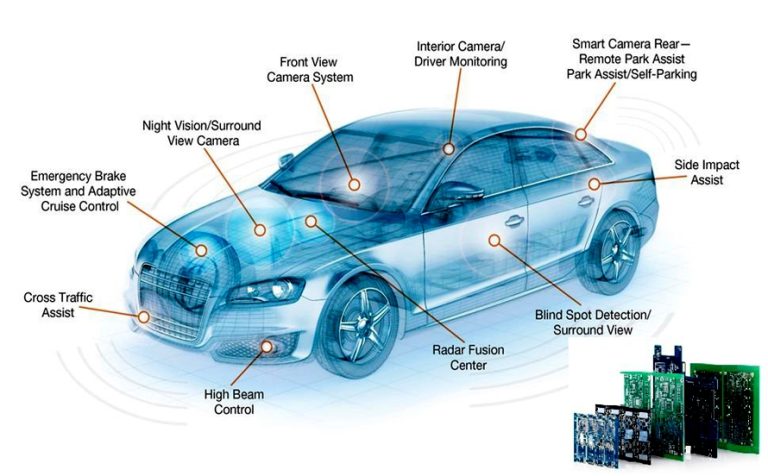
Growth by Value Rather Than Volume
A server board for an AI platform may contain several times the material and process content of a conventional server board, and it may sell for a multiple of the price. The same panel capacity that once produced many low-value boards now produces fewer high-value ones, which means revenue can grow without a proportional increase in physical output.
The first consequence is that capacity alone stops being the measure of a manufacturer’s position. A factory with a large installed base of mature process capability is not automatically advantaged, because the demand is concentrated in a capability class it may not possess.
The second consequence is pricing stability at the top of the range. Where a board is difficult to produce and few suppliers can produce it consistently, price holds even as total market growth slows elsewhere. That is the mechanism by which a mature industry can sustain margin improvements during a technology transition.
Regional distribution of the growth is uneven. Advanced board capacity is concentrated in a small number of locations, and the investment needed to build it is large enough that it tends to follow existing clusters of material supply, engineering talent and customers. That concentration makes the capacity constraint more local than global statistics suggest, and it means lead times can be tight in one region while capacity appears idle in another.
Finally, the measurement of success in this industry is shifting. Revenue per square metre of production, yield on advanced stacks and the share of revenue from high-speed products are becoming more informative than total output. Companies that track those measures, and that invest against them, are better positioned than those that continue to report only area and units.
What the High-Value Boards Require
The boards driving this shift share a set of requirements. They use low-loss or ultra-low-loss laminates, which are more expensive and less available than standard material. They carry many layers, which increases registration difficulty and materials consumption. They require impedance control with tight tolerances on multiple interfaces. And they are large, which magnifies the effect of any flatness or warpage problem.
They also require process discipline that is measured rather than asserted. A board with fifty or more layers, launched on 224 gigabit channels, cannot be validated by a single qualification run; the customer needs production data on impedance, alignment and plating quality that shows the process holds across a production period.
That requirement changes the supplier relationship. Where a conventional board can be purchased from several factories on price, an advanced board is bought from a factory that has demonstrated a specific capability, and the qualification effort is shared between the two parties over months.
Investment Follows the Constraint
Capital spending in the industry has concentrated on the steps that limit advanced production. Fine-line imaging, laser drilling, high-layer lamination, low-loss material handling and inspection capability have all attracted investment because they are what stands between a factory and the highest-value work.
Material investment has followed the same logic. Laminate and glass fabric capacity has been expanded, and prices for several key materials have risen repeatedly, because the industry’s ability to ship advanced boards depends on the availability of those inputs rather than on drilling capacity alone.
For an individual manufacturer, the practical question is which constraint it intends to relieve. Adding capacity for work it already does well improves throughput but not margin; adding capability for work it cannot currently win changes its competitive position. The second is harder and slower, and it is where the durable returns in this cycle are.
The Consumer Side Does Not Disappear
While the growth story has shifted to infrastructure, consumer electronics remain a large part of the industry by volume. Phones, wearables, appliances and automotive electronics all continue to consume boards, and their requirements keep rising as products become more compact and more connected.
The difference is the direction of pricing pressure. Consumer products compete on cost, so their boards are subject to continuous cost reduction, while infrastructure boards operate in a market where capability, not price, decides the award. Manufacturers serving both segments must run two quite different operating models under one quality system.
That combination is not impossible, and it is in fact common among larger manufacturers, but it requires discipline. Cost-driven work rewards standardisation and yield optimisation; capability-driven work rewards investment, engineering depth and documentation. Managers who apply the habits of one to the other usually underperform in both.
Employment and skills follow a similar pattern. Advanced board manufacturing needs process engineers who understand laminate behaviour, plating chemistry and registration control, and those skills take years to develop. A factory can install equipment in months, but building the team that runs it well takes considerably longer, which is one reason new capacity does not immediately translate into qualified output.
What This Means for Procurement
Buyers of advanced boards should expect continued tightness in the capability class that matters to them, even if the overall market appears to have ample capacity. The relevant supply is not the total, it is the subset of factories that can meet the specification at an acceptable yield.
That argues for earlier engagement, longer forecast horizons and more willingness to share design information. A factory that understands what the next board will require can prepare its process, and preparation is what determines whether a programme starts on time.
It also argues for evaluating suppliers on evidence. Impedance data from production panels, alignment trends, cross-section results and yield history for comparable stacks tell a buyer far more than a capability brochure, and they are the natural outputs of a disciplined quality system.
There is also a customer concentration risk in the current cycle. A significant share of advanced demand comes from a relatively small number of platform owners, so a delay in one programme can affect several suppliers at once. Manufacturers with a spread of customers across infrastructure, automotive and industrial segments are less exposed to that risk than those concentrated in a single platform.
The distribution of value inside a board also matters. Copper, laminate, solder mask and surface finish account for the materials, but the price difference between a standard and an advanced board comes mainly from process steps and yield risk. Buyers comparing quotations across technologies should therefore compare process content rather than the material list, because two boards with similar bills of materials can differ substantially in what it costs to build them reliably.
One practical measure of the shift is the share of revenue a manufacturer earns from products above a certain technical threshold. Companies that report that figure, and that show it rising, are demonstrating that their investment is converting into advanced work. Companies that report only total revenue give no indication of whether they are positioned for the next generation of demand.
Finally, the industry’s own expectations have changed. A decade ago market forecasts were driven by unit shipments of consumer devices; today they are driven by capital spending on computing infrastructure and by the technical difficulty of the boards involved. That is a healthier basis for growth, because it rewards capability rather than scale, but it also ties the industry more closely to a small number of investment cycles.
Where the Next Growth Step Comes From
If the current trajectory continues, the next threshold will be reached the same way: by increasing value per board rather than by producing more square metres. Larger packages, higher layer counts, finer features and lower-loss materials all point in that direction, and each of them raises the entry barrier for manufacturers.
The consequence for the industry structure is a widening gap between factories that can serve advanced demand and those that cannot. That gap is not closed by buying the same equipment, because the capability also depends on process knowledge accumulated by running production. It is closed by investing early and by building the customer relationships that provide the feedback needed to improve.
For manufacturers and their customers alike, the practical conclusion is the same. Capability is the asset that matters in this cycle, and it is built through board manufacturing discipline, documented process control and long-term engagement rather than through capacity alone.