
PCB Laminate Price Increase in 2026: How Buyers Respond
The PCB laminate price increase that ran through 2026 stopped being a background cost item somewhere in the second quarter. On 28 August 2026 Kingboard Laminates issued its seventh notice of the year, lifting all FR-4 copper clad laminate thicknesses by ten percent, prepreg using 7628 and heavier glass styles by ten percent, and thinner styles below 7628 by twenty percent. In September Panasonic raised some laminate products by as much as thirty percent, and Nan Ya Plastics moved copper clad laminate and prepreg by twenty to twenty five percent. Compounded since March, published estimates put some FR-4 grades more than one hundred percent above their starting price.
For engineering teams that treat laminate as a stable input, that framing no longer works. Material is now a delivery variable as much as a cost variable, and the procurement decisions made at the start of a project determine whether the build schedule survives the second half of it.
Three Inputs Moved at the Same Time
Copper clad laminate sits between glass fabric, copper foil and epoxy resin on one side and the board shop on the other, so it transmits every upstream movement. All three of those inputs moved in the same direction this year. Electronic glass fabric supply tightened, with prices more than doubling in some grades as high end capacity was directed toward low loss and ultra thin products for AI server boards. Copper stayed at elevated levels. Epoxy resin rose noticeably.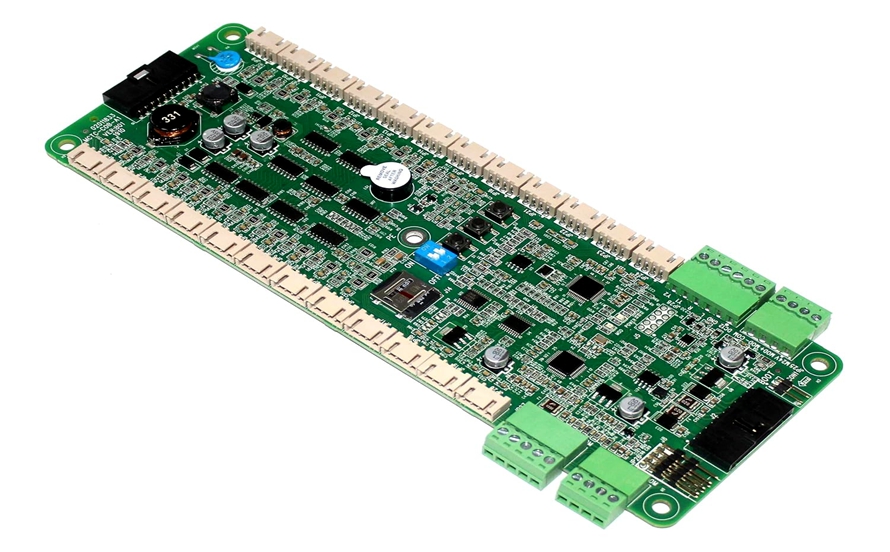
The important detail is that this was not one company repricing. Kingboard, Panasonic and Nan Ya adjusting within weeks of each other shows an industry wide cost structure rather than a single supplier decision, which is why buyers who negotiated a good price last year still found their quotes reset.
Price Is Only the First Channel
When laminate moves, buyers normally watch the unit price. The harder problem arrives through lead time. If a specific glass style or resin system becomes tight, orders that were scheduled comfortably can be pushed out, and the effect lands on the production calendar rather than on the invoice. Procurement groups have reported cases where availability was promised but price was explicitly left open, an arrangement that protects the shipment but leaves the budget exposed.
That combination is why this cycle is more disruptive than a normal commodity swing. Price can be passed on through updated quotations over a few weeks. A schedule that loses six weeks to material allocation cannot be recovered the same way, especially when the finished product has a launch date attached to it.
Qualification Locks Buyers Into a Material
High speed, high layer count and automotive programs specify laminate by manufacturer and grade, and those choices are validated against impedance targets, thermal cycling and customer reliability requirements. Once a stack up is qualified, changing the fabric structure or resin system is not a purchase order change. It is a requalification project with new impedance coupons, new reliability samples and, in automotive work, a fresh approval cycle.
The result is that the cost of switching usually exceeds the cost of absorbing the increase. Buyers discover this only after prices move, which is why the qualification effort belongs at the beginning of a program and not during a shortage. Keeping a second material family qualified in advance is inexpensive compared with qualifying one under pressure, and it is a straightforward part of component and material procurement planning.
High Layer Count Boards Absorb More of It
A twenty layer board consumes far more laminate than a four layer board of the same outline, and it also passes through more lamination cycles. Material cost therefore scales faster than layer count does. When the price of a square meter rises, the absolute increase on a high layer count panel is several times the increase on a simple one, even though the percentage is identical.
There is a second effect that matters more to engineering. Higher layer counts concentrate more lamination cycles into the same thickness, so a small change in prepreg resin content or dielectric thickness accumulates. If a supplier substitutes a fabric style to protect a schedule, the effect may appear as an impedance shift or a thickness control problem rather than as an obvious defect. That is the point at which a purchasing decision becomes an electrical one.
Batch Consistency Becomes a Purchasing Requirement
Consistency used to be handled inside the factory. With prices volatile and grades under pressure, it needs to be part of what the buyer asks for. Laminate arriving from different production campaigns can differ in dielectric constant, glass transition temperature and thickness tolerance, and those differences show up in impedance measurements before they show up anywhere else.
The practical response is to request lot level information with each delivery, to keep coupons from incoming material, and to avoid mixing campaigns on a single high speed order. Factories that manage this well treat incoming material and process control as a single system rather than two departments.
What Buyers Can Actually Control
Very little of the cost is controllable. The response is therefore about timing and options. Extend the forecast horizon so material can be booked earlier, and accept that a forecast is a commitment device rather than a wish list. Qualify a second material family before it is needed, even if the first choice remains preferred. Where contracts allow, use a formula that tracks a published index rather than a fixed price held for twelve months.
Stack up design offers the remaining room. Not every layer of a mixed construction needs the most expensive low loss material, and keeping high frequency cores to the layers that carry high speed signals is standard practice on cost sensitive programs. That decision must be made at design freeze, because retrofitting it later means requalifying the board. Buyers who plan a buffer for long lead materials and who keep at least one qualified alternate in reserve generally ride out a cycle like this without moving their launch date.
Questions Worth Asking Before Committing Volume
Capability statements rarely answer the question that matters during a shortage. Ask instead which specific brands and grades can be supplied in the required window, what the substitution policy is, and who carries the cost if a qualified material has to change. Ask for typical lead times over the last two quarters rather than the nominal figure, and for the last three lots of dielectric and thickness data on the grade being quoted.
A supplier that can answer those questions is demonstrating production planning rather than marketing. It also helps to understand how much of the work stays inside one factory, since material issues are easier to absorb when drilling, lamination, plating and assembly are coordinated under one roof. That coordination is what a PCB manufacturing capability set should describe in concrete terms.
Why Small Volume Buyers Feel It First
A high volume program negotiates laminate directly with the mill and often books capacity months ahead. A prototype or low volume buyer does not, and typically buys through distribution with a shorter price validity period. When mills allocate material, the allocation is decided at the top of that chain, so the smaller buyer sees both the largest percentage increase and the shortest notice.
For development work that is manageable, because the absolute quantity is small and the schedule is flexible. The problem appears during the transition from prototype to production. That transition is exactly when quantities rise, when a material change becomes expensive, and when the price quotation the design was costed against has expired. Programs that plan this step deliberately, for example by running early production quantities on the same material and stack up that will be used in volume, avoid paying twice for the same qualification. It also helps to understand how a supplier handles the step from prototype to volume before committing.
Where the Increase Shows Up Outside the Board
Laminate price is visible because it is quoted. The downstream effects are less visible and often larger. Panel yield drops when material behaves differently, drilling parameters need revalidation when resin content changes, and lamination cycle times may need adjustment for a stiffer or thicker prepreg. Each of those items consumes engineering time that was budgeted for something else.
That is why comparing quotations on material price alone is misleading during a tight cycle. A supplier that has qualified several material families and keeps process data on hand will recover from a material change in days. One that has a single qualified stack and no process history will spend weeks. The visible price difference of a few percent is usually smaller than the hidden cost of that delay, which is the argument for treating material sourcing and process control as one decision rather than two.
What to Watch Next
Three signals will indicate whether the pressure is easing. The first is glass fabric inventory for standard styles, since that is what feeds ordinary FR-4 rather than AI server grades. The second is how much of the new electronic fabric capacity now under construction completes qualification, because capital spending does not shorten lead times until products pass customer approval. The third is whether copper foil and resin follow fabric downward or stay elevated on their own.
Until those signals turn, the sensible assumption is that laminate stays expensive and occasionally hard to schedule. Programs built on that assumption, with qualified alternates, earlier material commitments and realistic lead times, are the ones that keep shipping. Programs that assume a return to last year’s pricing are the ones that will be requalifying material in the middle of a build, and every week spent there is a week added to the manufacturing process.