Edge AI Phone PCB: Why On-Device Models Change the Board
An edge AI phone PCB is being redesigned because the workload inside the phone has changed. Supply chain reporting in August 2026 described the next generation of mobile processors strengthening their neural processing capability, possibly with a new package arrangement, alongside increases in memory capacity, vapour chamber cooling and battery system changes, as on-device model support expands into more markets. Running a model on the handset rather than in a data centre raises memory bandwidth, sustained power and heat at the same time.
The effect on the board is not a single specification change. Processor performance is no longer the only limit on user experience; memory bandwidth, interconnect efficiency and thermal behaviour now determine what a model can do on a phone, and all three are board level properties.
Why Inference Changes the Design Target
Inference workloads differ from the bursty workloads phones were designed for. They keep the memory subsystem busy for extended periods, they use the neural accelerator continuously rather than intermittently, and they interact with camera, audio and display pipelines at the same time.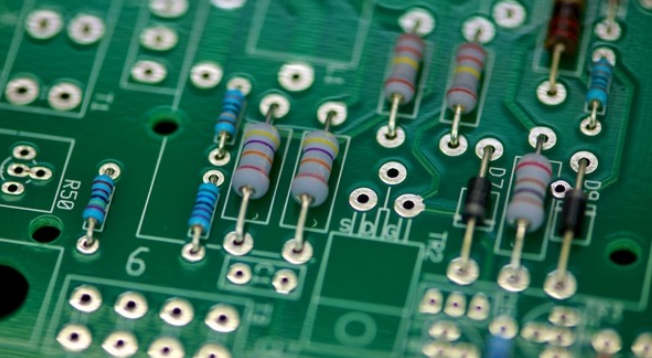
Sustained operation is what makes thermal design decisive. A phone can dissipate a burst of power briefly, but a model that runs for minutes requires a thermal path that carries heat away continuously, and that path begins at the board and ends at the frame.
Memory Bandwidth and Interconnect
Model inference is limited by how quickly weights and activations can be moved, so memory bandwidth matters as much as compute. Wider and faster memory interfaces increase the number of high speed signals between the processor package and the memory devices, and length matching and impedance control become harder as that count rises.
Where memory is packaged with the processor, the board-level problem shrinks and the package-level problem grows, but the interface to the rest of the system remains on the board. In either case the designer has to manage a dense, high speed connection over a short distance, which is a different challenge from routing a long channel across a server board.
Any-Layer HDI and Fine Lines
Phone boards have limited area and must carry more devices each generation. Any-layer interconnect allows vias between any pair of layers, which frees routing channels, and fine line capability below seventy five micrometres lets dense package fanout be completed without consuming the surface.
These are not optional refinements on a board where area is the binding constraint. They are the mechanism by which new functionality is added without enlarging the device, and they are the reason phone boards remain one of the most demanding volume products in the industry. A supplier building fine line and any-layer boards in volume has had to solve problems that appear elsewhere only in specialised products.
Thermal Design Inside a Sealed Case
A phone has no fan and little surface area, so heat spreads into the frame and the display. Vapour chambers extend the spreading area, but they only help if heat reaches them efficiently from the die, through the package, through the board and through the interface material.
Board design contributes through copper distribution, thermal vias and the placement of heat sources. Spreading the dissipating components rather than concentrating them lowers the peak temperature, and keeping temperature sensitive parts such as the battery and camera away from hot regions protects their performance. These decisions are made during layout and are difficult to correct later.
Power Delivery and Battery Behaviour
Sustained inference draws current that a phone must supply while charging or on battery, and the voltage regulators have to deliver it efficiently because wasted energy becomes heat in a sealed enclosure. Efficiency at partial load matters as much as peak capability, since models run at moderate load for long periods.
Battery system changes reported alongside processor upgrades suggest that capacity and charging capability are being adjusted for this workload. For the board that means high current charging paths, careful thermal isolation of the battery, and regulation that keeps the processor supplied without generating unnecessary heat near the display.
Camera and Display Interfaces
On-device models consume camera data and produce display output, so the interfaces between the image sensor, the processor and the display carry more traffic than before. These are high speed differential links that must maintain impedance through a dense layout and across layer transitions.
Because phones use flexible circuits and rigid flex constructions to reach the display and camera modules, the high speed path often crosses from a rigid board to a flex and back. Managing impedance and return paths across those transitions is one of the more demanding aspects of phone design, and it is where experience with rigid flex fabrication matters.
Antenna and RF Coexistence
A phone carries cellular, Wi-Fi, Bluetooth, near field communication and often satellite or ultra wideband radios, all in a metal framed enclosure. Adding a processor that runs continuously raises the noise floor the radios must tolerate.
Board design helps by keeping switching regulators and high speed digital sections away from antenna feed regions, providing clean reference planes under radio frequency traces, and preserving the clearance the antenna design requires. These are layout constraints rather than component choices, and they compete for the same board area that density is consuming.
Package Trends and Their Effect on the Board
If processors move toward package-on-package or more integrated arrangements, the number of board-level connections may fall while the density of the remaining ones rises. That shifts difficulty from routing count to precision and from layer count to via capability.
For board designers the practical implication is that stack up decisions have to anticipate the package rather than follow it. A board designed with via capability and line width at the limit for the current package may not accommodate the next generation, and phone programmes rarely allow a full redesign between generations.
Manufacturing Consistency at Phone Volumes
Phone production is measured in tens of millions of units, so consistency matters more than a demonstration capability. Registration across an any-layer stack, plating quality in microvias and dimensional stability in thin flex sections all have to hold across production lots, because small drifts affect yield and reliability at that scale.
Suppliers achieve this with process characterisation, coupon measurement and continuous correction rather than with inspection. Buyers should ask how data from production panels is used to adjust the process, which is a question about process control rather than equipment.
Test and Inspection
Testing a modern phone board means verifying high speed interfaces, measuring impedance on controlled structures and confirming that the assembled unit operates across its thermal range. Functional testing under load is particularly relevant for an AI phone, because thermal throttling can hide a design weakness during short tests.
Inspection contributes by catching assembly defects that would otherwise appear as intermittent faults in the field, and X-ray inspection of package joints is standard where area array packages are used. Planning that coverage with the manufacturer is part of assembly verification, and it is easier when fabrication and assembly share one process flow.
Trade-Offs When Area Is Fixed
Every new function competes for space that does not grow. Designers respond by integrating functions into fewer components, moving passive components to the underside of the board, and accepting tighter spacing that places more demand on manufacturing precision.
The result is that board design and manufacturing capability advance together. A layout that assumes the factory can hold tighter tolerances than it actually can will generate yield losses that appear as cost, so the practical approach is to set design rules with the manufacturer and to keep them updated as both sides learn, which is the substance of an iterative production process.
Storage, Sensors and the Model
Running models locally increases pressure on storage, because weights and cached data have to be read quickly and frequently. Storage interfaces have become another high speed link on the board rather than a background subsystem.
Sensors add a second stream. Cameras, inertial sensors and audio inputs feed the model continuously, so the interfaces between them and the processor carry more traffic than a device designed around photography and messaging. Each addition consumes routing resources and adds another high speed link that must hold its impedance through a dense layout.
Battery Life Versus Performance
Every watt spent on inference is a watt unavailable to the display and the radio, so efficiency becomes a user visible feature rather than an engineering metric. The processor is expected to complete work quickly and return to a low power state, which places emphasis on transient response in the power network.
Fast transitions between low and high load stress the voltage regulators and the decoupling network, because current demand can change within microseconds. Designing that response into the power distribution network is one of the less visible but most consequential parts of an edge AI phone board.
What Comes Next for Phone Boards
If on-device models continue to grow, the pressure on memory bandwidth, thermal dissipation and power efficiency will continue with them, and the board will keep absorbing the consequences. Density will rise, thermal paths will become more deliberate, and the interfaces between processor, memory and sensors will carry more data.
For manufacturers the opportunity is in the volume products that combine fine lines, any-layer interconnect, rigid flex and thermal management in one design. Few product categories demand all of those at once, which is why phone board capability tends to become the baseline that other markets draw on when their own products become denser and hotter.