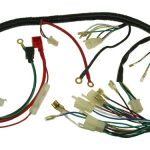
A wire harness, also known as a cable harness or wiring assembly, is an organized combination of wires, cables, connectors, terminals, protective materials, and other components designed to transmit electrical power and signals efficiently and safely. Depending on the application, a wire harness can contain only a few wires or incorporate hundreds of individual conductors, connectors, terminals, sensors, and protective elements.
As electronic systems become increasingly complex, wire harness assembly has become an essential part of modern electrical and electronic product manufacturing. Automotive systems, aerospace equipment, medical devices, industrial automation, telecommunications, energy systems, and consumer electronics all rely on properly designed wiring solutions.
A professionally engineered custom wire harness can simplify installation, improve electrical reliability, reduce wiring complexity, optimize available space, and facilitate production and maintenance. This guide explains the structure, types, benefits, design considerations, manufacturing process, testing methods, and applications of wire harness assemblies.
For manufacturers requiring integrated electronic manufacturing services, Kingda provides PCB fabrication, PCB assembly, component sourcing, and customized electronic manufacturing solutions to support projects from prototype development through volume production.
What Is Wire Harness Assembly?
Wire harness assembly is the process of combining individual wires and cables with terminals, connectors, protective coverings, clips, labels, and other components into a structured electrical assembly.
Instead of installing and routing every individual wire separately, a finished harness groups related conductors into one organized assembly. This makes installation faster and reduces the possibility of wiring errors.
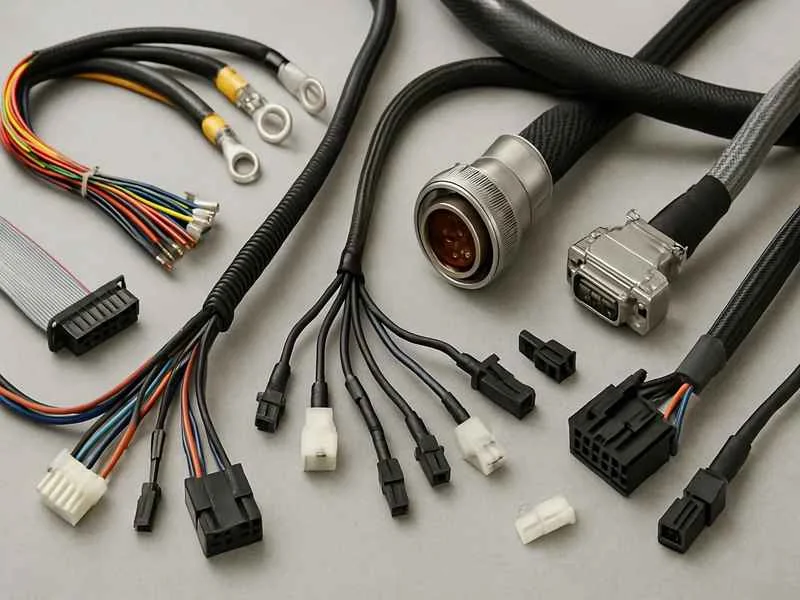
A typical wire harness assembly may include:
- Wires and cables – Carry electrical power, control signals, or data.
- Connectors – Provide detachable electrical interfaces between systems or modules.
- Terminals – Establish electrical and mechanical connections between wires and connectors.
- Sleeves and sheaths – Protect wires from abrasion, heat, chemicals, and moisture.
- Clips and fasteners – Secure the harness to the product structure.
- Labels and identifiers – Simplify installation, inspection, troubleshooting, and maintenance.
- Splices and junctions – Connect multiple conductors within the harness.
- Shielding materials – Reduce electromagnetic interference (EMI) in sensitive applications.
The final harness is designed according to the electrical, mechanical, environmental, and installation requirements of the target product.
Types of Custom Wire Harnesses
Different industries require different wire configurations, connector systems, materials, and protection methods. Common wire harness types include the following.
1. Automotive Wire Harnesses
Automotive wire harnesses connect electrical and electronic systems throughout vehicles. They may be used for:
- Engine control systems
- Battery management systems
- Lighting systems
- Infotainment systems
- Instrument clusters
- Airbag and safety systems
- ABS and braking systems
- ADAS
- Electric vehicle power distribution
Automotive harnesses must withstand vibration, temperature fluctuations, moisture, oil, chemicals, and mechanical stress. EV applications can additionally require solutions designed for higher voltage and current levels.
2. Aerospace Wire Harnesses
Aerospace wire harnesses are used in aircraft, satellites, avionics, communication systems, and other demanding applications.
Typical requirements include:
- Low weight
- High reliability
- Excellent insulation
- Resistance to vibration and shock
- Temperature resistance
- Flame and smoke performance
- Strict traceability
Because failures can have serious consequences, aerospace wiring assemblies typically require rigorous design verification and testing.
3. Medical Device Wire Harnesses
Medical wire harnesses are used in diagnostic, monitoring, imaging, surgical, and therapeutic equipment.
Applications include:
- Patient monitoring systems
- Diagnostic equipment
- Medical imaging systems
- Surgical instruments
- Laboratory equipment
- Portable medical devices
Medical harnesses may require high cleanliness, biocompatible materials, sterilization compatibility, shielding, and stringent traceability depending on the application.
4. Industrial Wire Harnesses
Industrial wire harness assemblies are commonly found in:
- Robotics
- Factory automation
- Control cabinets
- PLC systems
- CNC equipment
- Motor control systems
- Sensors
- Industrial machinery
Industrial environments can expose harnesses to vibration, oils, chemicals, dust, moisture, and temperature changes. Therefore, material selection and mechanical protection are particularly important.
5. Consumer Electronics Wire Harnesses
Consumer products generally require compact, lightweight, and cost-efficient wiring solutions.
Typical applications include:
- Computers and laptops
- Home appliances
- Gaming equipment
- Smart home products
- Audio equipment
- Consumer electronic devices
These harnesses often prioritize compact routing, flexible installation, efficient signal transmission, and high-volume manufacturability.
Benefits of Wire Harness Assembly
A properly designed wire harness assembly provides several important advantages compared with installing individual wires separately.
1. Improved Organization and Installation Efficiency
Bundling multiple conductors into one assembly reduces wiring clutter and simplifies installation.
A standardized harness can:
- Reduce installation time
- Minimize wiring mistakes
- Simplify routing
- Improve maintenance efficiency
- Reduce assembly complexity
For mass-produced products, standardized harnesses can significantly improve production consistency.
2. Enhanced Electrical Reliability
A professionally manufactured harness provides controlled connections between electrical components.
Proper wire selection, terminal crimping, connector engagement, and insulation protection can help reduce:
- Open circuits
- Short circuits
- Loose connections
- Signal interference
- Connector failures
- Insulation damage
3. Better Mechanical Protection
A harness can incorporate protective sleeves, conduits, heat-shrink tubing, braided sleeving, and strain relief.
These components help protect wiring from:
- Abrasion
- Vibration
- Mechanical impact
- Heat
- Moisture
- Chemicals
- Electromagnetic interference
4. Space Optimization
Modern electronic products often have limited internal space. A customized wire harness design allows wires to follow predetermined paths and avoid mechanical interference.
This is particularly important for automotive electronics, industrial equipment, medical instruments, and compact consumer products.
5. Consistent Manufacturing Quality
A standardized harness converts complicated point-to-point wiring into a repeatable assembly process.
Manufacturers can establish controlled specifications for:
- Wire length
- Wire gauge
- Terminal type
- Connector position
- Crimp dimensions
- Branch locations
- Protective covering
- Labeling
This improves consistency between production batches.
6. Easier Maintenance and Troubleshooting
Clearly labeled wires and standardized connectors make it easier for technicians to identify circuits and replace assemblies.
A properly documented harness can reduce troubleshooting time and simplify field maintenance.
7. Customization Flexibility
A custom cable harness can be designed according to the product’s exact requirements, including:
- Wire gauge
- Wire length
- Number of conductors
- Connector type
- Terminal type
- Shielding
- Insulation material
- Branch configuration
- Protective covering
- Identification method
Wire Harness Design and Pre-Production
The design stage determines whether a harness can meet electrical, mechanical, environmental, and manufacturing requirements.
1. Requirements Analysis
The first step is to identify:
- Operating voltage
- Current requirements
- Signal characteristics
- Wire length
- Installation space
- Temperature range
- Vibration conditions
- Moisture exposure
- Chemical exposure
- Applicable industry standards
For high-speed or sensitive signals, designers should also consider impedance, shielding, crosstalk, and electromagnetic compatibility.
2. Electrical Schematic Development
A detailed electrical schematic defines how individual wires, terminals, connectors, and devices are interconnected.
Important information includes:
- Wire identification
- Wire gauge
- Wire color
- Connector pinout
- Terminal specifications
- Circuit function
- Ground connections
- Power distribution
- Shielding requirements
Accurate documentation is essential for manufacturing and testing.
3. 2D and 3D Harness Design
Modern wire harness design increasingly uses CAD and 3D modeling tools.
3D design helps engineers:
- Visualize the harness inside the final product
- Optimize routing
- Verify connector accessibility
- Check bend radius
- Identify mechanical interference
- Define branch locations
- Optimize installation procedures
This approach can reduce design errors before physical prototypes are produced.
4. Wire and Material Selection
Material selection directly affects harness reliability.
Common conductor materials include:
- Copper
- Tinned copper
- Aluminum
- Copper alloys
Common insulation materials include:
- PVC
- XLPE
- PTFE
- Silicone
- TPE
The appropriate material depends on temperature, flexibility, voltage, chemical exposure, mechanical stress, and regulatory requirements.
5. Prototyping and Validation
Before volume production, prototypes can be manufactured to verify:
- Physical dimensions
- Connector compatibility
- Wire routing
- Electrical continuity
- Mechanical fit
- Installation process
- Signal performance
- Environmental durability
Design revisions can then be implemented before mass production.
6. Documentation and Revision Control
A production-ready harness should be supported by controlled documentation, including:
- Engineering drawings
- Electrical schematics
- Bill of materials (BOM)
- Wire list
- Connector specifications
- Assembly instructions
- Test requirements
- Revision history
Effective revision control is especially important for products with long production lifecycles.
Wire Harness vs. Cable Assembly
Although wire harnesses and cable assemblies are often used interchangeably, they are not always identical.
Wire Harness
A wire harness generally consists of multiple individual wires or conductors organized into a structured bundle.
Characteristics include:
- Multiple individual wires
- Flexible routing
- Multiple branches
- Several connectors
- Application-specific configuration
Wire harnesses are widely used when many electrical circuits must be routed through a product.
Cable Assembly
A cable assembly generally contains one or more conductors enclosed within a common outer jacket or structured cable construction.
It may be designed for:
- Power transmission
- High-speed data
- RF signals
- Communication
- Audio/video
- Standardized interfaces
Cable assemblies often provide additional protection and controlled electrical characteristics.
The selection between a wire harness and cable assembly depends on signal requirements, environmental conditions, mechanical constraints, and system architecture.
Wire Harness Manufacturing and Assembly Process
A professional wire harness manufacturing process typically includes the following stages.
1. Wire Cutting
Wires are cut to predetermined lengths according to engineering drawings and manufacturing specifications.
Automated cutting equipment can improve length consistency and production efficiency.
2. Wire Stripping
The insulation at the ends of the wires is carefully removed without damaging the conductor strands.
The stripping length must match the terminal and crimp specifications.
3. Terminal Crimping
Terminals are attached to stripped wire ends using controlled crimping equipment.
Proper crimp quality is essential because an insufficient or excessive crimp can cause:
- High contact resistance
- Mechanical weakness
- Intermittent connections
- Electrical failure
4. Subassembly
Individual wires can be grouped into subassemblies before final harness integration.
This may include:
- Splices
- Branches
- Intermediate connectors
- Protective sleeves
- Pre-formed wire groups
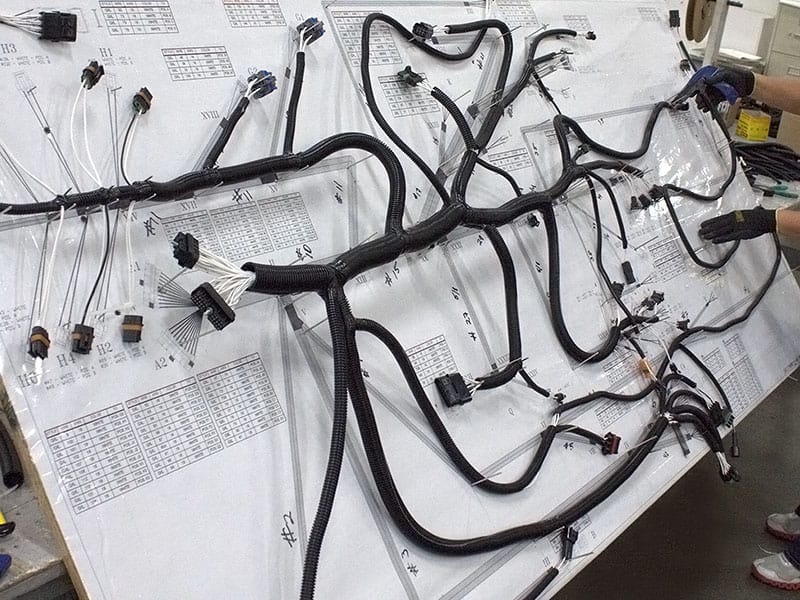
5. Harness Layout and Bundling
Wires are positioned according to the engineering drawing and secured using:
- Tape
- Cable ties
- Clips
- Clamps
- Sleeves
The harness is formed into its specified geometry.
6. Connector Assembly
Crimped terminals are inserted into connector housings according to the specified pin configuration.
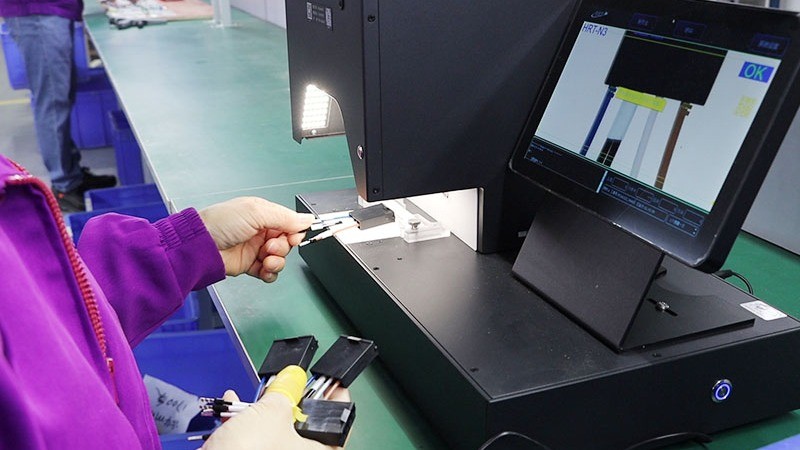
Operators or automated systems verify terminal insertion and connector engagement.
7. Protective Covering
Depending on the application, manufacturers may add:
- Heat-shrink tubing
- Braided sleeving
- Corrugated conduit
- PVC tubing
- Fabric tape
- EMI shielding
Protective materials are selected according to environmental and mechanical requirements.
8. Labeling
Labels, barcodes, wire markers, or identification tags are applied to support installation and traceability.
9. Electrical Testing
Finished harnesses undergo electrical testing to verify circuit integrity.
Typical tests include:
- Continuity testing
- Short-circuit testing
- Pin-to-pin verification
- Insulation resistance testing
- High-voltage testing
10. Final Inspection and Packaging
The finished assembly is visually inspected for:
- Incorrect components
- Damaged insulation
- Incorrect routing
- Loose terminals
- Missing labels
- Connector damage
- Dimensional deviations
Approved harnesses are then packaged according to transportation and storage requirements.
Wire Harness Covering Options
Protective coverings play an important role in harness durability.
1. Plastic Tubing
Plastic tubing provides basic mechanical and environmental protection.
Common materials include PVC, polyethylene, and nylon.
2. Braided Sleeving
Braided sleeves provide flexibility while protecting wires against abrasion.
Metallic braided sleeves can also provide shielding for EMI-sensitive applications.
3. Heat-Shrink Tubing
Heat-shrink tubing provides a close-fitting protective layer around wires and terminals.
It can provide:
- Insulation
- Strain relief
- Moisture protection
- Abrasion resistance
- Improved mechanical stability
4. Tape Wrapping
Electrical, fabric, high-temperature, and shielding tapes can be selected according to the application’s requirements.
5. Corrugated Conduit
Corrugated conduits provide additional mechanical protection and are widely used in automotive and industrial environments.
Wire Harness Testing and Quality Control
Testing is an essential part of wire harness assembly because an incorrectly connected wire can affect the entire electrical system.
1. Continuity Testing
Continuity testing confirms that each designated circuit is electrically connected from one terminal to another.
2. Short-Circuit Testing
Short testing verifies that conductors that should remain electrically isolated are not accidentally connected.
3. Insulation Resistance Testing
This test evaluates the resistance between conductors and helps identify insulation defects or leakage paths.
4. High-Voltage Testing
Hi-pot testing may be performed when required to verify insulation withstand capability under specified voltage conditions.
5. Connector and Terminal Inspection
Manufacturers should verify:
- Terminal insertion
- Crimp quality
- Connector locking
- Pin configuration
- Contact position
- Connector damage
6. Dimensional Inspection
Harness length, branch positions, connector locations, and bend geometry can be checked against engineering drawings.
7. Environmental Testing
Depending on the application, validation may include:
- Temperature cycling
- Humidity testing
- Vibration testing
- Mechanical shock
- Salt spray
- Chemical resistance
- Abrasion testing
The exact test program should be based on the product’s operating environment and applicable standards.
Engineering Considerations for Wire Harness Design
Effective harness engineering requires cooperation among electrical, mechanical, materials, and manufacturing engineers.
Electrical Engineering
Key considerations include:
- Current carrying capacity
- Voltage rating
- Signal integrity
- Impedance
- EMI/EMC
- Grounding
- Shielding
- Power distribution
Mechanical Engineering
Mechanical design should consider:
- Bend radius
- Strain relief
- Vibration
- Shock
- Connector retention
- Mounting points
- Routing clearance
- Thermal expansion
Thermal Management
Wire size and insulation material should be selected according to operating current and temperature.
Higher current can generate greater conductor heating, making conductor cross-section, ambient temperature, bundling density, and heat dissipation important design considerations.
Manufacturing Engineering
A harness should not only function correctly but also be manufacturable.
Design for Manufacturability (DFM) considerations include:
- Standardized components
- Accessible connector locations
- Appropriate stripping lengths
- Controlled crimp dimensions
- Simplified assembly operations
- Clear work instructions
- Automated testing capability
Kingda Wire Harness and Electronic Manufacturing Capabilities
As an experienced PCB manufacturer and PCB assembly service provider, Kingda can support customers with integrated electronic manufacturing solutions covering different stages of product development.
Kingda’s capabilities can be integrated into projects that require both PCB assembly and wire harness assembly, helping customers simplify their supply chain and coordinate multiple manufacturing processes.
Key advantages include:
1. Integrated PCB and PCBA Support
Kingda provides PCB manufacturing and PCB assembly services, allowing PCB production and electronic assembly requirements to be coordinated within one manufacturing workflow.
2. Prototype to Volume Production
Kingda supports projects from initial design verification and PCB prototype manufacturing through small-batch production and volume manufacturing.
3. Component Sourcing
A coordinated component procurement process can help customers manage BOM requirements and improve production consistency.
4. Quality and Process Control
Quality inspection and process control can be incorporated throughout manufacturing, including PCB fabrication, component assembly, soldering, inspection, and final testing.
5. Customized Manufacturing Solutions
Different electronic products require different combinations of PCB, PCBA, cable, and wiring solutions. Kingda can provide customized manufacturing support according to project specifications, product structure, and production requirements.
For projects combining PCB assembly, cable assembly, and wire harness solutions, an integrated manufacturing approach can simplify supplier management and improve production coordination.
Applications of Wire Harness Assembly
Wire harness assemblies are used in a wide range of industries.
Automotive
- Engine management
- EV battery systems
- BMS
- Infotainment
- ADAS
- Lighting
- Vehicle control systems
- Charging systems
Aerospace and Defense
- Avionics
- Flight control systems
- Communication equipment
- Radar systems
- Satellites
- Aircraft power distribution
Medical Electronics
- Patient monitoring equipment
- Medical imaging systems
- Diagnostic equipment
- Surgical instruments
- Laboratory equipment
- Portable medical devices
Industrial Automation
- Robotics
- PLC systems
- CNC machines
- Motor control
- Sensors
- Industrial automation equipment
Consumer Electronics
- Computers
- Laptops
- Smart home devices
- Gaming systems
- Home appliances
- Audio equipment
Telecommunications
- Network equipment
- Routers
- Switches
- Communication infrastructure
- Data transmission systems
Energy and Power Electronics
- Solar power systems
- Wind power equipment
- Energy storage systems
- EV charging equipment
- Power distribution systems
- Smart-grid equipment
How to Choose a Wire Harness Manufacturer
Selecting the right wire harness manufacturer requires more than comparing unit prices. Important evaluation criteria include:
- Engineering capability – Can the manufacturer understand schematics, drawings, BOMs, and technical specifications?
- Material sourcing – Can the supplier provide the required wires, terminals, connectors, and protective materials?
- Manufacturing capability – Does the supplier have suitable cutting, stripping, crimping, assembly, and testing equipment?
- Quality control – Are continuity, insulation, high-voltage, dimensional, and visual inspections available?
- Traceability – Can materials, production batches, and revisions be tracked?
- Production scalability – Can the supplier support prototypes, low-volume production, and volume manufacturing?
- Integrated services – Can PCB, PCBA, cable, and harness requirements be coordinated when necessary?
For complex electronic products, choosing a manufacturing partner with both PCB/PCBA and wiring capabilities can simplify supply-chain management and improve project coordination.
Conclusion
Wire harness assembly is a critical part of modern electrical and electronic system manufacturing. By organizing wires, terminals, connectors, protective materials, and identification components into a standardized assembly, wire harnesses improve installation efficiency, electrical reliability, mechanical protection, space utilization, and production consistency.
A successful harness begins with detailed electrical and mechanical design, followed by appropriate material selection, prototyping, controlled manufacturing, electrical testing, and final inspection. The specific wire, connector, terminal, shielding, and protective covering should always be selected according to the application’s voltage, current, signal, temperature, vibration, environmental, and regulatory requirements.
For products that combine electronic boards with complex wiring systems, an integrated manufacturing strategy can provide additional benefits. Kingda, as an experienced PCB manufacturer and PCB assembly service provider, provides professional PCB prototype manufacturing, rapid PCB prototyping, PCB assembly, and electronic manufacturing solutions, supporting customers from initial design verification through small-batch and volume production.
Whether your project involves automotive electronics, industrial automation, medical equipment, consumer electronics, telecommunications, or energy systems, a professionally engineered custom wire harness can provide the reliable electrical connectivity and mechanical organization required for modern electronic products.