Choosing the right solder mask color is often treated as a cosmetic decision, but it can also affect inspection visibility, optical performance, production consistency, and overall manufacturing cost.
Many engineers select a PCB color based primarily on habit or appearance. Green is commonly selected for general-purpose boards, while black, blue, white, red, and other colors may be chosen according to product requirements. However, there is no single color that is universally optimal for every application.
A practical selection strategy should consider five factors: functional requirements, operating environment, production volume, inspection requirements, and product appearance.
For most projects, the correct approach is not to ask which color has the best overall performance, but rather which PCB solder mask configuration provides the appropriate combination of manufacturing stability, inspection capability, optical characteristics, cost, and appearance for the intended application.
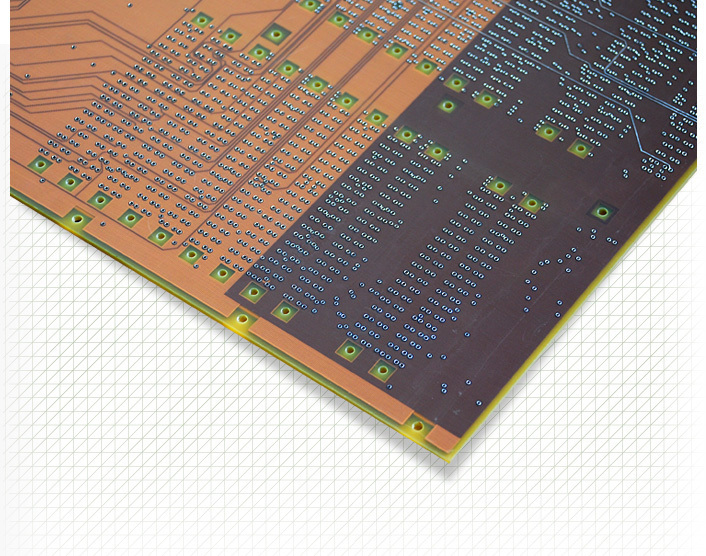
Five Key Factors for Solder Mask Color Selection
A structured solder mask color selection process can follow the priority of function, operating conditions, quality control, cost, and appearance.
1. Functional Requirements
Function should be considered first.
Some products have optical or identification requirements that make a particular color advantageous. For example, white solder mask is commonly used on LED and lighting PCBs because its reflective surface can help improve light distribution.
For warning or identification purposes, red or yellow may be selected to distinguish specific boards or functional sections.
For general electronic applications without special optical or identification requirements, conventional colors are usually sufficient.
It is important to distinguish between a color’s visual characteristics and its electrical properties. Changing the solder mask color does not automatically improve insulation, voltage resistance, or circuit performance. These properties depend much more strongly on the solder mask material, thickness, curing process, PCB construction, spacing, and manufacturing controls.
2. Operating Environment
Environmental conditions should be considered after functional requirements have been established.
Temperature, humidity, UV exposure, chemical exposure, and mechanical conditions can influence the long-term stability of the solder mask system.
For outdoor products, the engineering team should evaluate the actual solder mask material and its resistance to the intended environmental conditions rather than assuming that a particular color automatically provides superior durability.
For high-temperature applications, the appropriate material grade, curing process, copper design, laminate system, and thermal management are generally more important than color alone.
Therefore, color should be treated as one part of the material and manufacturing specification rather than as a standalone reliability parameter.
3. Production Volume and Quality Control
Production volume has a direct impact on color selection.
Standard colors generally have established manufacturing processes, material supply chains, and inspection procedures. This can make them easier to control in high-volume production.
When selecting a customized color for a large production run, engineers should confirm:
- Material availability
- Minimum order requirements
- Production lead time
- Color consistency between batches
- Curing characteristics
- Inspection compatibility
- Supplier process capability
A customized color may be appropriate for a visible consumer product, but the additional manufacturing complexity should be justified by an actual product requirement.
4. Inspection Requirements
Inspection is an important but sometimes overlooked factor.
The color and surface characteristics of the solder mask can influence how easily certain PCB features are visually distinguished during manufacturing inspection.
For example, contrast between solder mask, exposed copper, pads, markings, and surface-finish areas can affect manual inspection and some automated optical inspection configurations.
Therefore, AOI inspection parameters should be evaluated whenever a non-standard solder mask color is introduced.
This does not mean that dark or customized solder masks cannot be inspected. Modern inspection systems can be configured for different board conditions. However, changing the solder mask may require adjustments to lighting, image thresholds, camera settings, or inspection recipes.
The important principle is to validate the inspection process rather than assume that a color change has no production impact.
Standardized Color Selection by Application
Different applications may lead to different practical choices.
Green Solder Mask for General-Purpose Production
Green solder mask remains a common choice for general-purpose PCB manufacturing because it has a mature manufacturing history and is widely supported by PCB fabricators.
It can provide good visual contrast between the solder mask and exposed copper features, which can be helpful during inspection.
For industrial controls, power electronics, internal consumer-electronics boards, and other applications without special appearance or optical requirements, green can be a practical default.
However, the selection should still be based on the actual manufacturer’s process capability and material system rather than assuming that green is automatically the highest-reliability option.
Blue Solder Mask for Identification and Appearance
Blue solder mask can be useful when product identification or visual differentiation is required.
It is frequently used when designers want to distinguish a PCB from conventional green boards while maintaining a relatively familiar manufacturing process.
For small- and medium-volume products, blue can provide visual differentiation without necessarily requiring an unusual custom color.
The engineering team should nevertheless verify availability, inspection compatibility, and batch consistency before releasing a customized color for production.
Black Solder Mask for Premium Product Appearance
Black solder mask is often selected for consumer electronics, development boards, instruments, and products where the PCB may be visible.
Its dark appearance can create a clean and premium visual effect.
However, black solder mask should not automatically be considered electrically superior to green solder mask.
Electrical insulation, dielectric behavior, adhesion, moisture resistance, and thermal performance depend on the actual solder mask system and manufacturing process.
Dark surfaces can also provide less visual contrast for certain inspection tasks, so AOI and manual inspection should be validated before volume production.
If black is selected primarily for appearance, the engineering team should confirm that the visual benefit justifies any additional manufacturing or inspection considerations.
White Solder Mask for Optical Applications
White solder mask is particularly useful for LED lighting, backlighting, optical modules, and other applications where PCB reflectivity can influence the optical system.
A white surface can help reflect light from LEDs and reduce some optical losses associated with darker surfaces.
However, white solder mask also requires careful consideration of contamination, handling marks, discoloration, and appearance consistency.
For products where optical performance is important, the engineering team should evaluate the complete optical stack rather than considering solder mask color in isolation.
Factors such as LED package design, reflector geometry, surface finish, diffuser materials, and board contamination can all affect the final optical result.
Red and Yellow for Identification or Warning
Red and yellow solder masks can be used to identify specific functional boards, safety-related assemblies, or product variants.
Their high visual distinctiveness can be useful for manufacturing and maintenance.
However, color coding should be supported by proper product documentation and labeling. Color alone should not be the only safety mechanism for a critical warning.
The material system and manufacturing process should also be confirmed to ensure that the selected color is suitable for the intended application.
Color Selection for Outdoor and High-Temperature Applications
The original assumption that dark solder mask should always be avoided in high-temperature outdoor equipment is too broad.
Dark surfaces can absorb more visible and near-infrared radiation than lighter surfaces under certain illumination conditions, but the actual PCB temperature is determined by the complete thermal environment.
Important factors include:
- Solar radiation
- Enclosure design
- Airflow
- Heat sources
- Copper distribution
- Component power dissipation
- Thermal interfaces
- PCB material
- Surface emissivity
- Installation orientation
Therefore, selecting a light-colored solder mask alone does not guarantee better thermal performance.
For outdoor and high-temperature applications, engineers should prioritize the actual thermal design and select a solder mask material qualified for the required temperature and environmental exposure.
Solder Mask Color and PCB Manufacturing
The color selection should also be connected to the PCB manufacturing process.
Different solder mask formulations can have different characteristics, including:
- Viscosity
- Exposure response
- Curing behavior
- Surface appearance
- Adhesion
- Chemical resistance
- UV resistance
- Thermal stability
- Rework characteristics
Even when two colors appear visually similar, their process behavior may not be identical.
For a new color, the manufacturer should confirm the applicable process parameters instead of simply copying the settings used for another formulation.
The final specification should identify the required solder mask type, color, surface condition, and any relevant performance requirements.
Process Considerations After Selecting the Color
Once the color is selected, the manufacturing process should be reviewed accordingly.
Green and Other Standard Colors
For standard colors with established production processes, manufacturers can generally use validated process parameters appropriate for the selected solder mask material.
The focus should be on consistent coating thickness, exposure, development, curing, adhesion, and appearance.
Black Solder Mask
When black solder mask is selected, inspection visibility should receive additional attention.
The manufacturer may need to optimize imaging and inspection conditions to maintain reliable detection of solder mask defects, exposed copper, pad conditions, and other features.
The curing profile should be based on the manufacturer’s qualified material process rather than simply increasing curing time as a universal rule.
White Solder Mask
For white solder mask, appearance control becomes especially important.
The manufacturing process should minimize contamination and prevent unnecessary discoloration.
Exposure and curing parameters should be determined by the solder mask manufacturer’s process window. Simply shortening exposure time to prevent yellowing is not a universal solution and could cause insufficient imaging or adhesion problems.
Custom Colors
For custom colors such as purple, orange, or other brand-specific formulations, the manufacturer should verify:
- Material supply
- Color specification
- Color tolerance
- Batch-to-batch consistency
- Process compatibility
- Inspection performance
- Production lead time
A color reference or approved sample can be established for projects where appearance consistency is important.
Avoiding Common Solder Mask Selection Mistakes
Mistake 1: Assuming Color Determines Electrical Performance
The color of solder mask is not, by itself, a reliable indicator of insulation performance, dielectric properties, moisture resistance, or voltage capability.
These characteristics depend on the material formulation, coating thickness, curing, board geometry, environmental conditions, and manufacturing quality.
Mistake 2: Choosing White Only for Appearance
White solder mask is particularly valuable when optical reflection is part of the product design.
For ordinary electronic boards without an optical requirement, the additional appearance benefit may not justify the additional process considerations.
The decision should therefore be based on actual product requirements.
Mistake 3: Selecting Custom Colors Without Production Validation
A color that looks correct on a prototype may not automatically provide the same appearance across different production batches.
Custom colors should be evaluated for supply stability, process capability, inspection compatibility, and lead time before mass production.
Mistake 4: Assuming Black Is Automatically Premium or High Performance
Black solder mask can improve product appearance, but visual quality should not be confused with electrical or environmental performance.
If black is selected, the manufacturer should verify the relevant material and process specifications independently of the color itself.
Mistake 5: Ignoring Inspection Conditions
A solder mask color can influence visual contrast and inspection conditions.
Before mass production, the engineering team should verify AOI performance, manual inspection visibility, marking readability, and defect-detection capability under actual production conditions.
A Practical Solder Mask Selection Formula
A useful decision framework can be expressed as:
Required function → Operating environment → Inspection → Production volume → Cost → Appearance
The first question should be:
Does the product have a functional reason to require a specific color?
If yes, select a color that satisfies that requirement.
If no, evaluate the operating environment and material requirements.
Next, consider inspection and production volume. Standard colors are generally easier to integrate into established manufacturing processes, while custom colors require additional validation.
Finally, consider appearance and branding.
This creates a more reliable selection process than choosing a color based solely on personal preference.
Solder Mask Color Selection Matrix
| Application | Common Color Direction | Primary Considerations |
|---|---|---|
| Industrial control | Green / Blue | Manufacturing stability, inspection, cost |
| Power electronics | Green / Blue | Material capability, thermal design, reliability |
| Consumer electronics | Black / Blue / Custom | Appearance, inspection, cost |
| LED lighting | White | Optical reflection, contamination control |
| Backlighting | White | Optical performance and surface consistency |
| Safety identification | Red / Yellow | Visual identification and documentation |
| Outdoor equipment | Green / Blue / Light colors | Environmental resistance and thermal design |
| Prototype boards | Green / Blue / Black | Availability, debugging, appearance |
| High-volume standard products | Standard colors | Supply stability and process consistency |
| Brand-visible products | Custom / Black / Blue | Appearance, batch consistency, inspection |
The table provides general guidance rather than mandatory color requirements. The final selection should be confirmed against the product specification and the PCB manufacturer’s qualified process.
Balancing Cost, Quality, and Appearance
The purpose of standardized color selection is not to eliminate all color choices.
Instead, it is to ensure that every color choice has a clear engineering reason.
For high-volume products, standard colors can reduce unnecessary customization and simplify production control.
For consumer products where the PCB is visible, appearance may have a legitimate product-design value.
For optical products, white solder mask can contribute to the optical design.
For identification purposes, red, yellow, or blue can improve visual differentiation.
The key is to avoid treating appearance as a substitute for technical requirements.
A well-designed selection process balances:
- Functional requirements
- Environmental reliability
- Inspection capability
- Manufacturing stability
- Material availability
- Production cost
- Product appearance
Kingda’s Solder Mask Manufacturing Support
Kingda can support PCB projects requiring standard and customized solder mask colors for different application scenarios.
During manufacturing preparation, the engineering team can evaluate the selected solder mask together with the PCB structure, surface finish, copper pattern, inspection requirements, and production volume.
For projects requiring customized colors, Kingda can also work with customers to confirm material availability, process compatibility, appearance requirements, and production consistency before volume manufacturing.
This approach helps prevent a color selected during prototype development from creating unexpected manufacturing or inspection problems during mass production.
For optical, industrial, consumer, power, and other PCB applications, solder mask selection should be integrated into the overall manufacturing specification rather than treated as an isolated cosmetic choice.
Conclusion
Solder mask color selection should be based on engineering requirements rather than habit or appearance alone.
Green solder mask is a practical choice for many general-purpose applications because of its established manufacturing and inspection characteristics. White solder mask can provide useful optical benefits in LED and lighting applications, while black solder mask and other colors can be appropriate when product appearance or visual identification is important.
At the same time, color itself does not determine PCB reliability. Material formulation, coating quality, curing, board construction, spacing, environmental conditions, and manufacturing process control have a much greater influence on electrical and mechanical performance.
A practical PCB solder mask selection strategy should therefore evaluate function first, followed by environment, inspection, production volume, cost, and appearance.
By applying a consistent selection framework and validating the chosen material with the PCB manufacturer, engineers can reduce unnecessary customization, improve production consistency, and ensure that the selected solder mask is appropriate for the actual application.
Kingda can work with customers from PCB design and material selection through fabrication and quality verification to develop practical solder mask solutions for prototype and volume-production requirements.