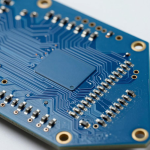
When selecting a PCB, engineers often focus on electrical performance, layer count, material, copper thickness, and surface finish. Solder mask color is sometimes treated as a purely cosmetic specification. However, in mass production, the choice of solder mask can also influence optical inspection, visual inspection, defect identification, SMT process control, and repair efficiency.
Different colors create different levels of contrast between the PCB surface, copper features, solder joints, component bodies, silkscreen, and inspection targets. These differences can affect how easily defects are detected by automated equipment or human operators.
For this reason, solder mask color should be selected according to the actual manufacturing and maintenance requirements rather than appearance alone. A suitable color can make inspection more efficient, while an unsuitable choice may increase inspection workload, false calls, reinspection, and troubleshooting time.
1. AOI Inspection: How Color Contrast Affects Optical Detection
AOI inspection relies on cameras, lighting systems, image-processing algorithms, and predefined inspection parameters to identify defects on assembled or bare PCBs. The contrast between the PCB background and inspection targets is therefore an important consideration.
During PCB inspection, the system may need to identify solder bridges, missing solder, insufficient solder, component placement errors, exposed copper, pad anomalies, solder mask defects, and other manufacturing issues.
Green remains one of the most widely used solder mask colors because it generally provides a balanced optical background for many conventional inspection systems. Copper, solder joints, white silkscreen, and component features can usually be distinguished clearly against the green surface.
Blue and red solder mask can also be suitable for automated inspection, but the inspection recipe may need to be optimized for the specific color, surface finish, lighting configuration, and camera system.
Black solder mask requires more careful consideration. Its dark background can reduce the visual contrast of certain surface features under particular lighting conditions. This does not mean that black boards cannot be inspected by AOI; rather, inspection parameters, lighting angles, exposure, thresholds, and image-processing settings may require additional optimization.
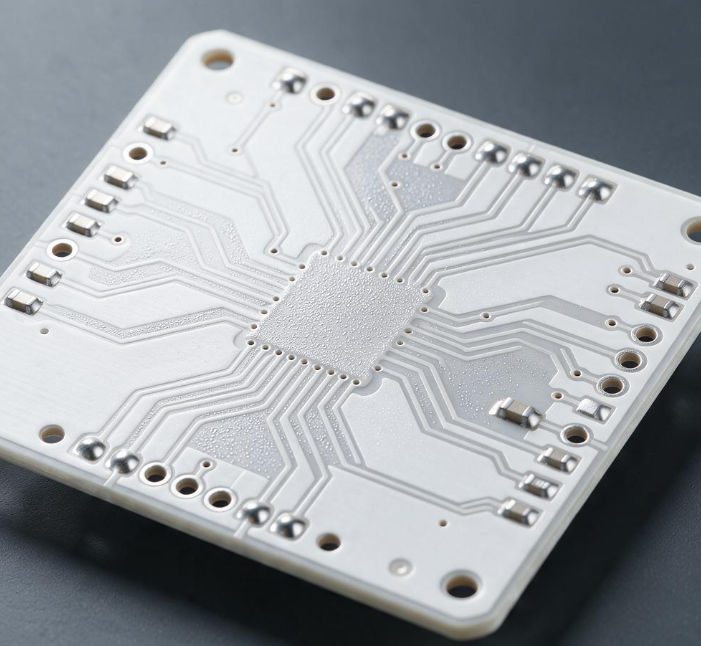
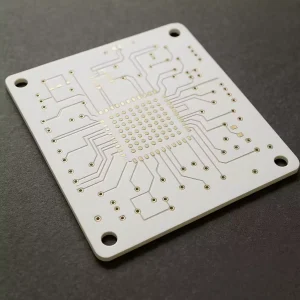
White solder mask presents a different challenge. Its high reflectivity can create strong highlights or variations in brightness, potentially increasing false calls if the inspection system is not properly configured. Therefore, white boards may require dedicated lighting and inspection recipes.
AOI Inspection Should Be Validated With the Actual Board
It is important not to assume that one color always provides the lowest defect rate for every AOI system. Detection performance depends on multiple variables, including:
- Camera resolution
- Lighting wavelength and angle
- Board surface finish
- Solder mask formulation
- Copper exposure
- Component package type
- Inspection algorithm
- Board geometry
- Inspection recipe and threshold settings
For a new solder mask color, engineering teams should run sample boards through the actual production inspection equipment and compare defect detection, false calls, and reinspection rates before mass production.
2. Visual Inspection: Improving Defect Visibility
Although automated equipment is increasingly common, visual inspection remains important in PCB manufacturing, assembly, engineering validation, troubleshooting, and after-sales repair.
Operators may need to identify:
- Solder bridges
- Insufficient or excessive solder
- Scratches
- Exposed copper
- Pad damage
- Component defects
- Contamination
- Solder mask damage
- Assembly-related abnormalities
Green solder mask generally provides a familiar and balanced background for these tasks. The contrast between the board surface and solder joints allows many common defects to be identified relatively quickly.
Blue and red surfaces can also provide good visibility, depending on the board design and inspection environment.
Black solder mask may make some low-contrast defects more difficult to identify under insufficient lighting. However, the actual effect depends strongly on illumination, magnification, surface finish, and the defect itself. Proper work lighting and magnification can compensate for some of these limitations.
White solder mask can provide strong contrast against dark components and certain markings, but reflections and contamination may become more noticeable. For long inspection sessions, lighting design should be considered together with the board color to avoid unnecessary visual fatigue.
3. PCB Rework: Color Can Affect Troubleshooting Efficiency
During PCB rework, engineers often need to locate solder joints, damaged pads, exposed copper, trace damage, component abnormalities, and previous repair locations.
The board surface acts as the visual background for these operations. A high-contrast surface can make it easier to locate the target area under a microscope or inspection camera.
For products requiring frequent engineering modifications, troubleshooting, or maintenance, the selection of solder mask color should therefore consider the entire repair workflow rather than only the finished appearance.
A typical repair process may include:
- Initial visual inspection
- Fault localization
- Microscope or camera inspection
- Component removal
- Pad and trace inspection
- Soldering or component replacement
- Electrical verification
- Final visual inspection
If the board surface makes certain defects difficult to distinguish, additional inspection time may be required.
At the same time, color should not be treated as the only factor determining repair efficiency. Lighting, microscope magnification, board layout, component density, accessibility, and operator experience can have an equally important or greater effect.
4. Does Solder Mask Color Directly Affect SMT Yield?
The relationship between solder mask color and SMT yield is often misunderstood.
Solder mask color itself does not automatically determine whether a board will experience soldering defects. SMT performance is influenced much more directly by solder paste properties, stencil design, pad geometry, component placement, PCB surface finish, reflow profile, board warpage, material properties, and process control.
However, different solder mask formulations may have different optical, thermal, and surface characteristics. These differences can indirectly affect manufacturing conditions and inspection processes.
For example, a particular solder mask formulation may require different curing conditions or demonstrate different surface characteristics. The manufacturing team should therefore evaluate the actual material system rather than assuming that color alone determines process performance.
During SMT production, key factors include:
- Stencil aperture design
- Solder paste selection
- Printing parameters
- SPI inspection
- Component placement accuracy
- Reflow temperature profile
- PCB warpage
- Surface finish
- AOI parameters
- Cleaning and contamination control
Consequently, changing from green to black or white should be treated as a material and process change that may require inspection recipe validation, rather than simply a visual change.
5. Different Solder Mask Colors Require Different Inspection Strategies
There is no universal rule stating that one color is suitable for every PCB application. Instead, color selection should be connected to the inspection method and product requirements.
Green Solder Mask
Green remains a common choice for general-purpose PCBs because it offers a familiar visual background and broad compatibility with conventional inspection workflows.
It is often suitable for:
- High-volume electronics
- Industrial control boards
- General consumer electronics
- Development and engineering boards
- Products requiring regular visual inspection
Blue Solder Mask
Blue provides a distinctive appearance while still offering practical visibility for many applications. It is frequently considered when product differentiation or brand appearance is important without making inspection unnecessarily complicated.
Red Solder Mask
Red can be used for product identification, visual differentiation, or specific engineering requirements. As with other colors, AOI recipes and visual inspection conditions should be validated on actual production boards.
Black Solder Mask
Black provides a clean and premium appearance and is often selected for products where aesthetics are important.
However, inspection teams should evaluate whether the dark background affects the visibility of specific defects under their actual lighting and AOI conditions.
White Solder Mask
White can be useful when optical reflection or light-colored surfaces are part of the product’s functional design, such as certain LED, lighting, or optical applications.
At the same time, reflection, contamination visibility, and AOI lighting must be considered carefully.
6. Common Mistakes When Selecting Solder Mask Color
Several mistakes can create unnecessary production or maintenance problems.
Choosing Color Only for Appearance
A visually attractive PCB may not automatically provide the best inspection conditions. Appearance should be evaluated together with manufacturing, inspection, and service requirements.
Assuming Black or White Boards Cannot Be Inspected
Modern AOI and optical systems can be configured for different board colors. The correct approach is to validate inspection performance rather than completely prohibit certain colors.
Assuming Green Always Guarantees Better Yield
Green is widely used and often provides convenient optical contrast, but production yield depends on the complete manufacturing process. A well-controlled blue, red, black, or white board can also achieve stable production performance.
Ignoring Inspection Recipe Validation
Changing color without reviewing AOI parameters can create unnecessary false calls or missed defects. A new color should be evaluated through an engineering sample or pilot run.
Treating Color as a Thermal Design Parameter
Dark and light colors can have different optical properties, but PCB temperature is determined by many factors, including power dissipation, copper distribution, ambient conditions, enclosure design, airflow, heat sources, and surface properties. Color alone should not be used to predict thermal reliability.
7. A Practical Solder Mask Color Selection Framework
A practical selection process can follow five steps:
Step 1: Define the product function
Determine whether the PCB is used in consumer electronics, industrial equipment, medical equipment, automotive electronics, lighting, communications, or another application.
Step 2: Define inspection requirements
Identify whether the product relies primarily on AOI, SPI, X-ray, microscope inspection, manual inspection, or a combination of methods.
Step 3: Evaluate maintenance requirements
If the product requires frequent troubleshooting or field repair, visual accessibility should receive greater consideration.
Step 4: Validate the production process
Before mass production, verify the selected solder mask color with the actual SMT, AOI, and visual inspection processes.
Step 5: Balance appearance and manufacturing efficiency
Only after functional and manufacturing requirements are satisfied should appearance become the final selection factor.
This approach can be summarized as:
Application → Inspection → Maintenance → Manufacturing Validation → Cost → Appearance
This sequence helps prevent aesthetic requirements from unintentionally creating manufacturing or service challenges.
8. Solder Mask Color Selection by Application
| Application | Common Color Considerations | Key Inspection Focus |
|---|---|---|
| General electronics | Green, blue | AOI and visual inspection |
| Industrial control | Green, blue, red | Long-term maintenance and troubleshooting |
| Consumer electronics | Green, blue, black | Appearance and AOI compatibility |
| LED and lighting | White, green | Optical performance and contamination |
| Engineering prototypes | Green, blue | Debugging and visual accessibility |
| Premium electronics | Black, blue, customized colors | Appearance and inspection validation |
| High-volume SMT | Green, blue | Stable AOI and process control |
| Frequently repaired equipment | Green, blue | Visual inspection and repair accessibility |
The table should be regarded as a starting point rather than a mandatory standard. The final selection should be based on the actual board design, inspection equipment, production environment, and customer requirements.
9. How Kingda Supports Solder Mask and PCB Inspection Requirements
At Kingda, PCB manufacturing is evaluated as an integrated process rather than treating solder mask color as an isolated cosmetic specification.
For projects involving non-standard colors or demanding inspection requirements, the engineering process can consider:
- Solder mask material compatibility
- Surface appearance consistency
- AOI inspection requirements
- Visual inspection conditions
- SMT process compatibility
- Board cleanliness
- Surface finish
- Production repeatability
- Customer appearance specifications
For high-volume production, early validation of the selected color and inspection process can help reduce unnecessary reinspection and avoid unexpected changes after production has started.
The most effective approach is to confirm the complete manufacturing and inspection workflow before finalizing the PCB specification.
10. Conclusion
Solder mask color is more than a cosmetic choice when a PCB must pass automated inspection, manual quality control, SMT production, and long-term maintenance.
Green is widely used because it provides a familiar and generally practical inspection background. Blue and red can offer a balance between appearance and manufacturing requirements, while black and white may require more careful inspection and process validation depending on the application.
However, there is no universal rule that one color always delivers the highest yield or lowest defect rate. AOI inspection, visual inspection, and PCB rework performance depend on the interaction between board color, materials, lighting, equipment, process parameters, board design, and operator conditions.
For this reason, the best color selection strategy is not simply “choose green.” Instead, engineers should evaluate the complete product lifecycle—from design and SMT production to inspection, troubleshooting, and after-sales service—and validate the selected solder mask under actual manufacturing conditions.
With appropriate material selection, process control, and inspection validation, Kingda can help customers achieve a practical balance between PCB appearance, production efficiency, inspection reliability, and long-term maintainability.