When selecting a PCB solder mask color, many engineers focus primarily on appearance while overlooking the potential impact of color on thermal behavior, weather resistance, optical performance, inspection efficiency, and long-term reliability. Although the color of the solder mask does not fundamentally change the PCB’s electrical parameters, it can affect how the board interacts with its operating environment.
For applications exposed to sunlight, elevated temperatures, high humidity, optical requirements, or strict maintenance conditions, the choice of solder mask color should therefore be treated as an engineering consideration rather than a purely cosmetic decision. An inappropriate selection may contribute to higher surface temperatures, discoloration, optical efficiency loss, reduced inspection visibility, or accelerated material aging.
The following guide explains how to select solder mask colors according to different operating conditions and highlights the key trade-offs engineers should consider during PCB design and manufacturing.
1. High-Temperature, Humid, and Outdoor Applications: Balancing Dark and Light Solder Mask Colors
Outdoor equipment, industrial control systems, automotive electronics, and other devices operating under high-temperature, high-humidity, or direct-sunlight conditions require careful consideration of PCB thermal performance.
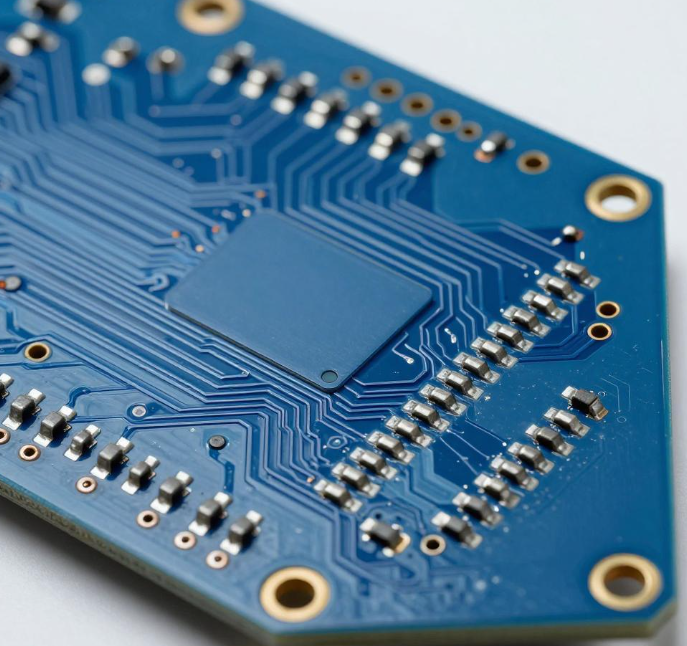
Dark solder mask colors, such as black and dark blue, generally absorb more visible and near-infrared radiation than lighter colors. Under direct sunlight, this can contribute to greater surface temperature rise. The actual temperature difference depends on the solder mask formulation, PCB structure, exposure angle, enclosure design, airflow, and environmental conditions, so a fixed temperature increase should not be assumed without testing.
Higher PCB surface temperatures can accelerate the aging of solder mask materials and other PCB components. Long-term thermal and humidity exposure may also affect material properties, insulation reliability, solder joint performance, and overall PCB reliability.
For equipment installed outdoors or in poorly ventilated enclosures, engineers should therefore evaluate the complete thermal design rather than selecting a color based solely on appearance. Lighter solder mask colors, including green and light blue, may reduce solar heat absorption compared with darker finishes and can be considered when thermal exposure is a concern.
However, solder mask color is only one factor in thermal management. Copper distribution, PCB thickness, component power dissipation, enclosure ventilation, heat sinks, thermal vias, and the selected laminate system normally have a much greater influence on the overall thermal performance of the assembly.
For low-temperature indoor applications without significant solar exposure, solder mask color generally does not require special thermal restrictions. Engineers can select the color according to manufacturing capability, inspection requirements, appearance, and project cost.
2. Optical and LED Applications: Why White Solder Mask Requires Special Consideration
For LED boards, backlight modules, illumination systems, display equipment, and other optical PCB applications, solder mask color can have a direct influence on light management.
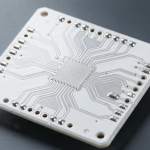
White solder mask is widely used in optical applications because its reflective surface can redirect more light toward the intended direction and help improve illumination efficiency and visual uniformity. The actual reflectivity depends on the solder mask material, surface condition, thickness, wavelength, and manufacturing process, so a universal reflectivity value should not be applied to every white solder mask system.
For this reason, engineers should evaluate the optical characteristics of the actual solder mask material rather than relying solely on its color designation.
White solder mask also has several practical disadvantages. Its light-colored surface makes contamination, dust, scratches, stains, and process residues easier to see. In addition, prolonged exposure to heat, ultraviolet radiation, chemicals, and environmental contaminants may cause discoloration or yellowing depending on the formulation and application conditions.
Therefore, white solder mask is particularly suitable when optical performance is a functional requirement, but it may introduce additional requirements for cleanliness, process control, storage, and environmental testing.
For non-optical applications, choosing white solder mask solely for appearance may provide limited functional value while increasing inspection and cleanliness requirements. When white solder mask is necessary for an optical product, manufacturers should instead focus on controlling contamination, coating consistency, curing conditions, and surface quality.
3. Safety Identification and High-Voltage Applications: The Functional Value of Colored Solder Mask
In high-voltage power electronics, charging equipment, industrial power modules, and safety-critical electrical systems, solder mask color can also serve as a visual identification tool.
Red and yellow solder mask colors offer strong visual contrast and can be used to distinguish specific circuit areas, warning zones, or maintenance-related sections. When properly incorporated into the overall product marking system, color coding can help technicians identify different functional areas more quickly during assembly, testing, troubleshooting, and maintenance.
However, solder mask color should never be considered a substitute for formal electrical safety markings, insulation design, creepage and clearance requirements, protective barriers, warning labels, or applicable safety standards.
For high-voltage PCB designs, electrical safety should remain the primary consideration. Colored solder mask can serve as a supplementary visual management method.
Red and yellow solder masks may also provide better visual differentiation than some very dark surfaces during manual inspection and maintenance. Nevertheless, actual inspection performance depends on lighting conditions, solder mask gloss, component density, surface finish, operator visibility, and the characteristics of the inspection system.
For this type of application, the selection principle should therefore be:
Electrical safety first, visual identification second, and appearance and cost considerations third.
4. Indoor General-Purpose Applications: Prioritizing Manufacturing Efficiency and Reliability
For conventional indoor consumer electronics, standard industrial control boards, low-frequency signal boards, communication auxiliary boards, and other applications without unusual thermal, optical, environmental, or safety requirements, solder mask color usually has limited impact on core electrical performance.
Green remains a common choice because of its mature manufacturing ecosystem, broad process compatibility, and convenient visual inspection characteristics. Blue, red, black, white, and other colors can also be selected when product appearance, functional identification, or customer requirements justify their use.
In these applications, engineers do not necessarily need to choose black or white solder mask simply to create a premium visual appearance. The more important factors are solder mask adhesion, thickness, curing quality, insulation performance, chemical resistance, surface cleanliness, and compatibility with the PCB manufacturing process.
Choosing a color that is well supported by the manufacturer’s production process can help maintain stable quality and avoid unnecessary manufacturing complexity.
5. AOI and Manual Inspection: Color Also Affects Visibility
Solder mask color can influence not only thermal and optical behavior but also PCB inspection.
Automated Optical Inspection (AOI) systems rely on cameras, illumination, image-processing algorithms, and contrast differences to identify solder joints, pads, traces, components, and defects. Different solder mask colors may produce different optical contrast conditions.
Green solder mask has traditionally been widely used because it provides a relatively strong visual contrast between the solder mask, copper pads, and soldered areas. This can also make manual inspection more comfortable under appropriate lighting conditions.
Dark solder mask colors, particularly black, can provide a premium appearance but may reduce visual contrast in certain inspection situations. Fine-pitch pads, solder bridges, scratches, contamination, and subtle surface defects may require optimized lighting and inspection parameters.
White solder mask presents the opposite challenge: contamination and surface imperfections can become highly visible, while excessive reflection may affect certain optical inspection conditions.
Therefore, when selecting a special solder mask color, manufacturers should confirm that AOI, SPI, manual inspection, and rework processes can be properly adapted to the selected surface.
6. How to Select the Right Solder Mask Color
A practical solder mask selection process should consider the actual operating environment rather than treating color as an isolated specification.
| Application Condition | Recommended Consideration | Key Reason |
|---|---|---|
| Outdoor equipment | Green or lighter colors may be considered | Potentially lower solar heat absorption |
| High-temperature equipment | Evaluate thermal system first | Color is only one thermal factor |
| LED and lighting boards | White solder mask | Supports reflective optical applications |
| High-voltage equipment | Red or yellow for visual identification | Helps distinguish functional or warning areas |
| Standard industrial PCBs | Green, blue, or other qualified colors | Focus on process stability and reliability |
| Consumer electronics | Based on product requirements | Appearance and manufacturing capability |
| AOI-sensitive designs | Confirm inspection compatibility | Color affects optical contrast |
| Long-term outdoor exposure | Verify material and UV resistance | Color alone does not determine weatherability |
7. Key Factors Beyond Solder Mask Color
It is important to avoid treating solder mask color as an independent indicator of PCB quality. The reliability of a finished PCB depends on a combination of material selection, design, manufacturing process, and environmental conditions.
Engineers should also evaluate:
- Solder mask adhesion and coverage
- Solder mask thickness and curing conditions
- Surface insulation resistance
- Chemical and moisture resistance
- UV and weathering resistance
- PCB laminate selection
- Copper thickness and heat dissipation
- Thermal expansion characteristics
- Creepage and clearance requirements
- AOI and manual inspection compatibility
- Storage and packaging conditions
For demanding applications, accelerated aging, thermal cycling, humidity testing, UV exposure, and other reliability tests should be performed when appropriate.
Conclusion
The selection of PCB solder mask color should go beyond aesthetics. Different colors can provide different advantages in thermal management, optical performance, visual identification, inspection, and product appearance, while also introducing specific manufacturing or reliability considerations.
For outdoor and high-temperature applications, engineers should evaluate solar absorption and the complete thermal design. For lighting and optical products, white solder mask can support light-reflective requirements. For high-voltage equipment, red or yellow can provide useful visual identification when combined with appropriate safety markings. For general-purpose indoor applications, green and other qualified colors can be selected based on manufacturing stability, appearance, and project requirements.
Ultimately, the correct solder mask color is the one that matches the product’s actual operating environment, inspection process, functional requirements, and manufacturing capabilities.
Kingda can support PCB projects with different solder mask colors and help engineers evaluate material selection, manufacturing processes, inspection requirements, and reliability considerations according to specific application conditions.