Embedded PCB Design: Embedded Systems, PCB Manufacturing & Applications
Modern electronic products are becoming increasingly compact, intelligent, and automated. From autonomous vehicles and medical equipment to smart home appliances and industrial automation systems, embedded technologies play an essential role in enabling electronic devices to perform dedicated functions efficiently.
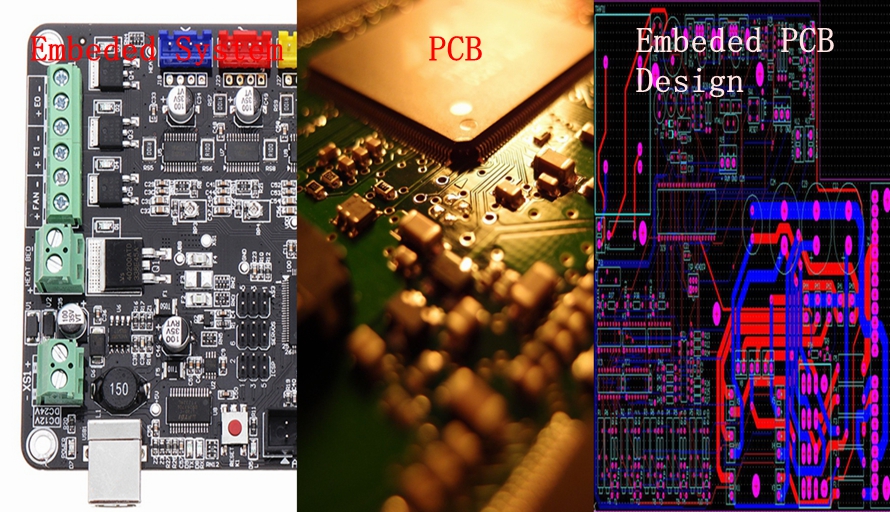
A Printed Circuit Board (PCB) provides the physical platform for connecting electronic components and routing electrical signals, while an embedded system combines hardware and software to perform a specific function. When embedded components or embedded system functions are integrated directly into a PCB structure, the result is commonly referred to as an embedded PCB or embedded component PCB.
The growing demand for smaller form factors, higher functionality, lower power consumption, and improved reliability has made PCB Design and advanced PCB Manufacturing increasingly important. Embedded PCB technology provides engineers with another approach to reducing system size while integrating more functionality into a limited physical space.
This article explains embedded systems, PCBs, and embedded PCB design, including their components, applications, advantages, disadvantages, and key differences.
1. What Is an Embedded System?
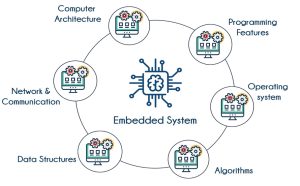
An embedded system is a dedicated computing system designed to perform one or more specific functions within a larger electronic or mechanical product. Unlike a general-purpose computer, an embedded system is typically optimized for a defined application, with hardware and software working together to process inputs and generate appropriate outputs.
For example, a surgical robotic system can use an embedded controller to receive commands and sensor information, process this data through programmed algorithms, and control motors or actuators with extremely high precision. The computing, sensing, and control functions are integrated into the equipment rather than operating as a separate computer.
An embedded system generally consists of three major elements:
- Hardware
- Embedded software or firmware
- Operating system or middleware, when required
The hardware provides processing, memory, communication, and input/output capabilities, while the software controls how the system operates. Middleware and operating systems can provide an interface between application software and the underlying hardware.
1.1 Components of an Embedded System
Most embedded systems are built around a microcontroller (MCU), microprocessor (MPU), system-on-chip (SoC), or another specialized processing device.
A microprocessor generally relies on external memory and peripheral devices. RAM, ROM or flash memory, I/O interfaces, communication controllers, timers, and other peripherals may be implemented as separate components.
A microcontroller integrates many of these functions into a single chip. An MCU may contain:
- CPU core
- Flash or ROM
- SRAM
- GPIO interfaces
- Timers and counters
- ADC/DAC interfaces
- Serial communication interfaces
- PWM controllers
- Security functions
- Other dedicated peripherals
This high level of integration can reduce PCB area and component count, making microcontrollers particularly suitable for compact embedded applications.
Memory architecture is another important consideration. Embedded designs may use volatile memory such as RAM and non-volatile memory such as flash memory or EEPROM. Depending on the processor architecture, systems may also use Harvard architecture, Von Neumann architecture, or modified versions of these architectures.
1.2 Real-World Applications of Embedded Systems
Embedded systems are used across a wide range of industries, including:
- Consumer electronics
- Medical equipment
- Automotive electronics
- Industrial automation
- Telecommunications
- Fire and safety systems
- Aerospace and defense
- Smart home equipment
- Robotics
- Energy and power systems
For example, an embedded controller in a medical monitoring device can continuously acquire sensor data, process physiological signals, and provide real-time information to users or other systems.
In automotive applications, embedded controllers are used for functions such as engine management, braking systems, driver assistance, infotainment, battery management, and vehicle networking.
1.3 Advantages of Embedded Systems
Embedded systems provide several important benefits:
- Compact size: Dedicated hardware and software can be optimized for a specific application.
- High reliability: A system designed for a defined task can reduce unnecessary hardware and software complexity.
- Low power consumption: Embedded hardware can be optimized for the application’s power requirements.
- Cost efficiency: High-volume products can benefit from application-specific hardware and integrated components.
- Real-time operation: Many embedded systems can process inputs and respond within strict timing requirements.
- High efficiency: Hardware and firmware can be optimized for specific tasks.
- Application-specific performance: Resources can be allocated according to the actual requirements of the product.
- Easy integration: Embedded controllers can communicate directly with sensors, actuators, displays, and communication interfaces.
Real-time operation is particularly important for applications such as industrial control, automotive systems, medical equipment, and safety-related electronics.
1.4 Disadvantages of Embedded Systems
Despite their benefits, embedded systems also present several challenges:
- Troubleshooting can be difficult because the system is integrated into another product.
- Hardware and firmware maintenance may require specialized engineering skills.
- Limited processing power and memory can restrict scalability.
- Network connectivity may be limited by hardware architecture and communication interfaces.
- Firmware modifications may require extensive testing and validation.
- Integrating additional functions can be difficult when the original hardware has limited resources.
- Embedded system development can require significant engineering time.
- Real-time communication can experience delays if the system is poorly designed or overloaded.
For safety-critical applications, software updates and hardware modifications may also require extensive validation before deployment.
2. What Is a Printed Circuit Board (PCB)?
A Printed Circuit Board (PCB) is a structural and electrical platform used to mechanically support and electrically connect electronic components.
A typical PCB consists of one or more conductive copper layers separated by dielectric materials. Depending on the application, common PCB materials include FR-4, polyimide, aluminum-based materials, ceramic substrates, and other specialized laminates.
During PCB Manufacturing, copper is patterned to form traces, pads, planes, and other conductive structures. Components are subsequently mounted onto the board using surface-mount technology (SMT), through-hole technology (THT), or a combination of both.
The result is a compact and repeatable electrical interconnection platform.
2.1 Components Used on a PCB
A PCB may contain a wide range of electronic components, depending on the product’s function.
Common components include:
- Resistors
- Capacitors
- Inductors
- Diodes
- Transistors
- Integrated circuits (ICs)
- Microcontrollers
- Microprocessors
- Connectors
- Sensors
- Oscillators and crystals
- Power management devices
- RF components
These components are electrically interconnected through copper traces, vias, planes, and other PCB structures.
SMT components are mounted directly onto PCB pads, while through-hole components use leads inserted into drilled holes. Both technologies remain important in modern PCB assembly.
2.2 PCB Applications
Today, PCBs are found in almost every category of electronic equipment.
Examples include:
- Computers and servers
- Smartphones and tablets
- Televisions
- Audio equipment
- Industrial controllers
- Medical monitoring equipment
- Automotive electronics
- Telecommunications equipment
- Consumer appliances
- Power electronics
- Robotics
- IoT devices
PCB technology is especially valuable when designers need to replace bulky point-to-point wiring with a compact, reliable, and repeatable interconnection structure.
2.3 Advantages of PCBs
The major advantages of PCBs include:
- Compact construction: Multiple electrical connections can be implemented within a relatively small area.
- Reduced wiring: Copper traces replace many individual wires.
- Repeatability: PCB fabrication provides consistent circuit structures across production batches.
- Improved reliability: Properly designed solder joints and interconnections can provide stable electrical performance.
- Space savings: Multilayer PCBs can accommodate complex circuits without significantly increasing board footprint.
- Design flexibility: Engineers can select different layer counts, materials, copper weights, surface finishes, and stackups according to application requirements.
- Manufacturing scalability: PCB production can support both prototypes and high-volume manufacturing.
Modern PCB Design also allows engineers to optimize signal integrity, power distribution, thermal performance, electromagnetic compatibility, and component placement before manufacturing begins.
2.4 Limitations of PCBs
PCBs also have limitations.
For example:
- Standard PCB structures may not be suitable for extremely high-current applications without specialized designs.
- Narrow copper traces have limited current-carrying capacity.
- High-current designs may require thicker copper, wider traces, copper planes, thermal management structures, or specialized heavy-copper PCB technology.
- Very high-density circuits may require advanced technologies such as HDI, microvias, sequential lamination, or embedded components.
- PCB repair can become difficult when components and routing are extremely dense.
Therefore, PCB specifications must be selected according to electrical, mechanical, thermal, and manufacturing requirements rather than simply minimizing board size.
3. What Is Embedded PCB Design?
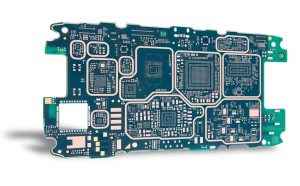
Embedded PCB Design refers to PCB technologies in which selected electronic components are integrated into the PCB structure rather than being mounted entirely on the outer surface.
Traditional PCB assembly places most components on the top or bottom surface of the board. Embedded component technology, in contrast, can place selected passive components or semiconductor devices within internal PCB layers.
This approach can reduce the occupied surface area and shorten electrical interconnections, potentially improving electrical performance and enabling more compact products.
Embedded PCB technology is particularly relevant to high-density electronics, miniaturized products, high-frequency circuits, and applications where space is severely constrained.
3.1 Types of Embedded Components
Embedded PCB structures can incorporate different types of components.
Passive components are among the most common. Embedded passive components can generally be implemented through several approaches:
- Embedding conventional passive components within the PCB structure.
- Using specially designed thin passive components optimized for embedding.
- Fabricating thin-film passive devices using specialized PCB or semiconductor-related processes.
Depending on the manufacturing technology, resistors and capacitors can potentially be integrated into internal PCB layers.
Some advanced technologies can also integrate semiconductor devices or other active components into the PCB structure. However, active component embedding is considerably more demanding because of thermal management, reliability, inspection, repair, and manufacturing process requirements.
3.2 How Embedded PCB Technology Works
The basic concept is to integrate selected components into the multilayer PCB during the fabrication process.
A simplified manufacturing sequence may include:
- PCB material preparation
- Inner-layer circuit fabrication
- Component placement or formation
- Lamination
- Drilling or laser microvia formation
- Copper plating
- Outer-layer circuit formation
- Surface finishing
- Electrical testing
- Final inspection and assembly
The exact process depends on the embedded component technology, PCB material system, component type, and manufacturing requirements.
Because embedded components are located inside the PCB, manufacturing tolerances become particularly important. Component placement, dielectric thickness, via positioning, lamination pressure, thermal behavior, and inspection methods must all be carefully controlled.
3.3 Applications of Embedded PCBs
Embedded PCB technology is used or considered for applications where miniaturization, electrical performance, and packaging efficiency are important.
Potential applications include:
- Automotive electronics
- Advanced driver-assistance systems
- Industrial automation
- Medical electronics
- Wearable devices
- Telecommunications
- RF and high-frequency electronics
- Aerospace electronics
- IoT devices
- High-density computing systems
Automotive electronics are a particularly relevant example because modern vehicles require increasingly sophisticated electronic functions while available packaging space remains limited.
3.4 Advantages of Embedded PCB Technology
Embedded PCB technology can provide several potential benefits:
- Reduced board footprint: Components can occupy internal PCB space instead of consuming valuable surface area.
- Higher packaging density: More functions can be integrated into a smaller package.
- Shorter electrical paths: Embedded components can reduce interconnection lengths.
- Potential signal-integrity benefits: Shorter connections can help reduce parasitic effects in some high-speed designs.
- Improved space utilization: Internal PCB layers become part of the component integration strategy.
- Potentially improved mechanical protection: Embedded components are surrounded by PCB materials rather than being fully exposed on the surface.
- System-level miniaturization: Fewer external components may be required.
These advantages make embedded PCB technology attractive for products that require high functionality in a limited physical space.
3.5 Disadvantages of Embedded PCB Technology
Embedded PCB technology also introduces additional design and manufacturing challenges:
- Higher engineering requirements: Engineers need specialized knowledge of embedded component design and multilayer PCB structures.
- Higher initial cost: Specialized materials, equipment, and manufacturing processes can increase development costs.
- Difficult repair: Internal components are inaccessible once the PCB has been laminated.
- More complex inspection: Conventional visual inspection cannot directly inspect components buried inside the PCB.
- More demanding manufacturing control: Registration, lamination, thermal stress, and material compatibility must be carefully controlled.
- Design-for-manufacturing challenges: Embedded components must be considered from the earliest PCB design stage.
- Reliability considerations: Thermal expansion, moisture, mechanical stress, and long-term material stability must be evaluated.
For these reasons, embedded PCB projects typically require close collaboration between PCB designers, component engineers, and the PCB manufacturer.
4. Embedded System vs. PCB vs. Embedded PCB
Although these three concepts are closely related, they represent different levels of electronic system integration.
| Feature | Embedded System | PCB | Embedded PCB |
|---|---|---|---|
| Primary role | Computing and control | Electrical interconnection and mechanical support | PCB with integrated embedded components |
| Main elements | Hardware + firmware/software | Conductive layers + dielectric materials + components | PCB structure + embedded components |
| Processing capability | Yes, depending on architecture | Not inherently | Depends on integrated components |
| Main purpose | Execute dedicated functions | Connect and support electronics | Increase integration and packaging density |
| Typical complexity | Depends on application | Depends on layer count and design | Generally higher manufacturing complexity |
| Key advantage | Dedicated functionality | Compact electrical interconnection | High integration and space efficiency |
| Main challenge | Software/hardware development | Electrical, mechanical, and manufacturing constraints | Manufacturing, inspection, repair, and reliability |
4.1 Relationship Between Embedded Systems and PCBs
An embedded system normally requires a physical hardware platform. The PCB provides the electrical and mechanical foundation on which processors, memory, sensors, power circuits, communication interfaces, and other components can be installed.
Therefore, an embedded system and a PCB are not necessarily competing technologies. Instead, they normally work together.
For example, a PCB may contain a microcontroller, memory, sensors, power-management ICs, communication interfaces, and connectors. The combination of these hardware components with firmware can form an embedded system.
4.2 How Embedded PCB Design Connects the Two
Embedded PCB technology takes integration one step further by incorporating selected components into the PCB itself.
Instead of placing every component on the PCB surface, certain components can be embedded within the multilayer structure.
This creates a closer relationship between:
Embedded System → PCB Hardware → Embedded Components → System-Level Integration
The objective is not simply to make a PCB smaller. Engineers must balance size reduction with manufacturability, reliability, thermal performance, electrical performance, testing, and lifecycle requirements.
5. Key PCB Design Considerations for Embedded Components
When developing an embedded PCB, several design factors require particular attention.
Component Selection
Not every electronic component is suitable for embedding. Component dimensions, temperature ratings, electrical characteristics, mechanical structure, and compatibility with the PCB manufacturing process must be evaluated.
Thermal Management
Embedded components can be surrounded by dielectric materials, which may change their ability to dissipate heat. High-power components therefore require careful thermal analysis and appropriate heat-transfer paths.
Signal Integrity
Embedding components can shorten electrical paths and reduce parasitic effects. However, high-speed PCB design still requires careful impedance control, return-path planning, stackup optimization, and electromagnetic compatibility analysis.
Manufacturing Tolerances
Embedded structures require accurate layer registration and controlled material thickness. Small manufacturing variations can affect component positioning, via connections, impedance, and overall reliability.
Testing and Inspection
Because embedded components are not directly visible after lamination, manufacturers may need specialized electrical testing, X-ray inspection, cross-section analysis, or other verification methods depending on the product requirements.
Repairability
Surface-mounted components can generally be replaced relatively easily. An embedded component, however, is difficult or impossible to access after PCB fabrication. Therefore, design verification and manufacturing quality control become especially important.
6. Embedded PCB Manufacturing Considerations
Successful embedded PCB production requires more than conventional board fabrication.
The manufacturer should have experience with:
- Multilayer PCB fabrication
- Sequential lamination
- Embedded passive components
- Fine-line routing
- Microvias and HDI structures
- Controlled dielectric thickness
- High-precision registration
- Electrical testing
- X-ray inspection
- Cross-sectional analysis
- Thermal reliability testing
A capable manufacturing partner such as Kingda can help engineers evaluate embedded PCB requirements from the design stage through fabrication and assembly.
For complex projects, Design for Manufacturing (DFM) should be performed before production. DFM analysis can identify potential problems involving component dimensions, clearances, copper distribution, layer registration, drilling, lamination, and assembly requirements.
7. Embedded PCB Design for Modern Automation
Automation continues to expand into vehicles, factories, homes, medical systems, robotics, and infrastructure. As these systems become more intelligent, electronic assemblies must accommodate more processing power, sensors, communication interfaces, and control functions within increasingly limited physical spaces.
This trend is driving demand for:
- Higher PCB density
- Smaller components
- More compact system architectures
- Advanced multilayer PCB structures
- HDI technology
- Embedded passive components
- Improved thermal management
- High-speed signal integrity
- More sophisticated PCB manufacturing processes
Embedded PCB design is therefore becoming an important technology for achieving greater functionality without proportionally increasing product size.
8. Conclusion
Embedded systems, printed circuit boards, and embedded PCB technology perform different but complementary roles in modern electronics.
An embedded system combines dedicated hardware and software to perform specific functions. A PCB provides the electrical interconnection and mechanical platform required to integrate electronic components. An embedded PCB takes integration further by placing selected components within the PCB structure.
As electronic products become smaller and more sophisticated, conventional surface-mounted components alone may not always provide sufficient packaging density. Embedded PCB technology offers another solution by utilizing the internal space of multilayer boards.
However, embedded PCB technology also introduces greater requirements for PCB Design, PCB Manufacturing, thermal management, inspection, testing, reliability, and DFM. For applications where miniaturization and high integration are critical, selecting the right materials, manufacturing processes, and PCB manufacturing partner is essential.
With appropriate engineering analysis and manufacturing control, embedded PCB technology can help electronics manufacturers achieve compact, reliable, and highly integrated products for automotive, medical, industrial, telecommunications, consumer electronics, and other advanced applications.