Flex PCB Coverlay: PCB Design, PCB Manufacturing & Flexible Circuit Protection
Flexible electronics help bridge the gap between high performance and miniaturization, allowing electronic devices to achieve compact dimensions without compromising their functional requirements. This technology is widely used in wearable electronics, medical devices, smartphones, smart TVs, automotive electronics, and many other applications where space, weight, and flexibility are critical.
A Flex PCB is a mature circuit technology manufactured using flexible polymer-based materials. Its lightweight, thin, and bendable structure allows engineers to create three-dimensional circuit configurations that are difficult or impossible to achieve with conventional rigid circuit boards. This makes flexible circuits particularly valuable for space-constrained and dynamically moving electronic assemblies.
One of the most important protective structures used in flexible circuits is the PCB coverlay. Coverlay is an essential part of the layer structure of Flex PCB and Rigid-Flex PCB assemblies. It protects exposed copper conductors, provides electrical insulation, and helps maintain the mechanical reliability of flexible circuits.
In this article, we will explain what PCB coverlay is, how it is applied, which materials are commonly used, and where coverlay technology is applied.
What Is PCB Coverlay?
PCB coverlay is a protective layer applied to flexible printed circuit boards to provide mechanical protection, thermal protection, and electrical insulation between conductive traces.
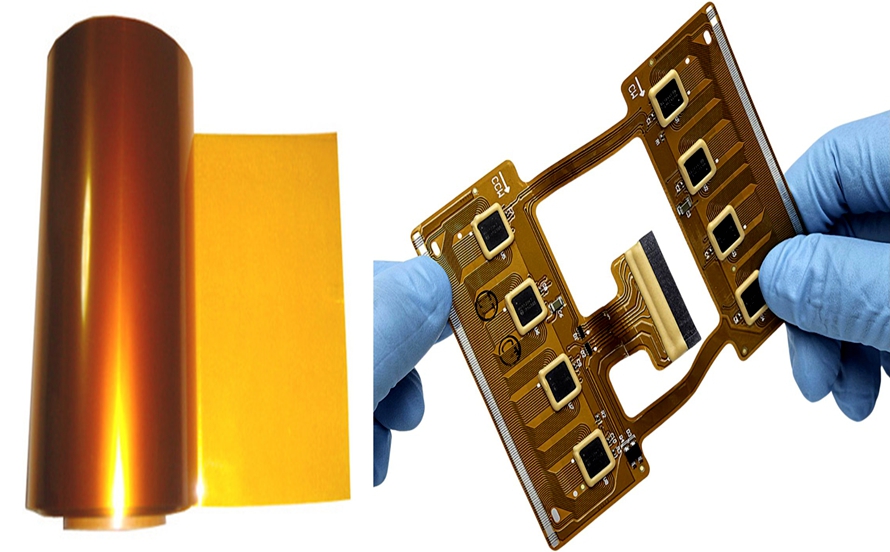
A typical coverlay consists of a flexible polymer film, most commonly polyimide, combined with an adhesive layer. The thickness and material properties can be selected according to the electrical, mechanical, and environmental requirements of the application.
Coverlay is generally applied over the exposed copper circuitry of a flexible PCB. Unlike rigid PCBs, which commonly use solder mask as their primary protective coating, flexible circuits often require coverlay because it provides better mechanical flexibility and durability during bending.
The major functions of Flex PCB coverlay include:
- Protection against oxidation: Copper can oxidize when exposed to moisture, oxygen, and elevated temperatures. Coverlay helps protect exposed copper surfaces from environmental degradation during PCB assembly and normal operation.
- Protection against contamination: Dust, moisture, chemicals, and other contaminants can reach exposed conductors and potentially cause leakage currents, corrosion, or short circuits. Coverlay provides an additional protective barrier.
- Electrical insulation: Coverlay separates conductive traces from surrounding components, shielding structures, and other conductors and helping prevent unintended electrical contact.
- Mechanical protection: The coverlay protects copper traces against abrasion, scratches, and mechanical stress, which is particularly important in flexible and repeatedly moving assemblies.
- Maintaining flexibility: Properly selected coverlay materials preserve the bending characteristics of the flexible circuit, allowing the PCB to conform to curved or three-dimensional spaces.
- Improved reliability: By protecting the copper circuitry from mechanical and environmental damage, coverlay can contribute to the long-term reliability of flexible and rigid-flex assemblies.
For these reasons, coverlay is an important consideration during both PCB Design and PCB Manufacturing.
What Are the Common PCB Coverlay Application Methods?
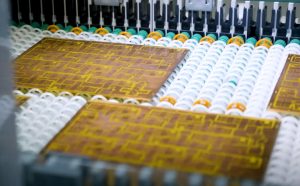
The method used to apply coverlay depends on the coverlay material, circuit geometry, required dimensional accuracy, production volume, and manufacturing cost.
The following are common coverlay application methods used in flexible PCB manufacturing.
1. Film-Based Coverlay
Film-based coverlay is one of the most widely used approaches for flexible circuit manufacturing.
In this process, an adhesive layer, such as acrylic or epoxy adhesive, is applied between the polymer coverlay film and the flexible PCB. The coverlay is then laminated onto the circuit under controlled temperature and pressure.
The coverlay film normally contains openings that expose specific areas such as component pads, soldering areas, and electrical contacts. These openings must be accurately aligned with the underlying circuit pattern.
Laser processing or precision mechanical processing can be used to create highly accurate coverlay openings, depending on the design requirements.
Film-based coverlay provides excellent mechanical protection and is particularly suitable for applications requiring high flexibility and durability.
2. Screen-Printed Coverlay
Screen printing is another method for applying protective materials to flexible circuits.
During this process, a screen or stencil is used to define the required coverlay pattern. A liquid polymer material is deposited through the openings using a squeegee.
After printing, the material must be cured using an appropriate thermal or ultraviolet curing process, depending on the specific formulation.
Screen-printed coverlay can provide a relatively economical solution for certain designs, especially when extremely high dimensional accuracy is not required.
However, engineers must carefully control the coating thickness, registration accuracy, curing conditions, and surface quality during PCB Manufacturing.
3. Photoimageable Coverlay
Photoimageable coverlay uses photolithographic techniques to achieve more precise patterns and openings.
The flexible PCB is first cleaned and prepared to remove dust, particles, and other contaminants. A photoimageable film or coating is then laminated or applied to the circuit.
The material is exposed to ultraviolet light through a photomask containing the required circuit pattern. Depending on the photoresist system, the exposed or unexposed areas are selectively removed during the development process.
A final curing process is then performed to achieve the required mechanical and electrical properties.
Photoimageable coverlay is particularly useful when PCB Design requires fine features, complex geometries, or higher registration accuracy.
What Materials Are Commonly Used for PCB Coverlay?
Flexible PCB designers and engineers can select from several coverlay material systems. Material selection should consider temperature resistance, flexibility, chemical resistance, dielectric performance, manufacturing process compatibility, and cost.
Polyimide
Polyimide is one of the most widely used materials for flexible PCB coverlay.
It offers excellent thermal stability, electrical insulation, chemical resistance, dimensional stability, and flexibility. These properties make polyimide suitable for applications where the circuit may experience repeated bending, elevated temperatures, or demanding environmental conditions.
Polyimide coverlay is widely used in consumer electronics, automotive electronics, medical equipment, industrial electronics, and aerospace systems.
Polyester
Polyester is another material option for flexible circuit protection.
Compared with polyimide, polyester generally has lower temperature resistance, but it can offer advantages in cost and processing for applications with less demanding thermal requirements.
Polyester-based materials also provide good electrical insulation and flexibility. However, designers should evaluate dimensional stability and processing requirements carefully when selecting this material for a specific flexible PCB.
Acrylic Adhesives and Resins
Acrylic adhesive systems are commonly combined with polyimide films to create a strong and flexible coverlay structure.
Acrylic adhesives can provide good adhesion and durability while maintaining the flexibility required by flexible circuits. Their electrical insulation properties also contribute to the protection of the underlying conductive traces.
The adhesive thickness must be considered during PCB Design, particularly around tight bends, fine-pitch components, and controlled-impedance structures.
Silicone
Silicone materials can also be used in certain flexible circuit applications.
Their major advantage is excellent flexibility. Silicone systems can accommodate movement and deformation while maintaining protective coverage over the circuit.
However, their thermal and chemical performance must be evaluated against the specific operating environment. Silicone-based materials can also have different lamination and processing requirements compared with conventional polyimide coverlay systems.
Liquid Crystal Polymer (LCP)
Liquid Crystal Polymer (LCP) is a high-performance material increasingly considered for demanding flexible circuit applications.
LCP offers low moisture absorption, good dimensional stability, favorable high-frequency electrical characteristics, and good thermal performance. These properties make it attractive for applications such as aerospace electronics, medical devices, high-frequency circuits, and advanced communication systems.
However, LCP-based solutions can be more expensive than conventional coverlay materials, so their use should be justified by the application’s performance requirements.
Coverlay vs. Solder Mask: What Is the Difference?

Coverlay and solder mask perform similar protective functions, but they are not interchangeable in every PCB application.
| Feature | PCB Coverlay | Solder Mask |
|---|---|---|
| Typical PCB type | Flex PCB and Rigid-Flex PCB | Rigid PCB |
| Primary purpose | Mechanical protection and insulation | Copper protection and solder bridging prevention |
| Typical material | Polyimide film + adhesive | Polymer coating |
| Flexibility | Excellent | Generally limited |
| Bending applications | Highly suitable | Less suitable |
| Application | Lamination, printing, or photoimageable processes | Coating and imaging processes |
| Typical applications | Flexible circuits, wearable electronics, medical devices | Conventional rigid circuit boards |
The primary difference is mechanical performance. Coverlay is specifically designed to work with flexible substrates and withstand bending and mechanical movement.
Therefore, choosing between coverlay and solder mask should be part of the overall PCB Design strategy rather than simply a cosmetic or manufacturing decision.
What Should Be Considered During PCB Coverlay Design?
Coverlay design directly affects flexible PCB manufacturability and reliability. Engineers should consider several factors before releasing the design for manufacturing.
Coverlay Opening Design
Coverlay openings must accurately expose solder pads, connector contacts, test points, and other areas that require electrical or mechanical access.
Insufficient clearance may interfere with soldering or assembly, while excessive openings can reduce mechanical and environmental protection.
Bend Areas
Coverlay thickness and adhesive properties can influence the bending behavior of the flexible circuit.
Designers should avoid unnecessary rigid structures in dynamic bend areas and consider the bending radius, bend direction, number of bending cycles, and overall stack-up.
Adhesive Squeeze-Out
During lamination, adhesive can flow beyond the intended coverlay area.
Therefore, the coverlay and copper pattern should be designed with appropriate clearances to prevent adhesive from interfering with component pads, contacts, or other functional areas.
Dimensional Registration
Flexible materials can experience dimensional changes during manufacturing. Accurate registration between copper patterns and coverlay openings is therefore important.
High-density flexible circuits may require tighter process control and more advanced coverlay manufacturing techniques.
Thermal Requirements
The selected coverlay material and adhesive system must withstand the thermal conditions associated with soldering, reflow, operating temperature, and environmental exposure.
This is particularly important for automotive, industrial, aerospace, and other high-reliability applications.
What Industries Use PCB Coverlay?
Coverlay technology is widely used across industries where flexible circuits must combine compact dimensions, electrical reliability, and mechanical durability.
Consumer Electronics
Smartphones, laptops, tablets, smart TVs, cameras, wearable devices, and other compact products frequently use flexible circuits.
Coverlay protects miniature copper traces while allowing the circuit to bend around hinges, housings, displays, batteries, and other components.
Medical Devices
Medical equipment and wearable healthcare devices often require compact and lightweight electronic assemblies.
Flexible PCBs with coverlay can be integrated into diagnostic equipment, monitoring devices, wearable sensors, and other applications where mechanical flexibility and electrical reliability are important.
Aerospace Electronics
Aerospace systems operate under demanding environmental conditions involving vibration, temperature variation, mechanical stress, and limited installation space.
Flexible and rigid-flex PCBs with appropriately selected coverlay materials can help protect conductive structures while reducing wiring volume and supporting complex three-dimensional packaging.
Automotive Electronics
Modern vehicles contain a growing number of electronic systems, including displays, sensors, lighting systems, control modules, cameras, and advanced driver-assistance electronics.
Flexible circuits can simplify interconnections in confined spaces, while coverlay protects the circuit against mechanical stress and environmental exposure.
Industrial Automation and Robotics
Robotic systems and automated machinery frequently contain moving components and compact electronic modules.
A flexible PCB with suitable coverlay can accommodate repeated movement and bending while protecting the underlying circuitry. This makes flexible circuit technology useful for robotic joints, sensors, control systems, and industrial equipment.
Why Is PCB Coverlay Important for Flexible Circuit Reliability?
Flexible circuits are fundamentally different from conventional rigid PCBs because they are designed to move, bend, fold, or conform to complex mechanical structures.
As a result, the protective layer must do more than simply cover exposed copper.
A properly designed coverlay system can provide:
- Electrical insulation
- Copper protection
- Mechanical abrasion resistance
- Moisture and contamination protection
- Improved environmental durability
- Better bending reliability
- Compatibility with three-dimensional packaging
- Increased protection during PCB assembly
However, coverlay selection alone cannot guarantee reliability. The substrate material, copper type, copper thickness, adhesive system, bend radius, layer stack-up, via structure, component placement, and assembly process must all be considered together.
PCB Coverlay in PCB Design and PCB Manufacturing
PCB coverlay is a critical element in the development of modern flexible and rigid-flex circuits. By protecting copper traces while maintaining the flexibility of the underlying circuit, coverlay allows engineers to create compact, lightweight, and three-dimensional electronic assemblies.
From polyimide film and acrylic adhesive systems to photoimageable materials and advanced LCP solutions, different coverlay technologies can satisfy different performance and manufacturing requirements.
For successful PCB Manufacturing, engineers should define coverlay openings, thickness, material, adhesive system, bend zones, and registration requirements during the PCB design stage. Early communication between the designer and manufacturer can help prevent assembly problems, improve manufacturability, and achieve more consistent production results.
As flexible electronics continue to expand into wearable devices, medical electronics, automotive systems, aerospace equipment, robotics, and high-density consumer products, PCB coverlay will remain an important technology for protecting flexible circuits and maintaining their long-term electrical and mechanical performance.
Conclusion
PCB coverlay is an essential protective technology for Flex PCB and Rigid-Flex PCB applications. It provides electrical insulation, protects exposed copper, improves resistance to environmental contamination, and helps flexible circuits withstand mechanical stress and repeated bending.
Polyimide remains one of the most common coverlay materials, while polyester, acrylic adhesive systems, silicone, and LCP can be selected for applications with different performance and cost requirements.
From a PCB Design perspective, coverlay openings, bend areas, material thickness, dimensional registration, and thermal requirements must be carefully considered. From a PCB Manufacturing perspective, lamination, curing, alignment, adhesive flow, and process control directly affect the quality and reliability of the finished flexible circuit.
By selecting an appropriate coverlay structure and integrating it into the overall PCB design and manufacturing process, Kingda can help customers develop flexible circuit solutions that meet demanding requirements for compactness, flexibility, reliability, and electrical performance.