PCB Surface Finish Comparison: PCB Design, PCB Manufacturing & Surface Treatment Guide
PCB design and manufacturing are highly technical and precision-driven processes. Every material, component, and manufacturing step can affect the quality, reliability, and performance of the finished circuit board.
One of the most important decisions in PCB Manufacturing is selecting the appropriate surface finish. The surface finish protects exposed copper and provides a suitable interface for soldering components during PCB assembly. Different surface finishes offer different levels of solderability, flatness, durability, shelf life, environmental resistance, and cost.
Therefore, a PCB surface finish comparison should be performed before manufacturing begins. Selecting an unsuitable finish can affect soldering quality, component assembly, reliability, and the long-term performance of the PCB.
This article compares several commonly used PCB surface finishes, including Immersion Tin, Immersion Silver, ENIG, HASL, and OSP, and explains the factors engineers should consider when selecting a finish for a specific application.
What Is PCB Surface Finish and Why Is It Important?
PCB surface finish is a thin protective layer applied to exposed copper areas such as component pads, solder pads, and other conductive surfaces on a printed circuit board.
Copper provides excellent electrical conductivity, but exposed copper can oxidize when exposed to oxygen, moisture, and contaminants. Copper oxide can negatively affect solderability and make reliable component assembly more difficult.
A suitable surface finish creates a protective interface between the copper and the surrounding environment while maintaining good solderability.
The main functions of PCB surface finish include:
- Protecting exposed copper from oxidation and corrosion
- Maintaining solderability during PCB assembly
- Improving the reliability of solder joints
- Providing a suitable surface for SMT component placement
- Improving the storage life of manufactured PCBs
- Supporting fine-pitch and high-density component assembly
- Meeting specific environmental and reliability requirements
Surface finish selection should therefore be considered during both PCB Design and PCB Manufacturing, rather than being treated as a final manufacturing detail.
PCB Surface Finish Comparison
There is no single surface finish that is suitable for every PCB application. The correct choice depends on factors such as PCB complexity, component pitch, production volume, operating environment, storage requirements, soldering process, reliability requirements, and budget.
The following table provides a general comparison of commonly used PCB surface finishes.
| Surface Finish | Main Advantages | Main Limitations | Typical Applications |
|---|---|---|---|
| Immersion Tin | Good solderability, relatively flat, lead-free | Limited shelf life, sensitive to handling and oxidation | Consumer electronics, moderate-volume production |
| Immersion Silver | Good solderability, flat surface, suitable for fine-pitch assembly | Tarnishing/oxidation concerns, handling requirements | High-density electronics, telecommunications |
| ENIG | Excellent flatness, good solderability, corrosion protection | Higher cost, process control required | Fine-pitch SMT, high-reliability electronics |
| HASL | Low cost, good solderability, widely available | Uneven coating, less suitable for very fine-pitch designs | Conventional PCBs, through-hole applications |
| OSP | Low cost, flat surface, lead-free, environmentally favorable | Limited durability and shelf life | High-volume SMT, cost-sensitive electronics |
The following sections examine each finish in greater detail.
1. Immersion Tin
Immersion Tin (ImSn) is a lead-free surface finish that deposits a thin layer of tin (Sn) directly onto exposed copper surfaces through a chemical immersion process.
Because the coating is relatively thin and provides a flat solderable surface, immersion tin can be suitable for SMT assembly and applications requiring relatively uniform pads.
Advantages of Immersion Tin
- Lead-free surface finish
- Good solderability
- Relatively flat surface
- Suitable for SMT assembly
- Lower cost than some noble-metal finishes
- Suitable for certain fine-pitch applications
Limitations of Immersion Tin
One limitation is its relatively limited shelf life compared with some more durable finishes. Surface oxidation and handling conditions can affect solderability if boards are stored for extended periods.
The finish also requires careful manufacturing and storage controls. Improper handling can contaminate the surface and reduce soldering performance.
Immersion tin can be considered for consumer electronics and other applications where cost, solderability, and production requirements are balanced appropriately.
2. Immersion Silver
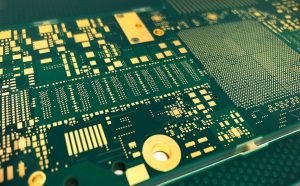
Immersion Silver (ImAg) is another chemical immersion surface finish used to protect exposed copper and provide a solderable surface.
During the process, a thin layer of silver is deposited onto the exposed copper surface. Because immersion silver produces a relatively flat surface, it can be suitable for fine-pitch SMT components and high-density PCB designs.
Advantages of Immersion Silver
- Excellent surface flatness
- Good solderability
- Suitable for fine-pitch components
- Lead-free
- Compatible with SMT assembly
- Suitable for high-density PCB applications
Limitations of Immersion Silver
The primary concern with immersion silver is surface tarnishing. Silver can react with environmental contaminants and sulfur-containing compounds, which may affect its appearance and, under certain conditions, solderability.
Therefore, proper packaging, storage, handling, and process control are important.
Immersion silver is commonly considered for telecommunications, computing, and other high-density electronic applications where a flat surface is required.
3. ENIG — Electroless Nickel Immersion Gold
ENIG (Electroless Nickel Immersion Gold) is one of the most widely used PCB surface finishes for demanding electronic applications.
As its name suggests, ENIG consists of two metallic layers. First, an electroless nickel layer is deposited onto the exposed copper. A thin immersion gold layer is then applied over the nickel surface.
The nickel layer provides a durable barrier and solderable surface, while the gold layer protects the nickel during storage and handling.
Advantages of ENIG
- Excellent surface flatness
- Good solderability
- Good corrosion resistance
- Suitable for fine-pitch SMT components
- Lead-free
- Suitable for high-density PCB designs
- Compatible with multiple assembly processes
- Good storage characteristics when properly processed and packaged
The flat surface of ENIG makes it particularly useful for fine-pitch components, BGA packages, QFNs, and other high-density packages where surface uniformity is important.
Limitations of ENIG
The primary disadvantage of ENIG is its relatively higher cost compared with HASL and OSP.
ENIG also requires strict process control. Problems such as excessive nickel corrosion during the immersion-gold stage can cause reliability issues. Proper chemistry control and manufacturing inspection are therefore essential.
ENIG is frequently selected for complex PCBs where flatness, solderability, and reliability are more important than minimizing surface-finish cost.
4. HASL — Hot Air Solder Leveling
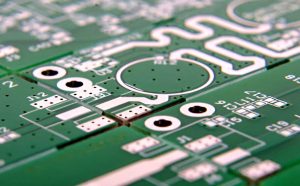
HASL (Hot Air Solder Leveling) is a traditional PCB surface finish that remains widely used for suitable applications.
During HASL processing, the PCB is coated with molten solder. Hot air knives are then used to remove excess solder and produce a relatively uniform solder coating over the exposed copper surfaces.
Both leaded and lead-free HASL processes exist, although lead-free HASL is preferred or required for many modern applications because of environmental and regulatory requirements.
Advantages of HASL
- Relatively low cost
- Good solderability
- Mature and widely available manufacturing process
- Suitable for many conventional PCB designs
- Good durability during normal handling
Limitations of HASL
The primary limitation of HASL is surface flatness.
Because molten solder is applied and then leveled using hot air, the resulting surface can be less uniform than finishes such as ENIG or OSP. This can create challenges for extremely fine-pitch components and some high-density SMT designs.
HASL is therefore more appropriate for conventional PCB designs where ultra-flat pads are not a critical requirement.
Lead-Free HASL vs. Leaded HASL
Lead-free HASL uses solder alloys that do not contain lead, while traditional HASL may use lead-containing solder.
The appropriate option depends on the product’s regulatory, environmental, and application requirements. For products subject to RoHS or similar restrictions, lead-free HASL is generally the relevant choice.
5. OSP — Organic Solderability Preservative
OSP (Organic Solderability Preservative) is an organic surface treatment designed to protect exposed copper from oxidation while maintaining solderability.
Unlike metallic surface finishes such as ENIG and immersion silver, OSP uses a thin organic coating rather than depositing a metal layer onto the copper.
Advantages of OSP
- Low material cost
- Relatively simple process
- Excellent surface flatness
- Lead-free
- Suitable for fine-pitch SMT
- Low additional metal content
- Generally considered a more environmentally favorable option than some metallic finishes
OSP is particularly attractive for high-volume SMT manufacturing where a flat solderable surface and cost efficiency are important.
Limitations of OSP
OSP coatings can be more vulnerable to mechanical damage and repeated thermal processing than some metallic finishes.
The coating may also have a more limited storage life, depending on the specific chemistry, packaging conditions, and environmental exposure.
For this reason, manufacturers should carefully consider production schedules, storage conditions, assembly cycles, and handling requirements before selecting OSP.
PCB Surface Finish Comparison: Key Selection Factors
Selecting a surface finish should not be based on price alone. Engineers should evaluate the complete requirements of the PCB and its intended application.
1. PCB Design Complexity
Fine-pitch components, BGAs, QFNs, micro-BGAs, and high-density interconnect structures often require a flat and uniform surface.
In these cases, finishes such as ENIG, immersion silver, immersion tin, or OSP may be considered depending on the overall design requirements.
2. Soldering Process
The selected surface finish must be compatible with the planned assembly process.
Consider:
- SMT reflow soldering
- Wave soldering
- Selective soldering
- Hand soldering
- Multiple reflow cycles
The number of thermal cycles can be particularly important when evaluating organic and metallic surface finishes.
3. Storage and Shelf Life
If PCBs will be stored for extended periods before assembly, the surface finish must maintain acceptable solderability throughout the expected storage period.
Packaging, humidity control, temperature, and handling conditions can all influence surface condition.
4. Flatness Requirements
Flatness is especially important for modern surface-mount packages.
For example, BGA and fine-pitch components can be sensitive to pad coplanarity and surface uniformity. A finish with good flatness may therefore simplify assembly and improve process consistency.
5. Environmental Requirements
Engineers should determine whether the product must comply with environmental regulations such as RoHS.
The surface finish should also be evaluated for its resistance to humidity, corrosion, contamination, and other environmental conditions relevant to the final product.
6. Cost
Surface finish can contribute significantly to PCB manufacturing cost.
HASL and OSP are often selected for cost-sensitive applications, while ENIG and other advanced finishes may be justified when flatness, reliability, or specialized performance requirements are more important.
The appropriate choice should consider the total cost of ownership rather than surface-finish price alone.
How to Choose the Right PCB Surface Finish
A practical selection process can be divided into several steps.
Step 1: Identify the PCB Application
Determine whether the board will be used in:
- Consumer electronics
- Telecommunications
- Industrial equipment
- Automotive electronics
- Medical equipment
- Aerospace systems
- Power electronics
- Computing and high-density electronics
Each application can have different reliability and environmental requirements.
Step 2: Evaluate Component Density
If the PCB uses fine-pitch components or BGA packages, surface flatness becomes more important.
A finish such as ENIG may be considered when high surface uniformity is required.
Step 3: Determine the Assembly Process
Identify whether the board will undergo reflow, wave soldering, selective soldering, or multiple assembly processes.
The finish should be compatible with the complete assembly process rather than only the initial soldering operation.
Step 4: Consider Production Volume
For high-volume production, a cost-effective and stable surface finish can have a significant impact on manufacturing economics.
For smaller production volumes or high-reliability applications, a higher-cost finish may be selected when its technical advantages justify the additional expense.
Step 5: Consider Storage Requirements
Determine how long the PCB will be stored before assembly and how it will be packaged.
Finishes with more demanding storage requirements may require additional handling and environmental controls.
Step 6: Confirm Manufacturer Capability
Not every PCB manufacturer offers every surface finish with the same process capability.
Before production, confirm the manufacturer’s available surface finishes, thickness controls, inspection methods, assembly compatibility, and applicable quality standards.
At Kingda, surface-finish selection can be evaluated together with the PCB material, layer structure, copper thickness, component package, assembly process, and application environment to create a manufacturing solution that matches the project’s technical requirements.
PCB Surface Finish Comparison: Which One Should You Choose?
There is no universally applicable “best” PCB surface finish. The appropriate choice depends on the specific combination of electrical, mechanical, thermal, environmental, assembly, and economic requirements.
For example:
- HASL can be considered for conventional and cost-sensitive PCB designs.
- Lead-Free HASL is suitable when lead-free manufacturing is required and the design can accommodate its surface profile.
- OSP can be attractive for high-volume SMT production requiring a flat and economical surface.
- Immersion Tin can provide a flat, lead-free solderable surface for suitable applications.
- Immersion Silver can be considered when excellent flatness and solderability are required, with appropriate protection against tarnishing.
- ENIG is frequently selected for fine-pitch, high-density, and reliability-sensitive PCB applications.
The final selection should be based on engineering requirements rather than simply choosing the lowest-cost option.
Conclusion
PCB surface finish is a critical part of both PCB Design and PCB Manufacturing. It protects exposed copper, maintains solderability, supports reliable component assembly, and can influence the long-term performance of the finished circuit board.
The most common options include HASL, Lead-Free HASL, OSP, Immersion Tin, Immersion Silver, and ENIG. Each provides a different balance of flatness, solderability, durability, storage life, environmental resistance, manufacturing complexity, and cost.
When performing a PCB surface finish comparison, engineers should evaluate PCB complexity, component pitch, assembly technology, production volume, storage requirements, environmental conditions, reliability expectations, and budget.
By selecting the surface finish according to the actual requirements of the application and confirming manufacturing capabilities in advance, Kingda can help customers achieve reliable, manufacturable, and cost-effective PCB solutions.