What Is Box Build Assembly?
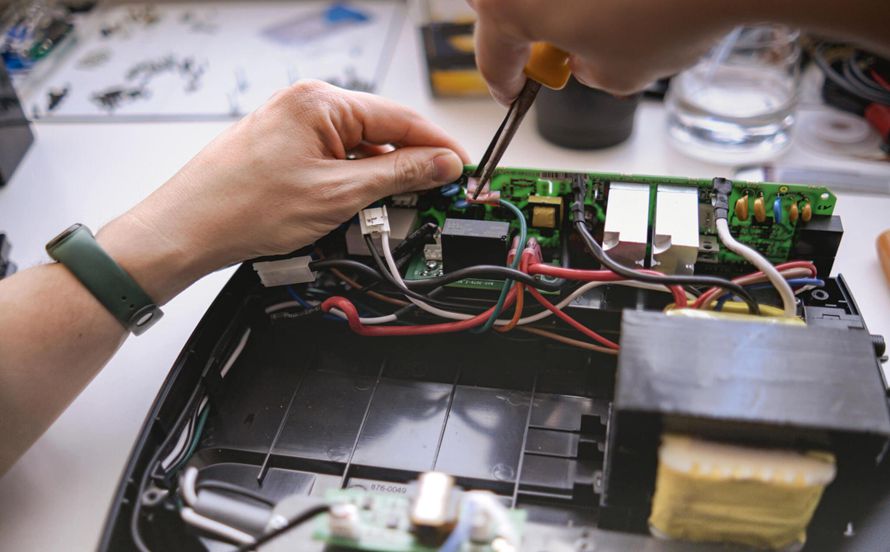
Box Build Assembly refers to the complete process of integrating a product’s electronic, mechanical, electrical, and structural components into a fully functional unit.
Unlike conventional PCB Assembly, which primarily focuses on mounting and soldering electronic components onto a printed circuit board, box build assembly covers the entire product-level manufacturing process.
A typical box build may include:
- PCB and electronic components
- Enclosure or housing
- Cable assemblies and wire harnesses
- Mechanical components
- Pneumatic or electromechanical components
- Connectors and interconnection systems
- Displays and user interfaces
- Power supplies and other functional modules
The completed product is then assembled, inspected and tested to verify that the entire system performs according to its design requirements.
According to industry practice, box-build manufacturing can cover the process from product design and material procurement through PCB assembly, wire and cable harnessing, mechanical assembly, inspection and final testing.
Box Build Assembly vs. PCB Assembly
The main difference between PCB assembly and box build assembly is the level of integration.
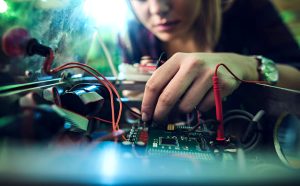
PCB Assembly generally involves mounting electronic components onto a bare PCB using SMT, THT, or other assembly methods. The resulting PCBA is an electronic subassembly rather than a complete finished product.
By contrast, Box Build Assembly integrates the PCBA with the enclosure, cables, connectors, mechanical parts, displays, power systems and other assemblies.
| Feature | PCB Assembly | Box Build Assembly |
|---|---|---|
| PCB fabrication | Usually involved | May be included |
| Electronic component assembly | Yes | Yes |
| SMT/THT assembly | Yes | Usually included |
| Cable assembly | Limited | Yes |
| Wire harness | Limited | Yes |
| Mechanical assembly | Limited | Yes |
| Enclosure installation | No | Yes |
| System integration | Limited | Yes |
| Functional testing | PCBA-level | Product-level |
| Final packaging | Usually limited | Yes |
Therefore, box build assembly can be considered a higher-level manufacturing and system integration service built around PCB assembly.
Key Components of Box Build Assembly
A complete box-build product can contain many different components. The exact configuration depends on the product architecture and application.
PCB and Electronic Components
The PCB Assembly is often the electronic core of the finished product. It may contain ICs, resistors, capacitors, connectors, sensors, power components and other electronic devices.
Depending on the design, the PCBA may use:
- Surface-mount technology (SMT)
- Through-hole technology (THT)
- Mixed-technology assembly
- Manual soldering
- Automated soldering
The assembled PCB is then installed into the product enclosure and connected to other subsystems.
Enclosure
The enclosure provides mechanical protection for the internal electronics.
Depending on the application, enclosures can be manufactured from:
- Plastic
- Aluminum
- Steel
- Stainless steel
- Die-cast materials
- Other engineered materials
The enclosure must provide sufficient space for the PCB, cables, connectors, mechanical components and thermal-management structures.
Cable Assemblies and Wire Harnesses
Cable assemblies and wire harnesses establish electrical connections between different components and modules.
A box-build system may require:
- Power cables
- Signal cables
- Data cables
- Custom wire harnesses
- Coaxial cables
- Ribbon cables
- Internal interconnects
Cable routing should be considered early in the design process because poor routing can cause mechanical interference, signal integrity problems, difficult assembly and maintenance issues.
Mechanical Components
Mechanical components can include brackets, screws, mounting plates, heat sinks, fans, hinges, shields and other structural parts.
Proper mechanical tolerances are particularly important because the components must fit together accurately while maintaining the required electrical and mechanical performance.
User Interfaces and Displays
Some finished products include displays, buttons, touchscreens, indicators, switches or other human-machine interface components.
These components must be correctly positioned within the enclosure and electrically connected to the main PCB or control system.
Complete Box Build Assembly Process
A successful Box Build Assembly Process requires coordination between engineering, procurement, manufacturing, quality control and logistics teams.
The major stages are described below.
1. Design and Manufacturing Planning
The process begins with product requirements and engineering documentation.
At this stage, the manufacturer and customer should define:
- Product functions
- Mechanical dimensions
- Electrical requirements
- PCB configuration
- Component specifications
- Enclosure requirements
- Cable and harness requirements
- Testing requirements
- Regulatory requirements
- Production quantities
Prototype development is also important before mass production. A prototype allows engineers to identify mechanical interference, assembly problems, thermal issues, cable-routing problems and other design weaknesses.
2. Design for Manufacturing (DFM)
Design for Manufacturing (DFM) is one of the most important considerations in box build assembly.
DFM evaluates whether the product can be manufactured consistently, efficiently and economically.
Important DFM considerations include:
Simplify the Design
Reducing unnecessary components and using standardized parts can simplify assembly and reduce manufacturing complexity.
Subassemblies can also be designed so that they can be tested independently before being integrated into the final product.
Optimize Mechanical Tolerances
Mechanical components should have appropriate dimensional tolerances.
Poor tolerance control can result in:
- Assembly interference
- Misalignment
- Excessive gaps
- Difficult installation
- Mechanical stress
Consider Cable Routing
Cable paths should be defined during the design stage rather than after the enclosure has been manufactured.
Engineers should consider bend radius, connector access, cable length, interference and serviceability.
Consider Testing
Test points, connectors and access points should be designed into the product so that technicians can perform functional and electrical testing efficiently.
DFM is widely used in box-build manufacturing to evaluate dimensions, tolerances, materials, tooling and manufacturing risks before production begins.
3. Component Procurement and Inventory Management
After the design has been finalized, the required materials and components must be sourced.
Typical procurement items include:
- PCBs
- Electronic components
- Enclosures
- Connectors
- Cables
- Wire harnesses
- Mechanical hardware
- Displays
- Power supplies
- Labels and packaging materials
Effective Supply Chain Management is essential because component shortages can delay the entire production schedule.
Important considerations include:
- Supplier qualification
- Component availability
- Lead time
- Minimum order quantity (MOQ)
- Component lifecycle
- Alternative components
- Incoming quality control
- Inventory levels
For long-term products, manufacturers should also consider component obsolescence and establish approved alternatives where appropriate.
4. PCB Assembly
The next stage is PCB Assembly, which converts the bare PCB into a functional electronic subassembly.
Surface Mount Technology (SMT)
SMT assembly generally includes:
- Solder paste printing
- Solder paste inspection
- Pick-and-place
- Reflow soldering
- AOI inspection
- X-ray inspection when required
- Electrical testing
SMT is widely used because it supports high component density and automated production.
Through-Hole Technology (THT)
Through-Hole PCB Assembly is used for components that require mechanical reinforcement or cannot be mounted using SMT.
The process generally includes:
- Component insertion
- Manual or automated placement
- Wave soldering or selective soldering
- Inspection
- Electrical testing
Many products use mixed technology, combining SMT and THT components on the same PCBA.
5. System Integration
After the PCBA has been completed and tested, it can be integrated into the enclosure.
This stage can include:
- PCB mounting
- Screw installation
- Bracket installation
- Heat sink installation
- Connector installation
- Cable routing
- Wire harness installation
- Mechanical subassembly
- Display installation
- Fan or thermal-management installation
The PCB may be secured using screws, standoffs, brackets or other mechanical fastening methods.
Cable and Wire Harness Integration
Cable and harness installation is a particularly important part of box-build manufacturing.
Engineers need to ensure that:
- Cables have sufficient length
- Connectors are correctly oriented
- Wires are not excessively bent
- Harnesses do not interfere with moving parts
- High-voltage and low-voltage wiring are appropriately separated
- Signal cables are routed appropriately
- Cables are securely fixed
Proper cable management improves both reliability and serviceability.
Mechanical Assembly
Mechanical components are then installed and secured.
Depending on the product, this may involve:
- Screws
- Clips
- Brackets
- Adhesives
- Gaskets
- Shields
- Heat sinks
- Fans
- Mounting plates
Geometric Dimensioning and Tolerancing (GD&T) can be used to control critical mechanical dimensions and ensure proper component fit.
6. Testing and Quality Assurance
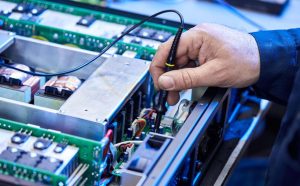
Testing is one of the most important stages of Box Build Assembly because the final product must be evaluated as a complete system rather than as an individual PCB.
Functional Testing
Functional testing verifies that the completed product performs its intended functions.
For example, testing may verify:
- Power input
- Communication interfaces
- Sensors
- Displays
- Buttons
- Motors
- Relays
- Data interfaces
- Control functions
Power-On Testing
Power-on testing verifies that the assembled product can start correctly and reach its required operating state.
It can help identify:
- Incorrect wiring
- Power supply problems
- Short circuits
- Incorrect component installation
- Firmware or configuration issues
Performance Testing
Performance testing evaluates whether the product meets defined electrical and functional specifications under specified operating conditions.
Compliance Testing
Depending on the product and target market, additional testing may be required for safety, electromagnetic compatibility (EMC), environmental performance or other regulatory requirements.
Visual Inspection
Visual inspection can identify:
- Missing components
- Incorrect components
- Damaged parts
- Loose screws
- Cable-routing problems
- Soldering defects
- Labeling errors
- Mechanical damage
Automated Optical Inspection
AOI (Automated Optical Inspection) uses cameras and software to identify defects on electronic assemblies.
For complex products, AOI can be combined with other inspection and testing methods to provide more comprehensive quality control.
7. Final Assembly, Labeling and Packaging
After the product passes all required tests, the final assembly stage is completed.
Typical activities include:
- Installing covers
- Final tightening
- Installing labels
- Applying serial numbers
- Applying barcodes
- Firmware configuration
- Final visual inspection
- Packaging
- Documentation preparation
Protective packaging may include:
- Foam
- Bubble wrap
- Anti-static bags
- Custom protective inserts
- Corrugated packaging
The packaging method should be selected according to product size, weight, sensitivity and transportation requirements.
Common Challenges in Box Build Assembly
Although box build assembly provides a complete manufacturing solution, several challenges need to be addressed.
Component Availability
Electronic components may have long lead times or become obsolete. Early procurement planning and qualified alternative components can reduce supply-chain risks.
Mechanical and Electrical Integration
The PCB, enclosure, cable harness and mechanical components must fit together correctly. Even a small dimensional error can cause assembly problems.
Cable Management
Improper cable routing can result in excessive bending, connector stress, electromagnetic interference or difficulty during maintenance.
Thermal Management
High-power electronic components can generate considerable heat. Heat sinks, thermal interfaces, fans or other cooling methods may therefore be required.
Testing Complexity
A complete product contains more subsystems than a standalone PCBA. Therefore, testing must cover both individual functions and overall system performance.
Traceability
For products requiring high reliability, manufacturers should maintain traceability for components, assemblies, production batches and test results. Serial numbers, barcodes and manufacturing records can help identify the source of problems when failures occur.
Advantages of Box Build Assembly
Working with a capable box-build manufacturer can provide several manufacturing benefits.
One-Stop Manufacturing
Instead of coordinating multiple suppliers for PCB assembly, cables, mechanical components and final assembly, customers can consolidate these processes with one manufacturing partner.
Reduced Supply Chain Complexity
A single supplier can coordinate procurement, inventory, assembly and testing, reducing the number of communication channels required.
Better System-Level Quality Control
When the same manufacturer handles multiple assembly stages, quality information can be integrated across the production process.
Faster Product Integration
Integrated manufacturing can reduce delays between PCB assembly, mechanical assembly, system integration and final testing.
Improved Product Traceability
A structured manufacturing system can maintain records for components, assemblies, testing and final products.
How to Choose a Box Build Assembly Manufacturer
When selecting a Box Build Assembly Manufacturer, companies should evaluate more than PCB assembly capability.
Important criteria include:
- PCB assembly capabilities
- THT and SMT production
- Cable and wire harness assembly
- Mechanical assembly capabilities
- Component sourcing
- DFM and DFA support
- Functional testing
- Quality management system
- Supply chain management
- Production traceability
- Prototype and small-batch capabilities
- Final packaging and logistics
A manufacturer capable of managing PCB assembly, mechanical integration, cable harnesses, testing and final packaging can provide a more complete manufacturing workflow.
Why Choose Kingda for Box Build Assembly?
Kingda can provide an integrated manufacturing approach covering PCB assembly and product-level integration.
The service can be structured around the requirements of the customer’s product, including:
- PCB Assembly
- SMT assembly
- Through-hole assembly
- Component sourcing
- Cable and wire harness assembly
- Mechanical assembly
- Box build integration
- Functional testing
- Quality inspection
- Final packaging
For products requiring customized manufacturing, early communication between the customer and manufacturer is particularly important. Engineering documentation, BOMs, Gerber files, mechanical drawings, assembly instructions and test specifications should be reviewed before production begins.
This approach helps identify manufacturing risks early and supports a more stable transition from prototype to production.
Conclusion
Box Build Assembly is much more than simply placing a PCB inside an enclosure. It is a complete product-level manufacturing process that integrates electronics, mechanical components, cables, wire harnesses, enclosures and testing into a finished product.
A typical Box Build Assembly Process includes design and DFM, component procurement, PCB assembly, system integration, cable and mechanical assembly, testing, quality assurance and final packaging.
For OEMs and electronics companies, effective DFM, reliable supply-chain management, appropriate testing and strong manufacturing traceability are essential to achieving consistent product quality.
By selecting an experienced manufacturing partner such as Kingda, customers can integrate multiple manufacturing stages into a coordinated workflow and simplify the transition from PCB assembly to complete electronic product manufacturing.