
Limited Budget? We Provide Multiple Cost-Effective PCB Process Options
As a critical component in electronic products, PCB cost control directly impacts the overall project budget. During product development, many companies face the challenge of maintaining product quality while working within strict cost limitations. They often worry that choosing lower-cost manufacturing options may affect reliability, while premium solutions may exceed their expected budget.
In reality, companies do not need to compromise between quality and cost. By selecting the right PCB manufacturing process based on application requirements, production volume, and performance expectations, it is possible to achieve reliable performance while significantly improving cost efficiency.
Through optimized materials, manufacturing methods, and production planning, we provide flexible PCB solutions that help customers achieve better value without sacrificing product reliability.
Scenario 1: Standard Applications — Optimizing Materials and Manufacturing
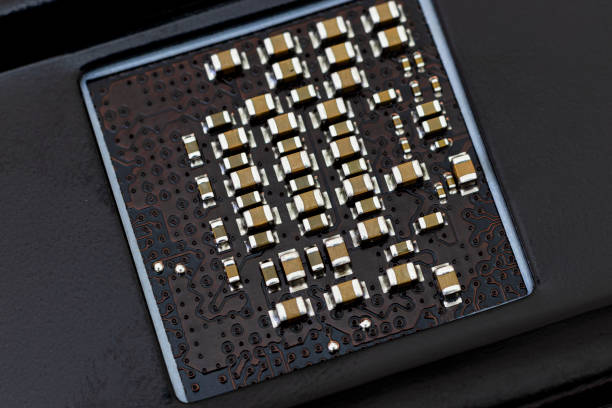
Processes
For applications such as consumer electronics, household appliances, and general-purpose control boards, standard FR-4 materials combined with optimized manufacturing processes provide an excellent balance between performance and cost.
FR-4 is one of the most widely used PCB materials due to its good electrical insulation, mechanical strength, thermal stability, and availability. Since it has a mature supply chain and stable manufacturing process, it helps reduce material procurement costs and shorten production cycles.
For standard applications, unnecessary manufacturing complexity can often be avoided. For example, if high-precision circuit patterns are not required, using standard etching accuracy instead of advanced fine-line processes can reduce production expenses. Similarly, optimizing board dimensions and panel utilization can minimize material waste and improve manufacturing efficiency.
By selecting suitable materials and simplifying unnecessary processes, companies can achieve affordable PCB fabrication while maintaining product reliability.
For more information about our manufacturing capabilities, visit our PCB fabrication services.
Scenario 2: Medium-Performance Applications — Balancing Surface Finish and Layer Design
For products such as industrial control equipment and automotive electronics, higher reliability and environmental resistance are usually required. However, these applications do not always need the most advanced PCB technologies.
Choosing the right surface finish is an important factor in controlling PCB costs.
Traditional HASL (Hot Air Solder Leveling) offers a lower-cost solution but may have limitations when used with fine-pitch components. ENIG (Electroless Nickel Immersion Gold) provides excellent surface flatness and oxidation resistance but comes with a higher manufacturing cost.
For many medium-performance applications, alternatives such as immersion tin or immersion silver can provide a better balance between solderability, reliability, and cost. These surface finishes are compatible with automated assembly processes while maintaining reasonable production expenses.
In addition, PCB layer count should be carefully planned. More layers do not always mean better performance. Through optimized component placement, signal routing design, and engineering improvements, some designs can achieve required electrical performance with fewer layers.
Reducing unnecessary layers can lower material costs, simplify production processes, and improve overall product stability.
Our PCB cost optimization strategies help customers select the right combination of technology and budget requirements.
Learn more about our advanced solutions through our multilayer PCB manufacturing capabilities.
Scenario 3: Small-Batch Production — Reducing Costs Through Batch Planning and Process Reuse
For startups, research projects, and small-volume production, flexible manufacturing strategies are essential for controlling PCB costs.
Many companies assume small orders always result in higher unit prices. However, through proper production planning, small-batch projects can still achieve competitive pricing.
By combining multiple production requirements, adjusting inventory plans, and scheduling manufacturing efficiently, customers can benefit from better production utilization and reduced unit costs.
Another effective approach is reusing proven PCB designs and manufacturing processes. Instead of frequently changing board structures, hole specifications, or material selections, companies can adopt standardized designs that have already been validated.
This reduces engineering changes, prevents unnecessary production adjustments, shortens development cycles, and lowers overall project expenses.
For early-stage product development, our PCB prototype manufacturing solutions help companies validate designs efficiently before moving into mass production.
Explore our PCB prototype services for flexible development and testing support.
Achieving Lower Costs Without Compromising PCB Quality
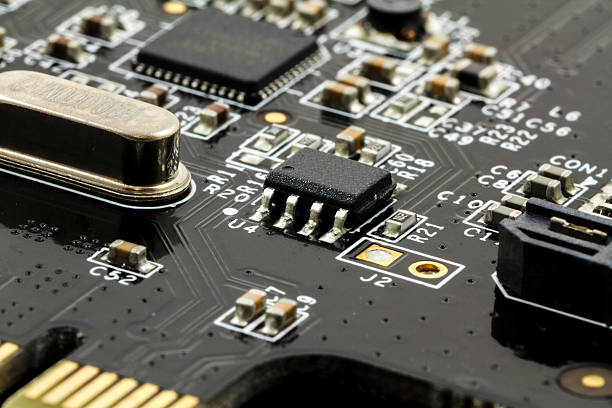
A limited budget does not mean companies must sacrifice PCB quality or performance. The key is finding the right balance between product requirements and manufacturing processes.
Whether choosing standard materials to control basic costs, optimizing manufacturing processes to improve cost efficiency, or reducing expenses through production planning and design reuse, companies can achieve reliable PCB solutions within their budget.
A professional PCB supplier should help customers evaluate factors such as application environment, electrical requirements, production volume, and future scalability before selecting the most suitable manufacturing approach.
By combining engineering expertise, optimized production methods, and strict quality management, gopcba provides customers with reliable and flexible PCB solutions that deliver excellent value.
Our goal is to help companies achieve cost-effective PCB solutions that reduce unnecessary expenses while maintaining stable performance, allowing products to reach the market faster and compete more effectively.