Custom Automotive LiDAR PCB Assembly for Autonomous Driving Systems | gopcba
LiDAR (Light Detection and Ranging) has become one of the most important sensing technologies in autonomous driving systems. By accurately detecting surrounding environments, measuring distances, and generating detailed 3D maps, LiDAR sensors provide critical data for autonomous vehicles to make safe and intelligent decisions.
Inside every LiDAR system, the printed circuit board (PCB) acts as the central control and communication platform. It is responsible for power management, signal transmission, data processing, laser control, and communication between different electronic modules.
Therefore, developing a reliable Automotive LiDAR PCB requires advanced design capabilities, high-quality materials, precise manufacturing processes, and strict testing procedures. A properly designed PCB can significantly improve LiDAR accuracy, stability, and durability under complex automotive conditions.
At gopcba, we provide professional Custom PCB Assembly solutions for automotive electronics, supporting prototype development, small-batch production, and high-volume manufacturing requirements. Our capabilities include PCB design, component sourcing, assembly, and manufacturing services to help customers accelerate next-generation autonomous driving projects.
Before starting the customization process of a LiDAR circuit board, engineers must fully understand the technical requirements of the LiDAR system, application environment, and performance targets. Proper preparation ensures that the final PCB design meets the strict requirements of automotive applications.
Different LiDAR architectures have different requirements for PCB design and assembly.
Mechanical LiDAR systems use rotating components driven by motors to achieve environmental scanning. The PCB must support motor control, power regulation, and communication functions while maintaining stable operation under continuous movement.
Hybrid solid-state LiDAR systems use technologies such as rotating mirrors or optical components. Their circuit boards require excellent signal processing capability and stable data transmission performance.
Solid-state LiDAR based on optical phased array technology requires extremely high precision because of its advanced scanning method. The PCB design must provide excellent signal integrity, compact layout, and reliable electrical performance.
Flash LiDAR systems do not rely on mechanical scanning modules. Their PCB structure focuses more on high-speed data processing, sensor integration, and efficient thermal management.
Because different LiDAR technologies have unique electrical and mechanical requirements, selecting the correct PCB structure is a critical step during development.
The application environment directly affects the design requirements of an Automotive LiDAR PCB.
For autonomous vehicles operating in urban environments, LiDAR systems must process large amounts of environmental data, including pedestrians, vehicles, traffic signs, and obstacles. The PCB requires high computing capability, stable signal transmission, and excellent electromagnetic compatibility.
For highway autonomous driving applications, LiDAR systems usually require longer detection distances and higher measurement accuracy. The PCB must support high-performance sensors and maintain reliable communication between different modules.
Automotive environments also expose electronic components to vibration, temperature fluctuations, humidity, and electromagnetic interference. Therefore, PCB design must consider mechanical reliability and long-term operational stability.
Before beginning PCB development, engineers need to evaluate key technical specifications, including:
High-performance LiDAR systems require advanced circuit solutions to ensure accurate signal acquisition and processing. These requirements directly influence PCB layer structure, material selection, routing design, and manufacturing technology.
The manufacturing process of LiDAR circuit boards requires strict control over materials, assembly technology, and quality management. Every production stage affects the final reliability of the autonomous driving system.
Material selection plays an essential role in LiDAR PCB Assembly.
For high-speed signal transmission applications, advanced high-frequency PCB materials may be required to maintain signal integrity and reduce transmission losses. These materials provide stable dielectric performance and improved electrical characteristics for high-frequency circuits.
For compact LiDAR structures, flexible PCB materials can provide better installation flexibility and help optimize internal space utilization. Flexible circuits are especially useful when multiple electronic modules need to be connected within limited mechanical structures.
gopcba also provides professional Flex PCB Assembly solutions for applications requiring lightweight, compact, and highly reliable circuit integration.
Flex PCB Assembly enables manufacturers to develop more efficient electronic designs for advanced automotive and industrial applications.
Thermal management is another critical factor in LiDAR PCB development.
During operation, laser modules, processors, and power components generate heat. Excessive temperature can affect component performance, reduce lifespan, and cause system instability.
Effective thermal solutions may include: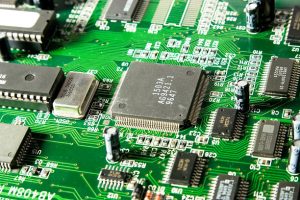
A well-designed thermal system ensures that the LiDAR sensor maintains stable performance during long-term vehicle operation.
The manufacturing accuracy of automotive LiDAR circuit boards directly impacts system reliability.
Advanced PCB Manufacturing processes are required to achieve precise trace patterns, reliable multilayer alignment, and excellent electrical performance.
During production, manufacturers must carefully control:
For complex LiDAR applications, high-density interconnect (HDI) technology and advanced assembly processes can help achieve smaller designs with improved signal performance.
gopcba provides complete PCB Manufacturing services, supporting advanced circuit board production for automotive electronics, industrial equipment, and high-performance applications.
The assembly quality of a LiDAR circuit board directly affects the reliability and service life of the entire sensing system. Since autonomous vehicles operate under continuous vibration, temperature changes, and complex road conditions, every electronic connection must maintain excellent mechanical and electrical stability.
During LiDAR PCB Assembly, manufacturers must carefully control soldering processes, component placement accuracy, and inspection procedures.
Important assembly considerations include:
For sensitive components such as laser drivers, optical sensors, and high-speed processors, advanced SMT technology ensures stable connections and minimizes signal loss.
gopcba provides professional SMT PCB Assembly services, supporting high-density electronic designs with precise component placement and reliable manufacturing quality.
Modern LiDAR systems generate and process massive amounts of data in real time. Therefore, maintaining signal integrity is one of the most important requirements for Automotive LiDAR PCB design.
High-speed PCB design must consider:
Poor PCB layout can lead to signal distortion, electromagnetic interference, and reduced sensor accuracy.
Professional PCB engineers use advanced design methods to optimize routing structures and ensure stable communication between LiDAR modules, processors, and vehicle control systems.
For complex automotive electronics, gopcba offers professional PCB Design Layout services to help customers achieve optimized circuit performance before manufacturing.
After completing the PCB production and assembly process, comprehensive testing and optimization are essential to ensure the circuit board meets automotive reliability standards.
Testing helps identify potential issues related to electrical performance, mechanical reliability, thermal stability, and environmental resistance.
Functional testing is the first step in verifying LiDAR PCB performance.
Engineers need to confirm that all critical modules operate correctly, including:
Any failure in these areas may affect the accuracy of environmental detection and reduce the safety of autonomous driving systems.
Through professional testing procedures, manufacturers can ensure that each PCB performs according to the original design specifications.
Automotive electronics must operate reliably under harsh conditions. Therefore, LiDAR circuit boards require strict environmental testing.
Typical reliability tests include:
These tests simulate real vehicle operating conditions and verify whether the PCB can maintain stable performance throughout its service life.
A reliable Custom PCB Assembly process helps ensure that electronic systems continue working accurately even in challenging environments.
Laboratory testing provides important performance data, but actual road testing is also necessary.
During vehicle testing, LiDAR systems equipped with customized PCBs are evaluated under different scenarios, including:
Real-world testing helps engineers identify problems that may not appear during laboratory evaluation.
For example, engineers can evaluate whether the LiDAR system can accurately recognize pedestrians, vehicles, road barriers, and other objects under different weather conditions.
After testing, engineers analyze performance data and make necessary improvements.
If signal interference is detected, possible solutions include:
If thermal issues occur, engineers may improve heat dissipation through:
Continuous optimization ensures that the final Automotive LiDAR PCB solution provides excellent performance, reliability, and durability for autonomous driving applications.
Developing a reliable LiDAR circuit board requires cooperation between PCB design, material selection, manufacturing, assembly, and testing.
A professional manufacturing partner can help companies reduce development risks and accelerate product commercialization.
gopcba provides complete electronics manufacturing solutions, including prototype development, component sourcing, PCB fabrication, and assembly services.
For customers requiring flexible production volumes, gopcba offers:
Through advanced production management and strict quality control, gopcba helps automotive technology companies build reliable electronic systems for next-generation mobility.
Our Prototype PCB Assembly services allow engineers to quickly validate new LiDAR designs before moving into full production.
For projects requiring scalable manufacturing, our High Volume PCB Assembly capability supports consistent quality and efficient mass production.
The customization of an Automotive LiDAR PCB is a complex engineering process that requires careful planning, advanced manufacturing technology, and comprehensive validation.
Before production, engineers must understand LiDAR technology, application requirements, and technical specifications.
During manufacturing, selecting suitable materials, optimizing PCB structures, controlling assembly precision, and ensuring signal integrity are essential steps for achieving high-performance results.
After production, functional testing, environmental validation, and continuous optimization ensure that the final PCB can meet the demanding requirements of autonomous driving systems.
As autonomous vehicles continue to evolve, reliable LiDAR PCB Assembly technology will play an increasingly important role in improving vehicle safety, intelligence, and automation.
With professional PCB Manufacturing, advanced assembly capabilities, and complete electronic manufacturing solutions, gopcba helps global customers develop high-quality circuit boards for automotive LiDAR, smart mobility, and advanced sensing applications.