Custom PCB Assembly
One-Stop PCB Assembly Solutions for Your Requirements
GOPCBA provides reliable custom PCB assembly solutions designed to meet the specific requirements of different electronic products and applications. From PCB fabrication and component sourcing to assembly, inspection, testing, and final delivery, we provide an integrated manufacturing solution under one roof.
Our capabilities include:
- PCB manufacturing, component sourcing, and PCB assembly
- Kitted, partial turnkey, and turnkey assembly
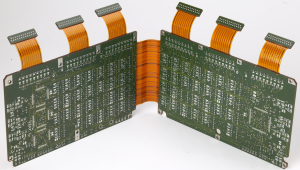
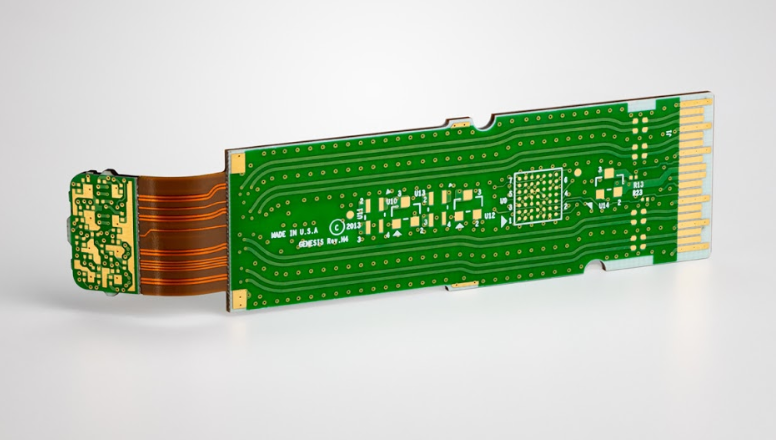
- Rigid, flexible, and rigid-flex PCB assembly
- Surface mount technology (SMT) and through-hole technology (THT)
- IC programming, conformal coating, and additional value-added services
- Prototype, low-volume, medium-volume, and high-volume production
Whether you need a small prototype run or a scalable production program, our PCB assembly services are designed to provide consistent quality, manufacturing flexibility, and efficient project management.
What Is Custom PCB Assembly?
Custom PCB assembly is the process of manufacturing an electronic circuit board according to a customer’s specific design, technical, material, component, and performance requirements.
Unlike standard off-the-shelf circuit boards, a custom assembly is developed around the requirements of a particular electronic product. The process may include PCB design review, PCB fabrication, component selection, component procurement, solder paste printing, component placement, soldering, inspection, electrical testing, and final assembly.
For complex products, the assembly process should be considered together with PCB design and manufacturing. Early engineering evaluation can identify potential manufacturing issues before production begins, helping reduce redesigns, material waste, production delays, and overall project costs.
For customers who need design support before assembly, our PCB Design Services can help evaluate layout requirements, manufacturability, signal integrity, component placement, and other technical considerations before the PCB enters production. PCB Design Services
Get a Free PCB Assembly Quote
Submit your project requirements to receive a quotation for your custom PCB assembly project.
Name*
Email*
Phone Number
Project Details*
You can provide relevant manufacturing files such as Gerber files, BOM, Pick-and-Place files, assembly drawings, schematics, specifications, or other technical documents to help our engineering team evaluate your project accurately.
Why Choose GOPCBA for Custom PCB Assembly?
GOPCBA provides an integrated manufacturing approach covering PCB fabrication, component sourcing, PCB assembly, testing, and related electronic manufacturing services.
Manufacturing Experience
Our engineering and production teams have extensive experience supporting PCB and PCBA projects for different industries and applications. We understand the importance of design accuracy, component availability, assembly quality, testing, and production consistency.
Quality-Focused Manufacturing
Quality control is integrated throughout the production process rather than performed only at the end. Incoming materials, solder paste printing, component placement, soldering, assembly quality, and electrical performance can be inspected according to project requirements.
Competitive Manufacturing Costs
A well-managed manufacturing process can help control production costs without compromising product quality. Material selection, component sourcing, PCB design, panelization, assembly technology, production volume, and testing requirements can all affect the final cost of a custom PCBA project.
One-Stop Manufacturing
GOPCBA integrates PCB fabrication, component procurement, assembly, inspection, testing, and additional manufacturing services into one workflow. This can simplify supplier management and reduce communication between multiple manufacturing partners.
Customers requiring fabricated boards together with assembly can use our PCB Manufacturing service to integrate bare PCB production with their PCBA requirements. PCB Manufacturing
Responsive Engineering Support
Engineering support is particularly important for custom PCB projects. Our engineers can review manufacturing data, identify potential DFM and DFA issues, verify BOM information, and help improve manufacturability before production.
What Are the Different Types of PCBs?
Before starting a custom assembly project, it is important to understand the major PCB types used in electronic products.
Single-Sided PCB
A single-sided PCB contains conductive traces and components primarily on one side of the board. It has a relatively simple structure and is commonly used for cost-sensitive electronic products and basic circuits.
Double-Sided PCB
A double-sided PCB contains copper circuitry on both sides of the substrate. Components and electrical connections can be distributed across both sides, providing greater circuit density than single-sided boards.
Multilayer PCB
A multilayer PCB consists of multiple conductive layers separated by insulating dielectric materials. Multilayer construction allows designers to achieve higher circuit density, improved signal routing, controlled impedance, and more complex electronic functionality.
Rigid PCB
Rigid PCBs use a solid substrate that maintains its shape during operation. FR-4 is one of the most commonly used materials for rigid PCB manufacturing, although specialized materials are available for high-frequency, high-temperature, and other demanding applications.
Flexible PCB
Flexible PCBs use thin, bendable substrates that allow the circuit to conform to the shape of a product. They are widely used where space, weight, movement, or mechanical flexibility are important considerations.
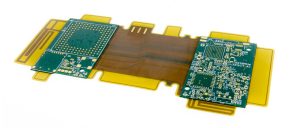
Rigid-Flex PCB
Rigid-flex PCBs combine rigid and flexible circuit sections into one integrated structure. This approach can reduce connectors and wiring while improving packaging flexibility and system reliability.
For more advanced PCB structures and production requirements, GOPCBA supports a broad range of PCB assembly capabilities, including rigid, flexible, rigid-flex, multilayer, HDI, high-TG, high-frequency, heavy-copper, and metal-core PCB assemblies. PCBA Capabilities
Benefits of Custom PCB Assembly
Greater Design and Functional Flexibility
Custom PCB assembly allows the circuit board to be developed around the requirements of a specific product. Component sizes, package types, board dimensions, electrical requirements, thermal considerations, and mechanical constraints can all be considered during the development process.
This flexibility is especially important for products with unique form factors or specialized performance requirements.
Cost Optimization
Custom PCB manufacturing can help eliminate unnecessary components and optimize the use of board space. Selecting suitable materials, components, PCB structures, and assembly technologies can also reduce manufacturing costs.
For projects requiring component procurement, a professional sourcing process can help improve component availability, control purchasing costs, and reduce supply-chain risks. GOPCBA provides dedicated Component Sourcing support as part of its one-stop PCBA manufacturing solution. Component Sourcing
Improved Efficiency
A PCB designed specifically for its intended application can eliminate unnecessary circuitry and optimize component placement. This can improve manufacturing efficiency and simplify future production.
Better Electrical Performance
Custom PCB design and assembly allow engineers to consider signal integrity, power distribution, grounding, thermal management, component placement, and routing requirements during development.
Proper design and manufacturing controls can help minimize electrical noise and improve the overall reliability of the finished electronic product.
Product Differentiation
A customized electronic design can provide unique functionality, packaging, and performance characteristics that may not be possible with a standard PCB solution. This can help manufacturers develop differentiated products for specific markets and applications.
Custom PCB Assembly Process
1. Schematic and PCB Layout Review
Before production begins, the manufacturing team reviews the customer’s schematic, PCB layout, Gerber files, BOM, Pick-and-Place data, assembly drawings, and other relevant documentation.
The purpose of this stage is to verify that the design data is complete and suitable for manufacturing.
DFM and DFA reviews can identify issues related to component spacing, pad design, solderability, assembly orientation, board dimensions, and manufacturing tolerances.
2. Solder Paste Printing
Solder paste printing is one of the most important stages in SMT assembly.
A stencil is positioned over the PCB, and a squeegee forces solder paste through precisely defined stencil apertures onto the appropriate pads. The amount and consistency of solder paste directly affect solder joint quality.
Poor printing conditions can result in insufficient solder, excessive solder, bridging, offset deposits, and other defects.
Stencil design, aperture geometry, solder paste characteristics, printing pressure, printing speed, board support, and environmental conditions should therefore be carefully controlled.
3. Solder Paste Inspection — SPI
After solder paste printing, SPI equipment can inspect the printed solder paste deposits.
The system evaluates parameters such as solder paste volume, height, area, position, and shape. Automated inspection helps identify printing problems before components are placed and soldered.
Early detection can reduce downstream defects and improve the overall first-pass yield of the assembly process.
4. Component Placement
Automated pick-and-place equipment places electronic components onto the solder-pasted PCB according to the programmed assembly data.
Modern assembly equipment can handle a wide range of component packages, including miniature passive components, ICs, QFNs, BGAs, CSPs, LGAs, connectors, and other components.
Placement accuracy is influenced by PCB positioning, feeder condition, component quality, solder paste distribution, machine calibration, and production programming.
5. Reflow Soldering
After component placement, the PCB assembly passes through a controlled reflow soldering process.
The PCB is heated through a programmed temperature profile. The solder paste first undergoes controlled heating, followed by flux activation and eventually melting of the solder alloy. The molten solder wets the PCB pads and component terminals and forms the required solder joints.
A typical reflow profile includes four major stages:
Preheating: The PCB temperature gradually increases to prepare the board and components.
Soaking: The temperature is stabilized and the flux becomes active.
Reflow: The solder alloy reaches its melting temperature and forms solder joints.
Cooling: The assembly is cooled under controlled conditions to complete the soldering process.
The exact thermal profile depends on the solder alloy, PCB construction, component specifications, and assembly requirements.
6. Automated Optical Inspection — AOI
AOI is commonly used to inspect PCB assemblies after soldering.
The system captures high-resolution images of the assembled PCB and compares them against programmed inspection criteria or reference data. AOI can identify problems such as missing components, incorrect components, placement errors, solder bridging, insufficient solder, polarity issues, and other visible defects.
For assemblies containing hidden solder joints such as BGA packages, X-ray inspection may also be used to evaluate internal solder connections.
7. Electrical and Functional Testing
Depending on the application, PCB assemblies can undergo additional electrical and functional testing.
Testing may include:
- In-circuit testing (ICT)
- Functional testing (FCT)
- Flying probe testing
- Electrical continuity testing
- Insulation testing
- X-ray inspection
- Customer-specific testing procedures
The appropriate testing strategy depends on product complexity, production volume, design requirements, and customer specifications.
What to Consider When Choosing a Custom PCB Assembly Supplier
Competitive Pricing
Cost is an important factor when selecting a PCB Assembly Services provider. However, the lowest quotation does not always represent the best overall value.
PCB layer count, board dimensions, material selection, component count, component availability, assembly technology, production quantity, testing requirements, tooling, and special processes can all affect the total project cost.
A detailed quotation should clearly identify manufacturing, material, assembly, testing, tooling, and other relevant costs.
Lead Time and Logistics
Lead time depends on PCB complexity, component availability, production quantity, assembly technology, and testing requirements.
A reliable manufacturing partner should be able to coordinate PCB fabrication, component sourcing, assembly, inspection, testing, and shipping as part of an integrated production schedule.
For prototype and development projects, rapid manufacturing capability is particularly important because shorter production cycles can accelerate design verification and product development.
Customers developing a new product can also use our Prototype PCB Assembly service to move from initial design verification to production more efficiently. Prototype PCB Assembly
Quality Requirements
Quality management should be considered before selecting a PCB assembly supplier.
A qualified manufacturer should have defined procedures for incoming material inspection, production process control, soldering quality, component verification, visual inspection, AOI, X-ray inspection, electrical testing, and final inspection.
Traceability is also important for products that require controlled manufacturing records and long-term quality management.
Technical Capability
Custom PCB assembly projects often involve specialized components, complex PCB structures, fine-pitch devices, high-density layouts, and specific electrical or mechanical requirements.
The manufacturer should therefore have appropriate equipment, engineering expertise, manufacturing processes, inspection systems, and technical support.
Early communication between the customer’s design team and the assembly manufacturer can help identify manufacturing risks before production starts.
Low Minimum Order Requirements
Prototype and low-volume projects are important for product development, engineering validation, and market testing.
Some manufacturers focus primarily on large-volume production, which can make smaller projects difficult to manage. A flexible PCB assembly supplier should be capable of supporting different production quantities, from prototypes and small batches to large-scale production.
This allows customers to continue working with the same manufacturing partner as their products move from development into commercial production.
Why Custom PCB Assembly Is Important for Modern Electronics
Electronic products are becoming smaller, more intelligent, and more functionally complex. As a result, standard PCB solutions may not always satisfy the mechanical, electrical, thermal, and manufacturing requirements of a particular application.
Custom PCB assembly provides a flexible way to combine product-specific circuit design, component selection, PCB construction, manufacturing processes, and testing requirements into one integrated solution.
A successful project should begin with engineering review and prototype validation. Once the design has been tested and optimized, the manufacturing process can be scaled for larger production volumes.
Working with a manufacturer that can provide PCB fabrication, component sourcing, assembly, testing, and engineering support through one supply chain can simplify communication and improve production efficiency.
Get Started With Your Custom PCB Assembly Project
GOPCBA provides integrated PCB manufacturing and assembly solutions for customers developing and producing electronic products.
Our manufacturing services can support the complete product journey, from PCB design and fabrication to component sourcing, SMT and THT assembly, inspection, electrical testing, and final product integration.
Whether you need a prototype, low-volume production, or scalable manufacturing, our engineering team can evaluate your project requirements and recommend a suitable manufacturing process.
For customers looking for a complete PCB Assembly solution, GOPCBA provides flexible assembly options covering SMT, through-hole, mixed technology, rigid PCB, flexible PCB, rigid-flex PCB, and other advanced PCBA requirements. PCB Assembly Services
Frequently Asked Questions
How does the custom PCB assembly process work?
The typical process includes design and manufacturing review, PCB fabrication, component sourcing, solder paste printing, solder paste inspection, component placement, reflow or wave soldering, AOI, X-ray or electrical testing when required, final inspection, packaging, and delivery.
What are the benefits of custom PCB assembly?
The major benefits include greater design flexibility, optimized costs, improved electrical performance, better space utilization, higher manufacturing efficiency, and the ability to develop PCBs specifically for a particular application.
What challenges can occur during custom PCB assembly?
Common challenges include component shortages, incomplete manufacturing files, PCB design issues, soldering defects, component placement errors, thermal-profile problems, and insufficient testing procedures.
Early DFM review, reliable component sourcing, controlled manufacturing processes, and appropriate inspection can significantly reduce these risks.
What are the most common PCB assembly problems?
Common PCB assembly defects include solder bridging, insufficient solder, excessive solder, component misalignment, missing components, incorrect component placement, polarity errors, tombstoning, solder voids, and hidden solder-joint defects.
Proper stencil design, solder paste control, placement accuracy, reflow profiling, AOI, SPI, X-ray inspection, and electrical testing can help prevent and identify these issues.
Start Your PCB Assembly Project Today
GOPCBA is a one-stop PCB and PCBA manufacturing partner providing PCB fabrication, component sourcing, assembly, inspection, testing, and electronic manufacturing support.
Our goal is to help customers move from PCB design and prototype development to stable production with reliable quality, efficient communication, and flexible manufacturing capabilities.
If you are looking for a reliable Turnkey PCB Assembly partner, submit your Gerber files, BOM, assembly files, and project requirements to our engineering team for evaluation and quotation.
Start your project today and turn your PCB design into a reliable finished electronic product.