Glass Fiber Board vs FR-4: Composition and Applications
Ask for a glass fibre board and you may be handed something that belongs in a building, not in an electronic product. Ask for FR-4 and you will get the material that almost every rigid circuit board is made from. The two share a common ingredient and are regularly confused, so it is worth separating what each one actually is.
What a Glass Fiber Board Is
A glass fibre board is a composite sheet made from glass fibre combined with a high-temperature composite material. The glass fibre cloth is the reinforcement; the resin system binds it. The result is a material with good mechanical strength, useful dielectric properties, and reasonable resistance to heat and moisture, and it machines easily.
The fibre cloth itself is what gives the board its character: good formability, low bulk density, low thermal conductivity — which is why it insulates so well — plus sound absorption, corrosion resistance and stable chemical behaviour. In practice that combination is used well outside the electronics industry. In industrial buildings, glass fibre board is used as a vibration-isolating pad between equipment and foundation, cutting the transmission of vibration and structure-borne noise. It is also specified where antibacterial, anti-mould and ageing resistance matter.
When people say glass fibre board in a fabrication context, they usually mean a generic composite panel, and the performance they care about is mechanical rather than electrical. The distinction sounds academic until the material has to survive a solder reflow process, at which point the difference between a composite panel and a circuit-grade laminate becomes the difference between a working assembly and a delaminated one.
What FR-4 Actually Means
FR-4 is not a material name at all. It is a grade designation: FR stands for flame retardant, and the material self-extinguishes when the flame is removed. FR-4 is therefore a specification for burning behaviour, not a recipe, and the fact that it is in practice always an epoxy glass cloth laminate is convention rather than definition.
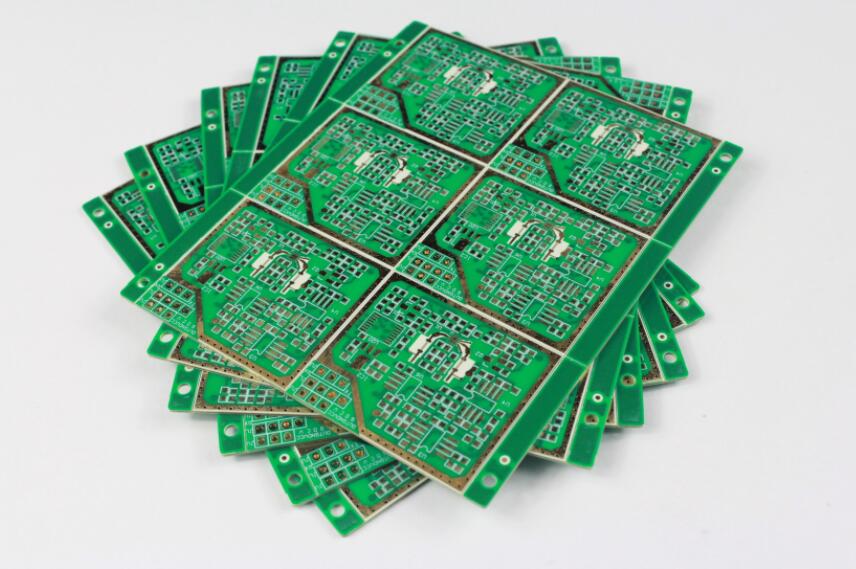
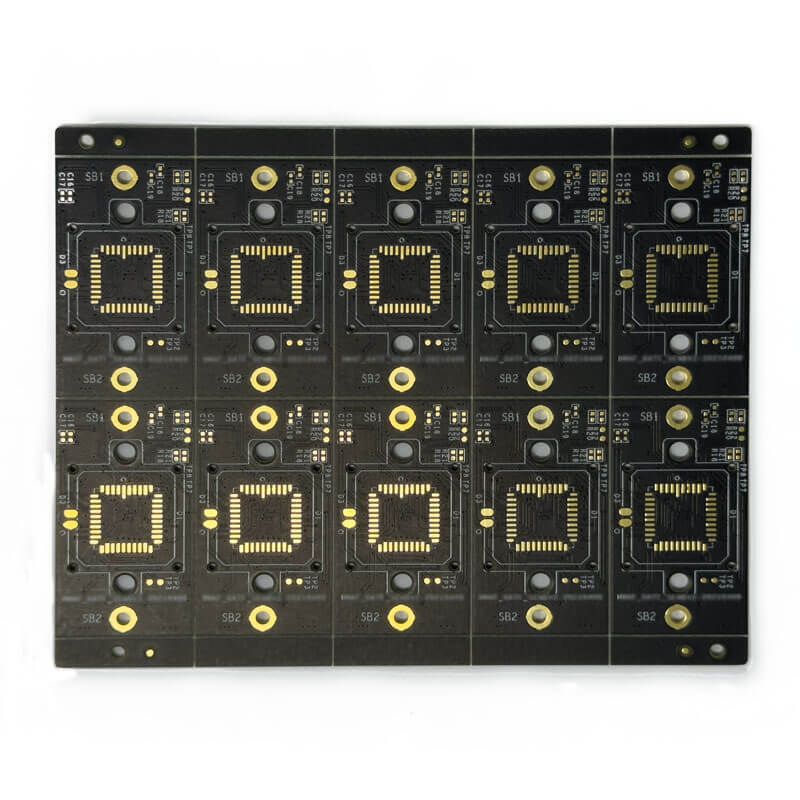
The familiar sheet is made from epoxy resin and woven glass fibre cloth. It has good mechanical and dielectric performance, tolerates heat and moisture well, and processes predictably — which is precisely why it became the default substrate. Its applications are narrower and more electrical than those of generic glass fibre board: stiffeners for flexible circuits, backup boards for drilling, insulating spacers and partitions in electrical equipment, and above all the base laminate for double-sided and multilayer printed circuit boards.
Where the Two Overlap
Both materials contain glass fibre as a primary constituent, and both therefore inherit a degree of mechanical strength and heat resistance from it. Both are used where insulation and high-temperature tolerance are required, and both are stable enough in normal service to be treated as engineering materials rather than consumables.
That overlap is the source of the confusion. A supplier asked for one may reasonably offer the other, because for a low-demand application either may work.
Where They Differ
The differences are in scope and in consistency.
Glass fibre board is the more general material. Its applications extend well beyond electrical insulation, and it is valued for properties that have nothing to do with circuits — sound absorption, vibration isolation, resistance to mould and corrosion. It is also more customisable: colour, thickness and acoustic performance can be adjusted to the requirement.
FR-4 is the more specialised material, and its specialism is electrical. It offers better flame resistance and more consistent electrical insulation, and it is qualified for circuit production in a way that a generic composite is not. In return, it is far less flexible: the laminate is bought to a specification, and the properties that matter are controlled tightly rather than tuned per project.
Put simply, a glass fibre board is chosen for what it does mechanically and acoustically, while FR-4 is chosen for what it does electrically.
One caution belongs here. FR-4’s flame-retardant behaviour comes from the resin chemistry, and the grade covers a wide family of materials with different glass transition temperatures, different dielectric constants and different tracking performance. Two boards both supplied as FR-4 can behave very differently in a high-temperature assembly process or a high-frequency circuit. The general properties of the base material and how they are specified are covered in this overview of multilayer PCB manufacturing.
Choosing Between Them
The decision starts with the question the material has to answer.
If the requirement is structural or acoustic — isolating a machine from a foundation, damping structure-borne noise, resisting mould in a damp environment — a glass fibre board is the natural choice, and its electrical properties are largely irrelevant.
If the requirement is an electronic assembly, the material is a PCB substrate, and the choice is made within the FR-4 family or beyond it. Electrical performance leads: dielectric constant and loss determine what the board can do at frequency, glass transition temperature determines how it survives assembly and reflow, and thickness and copper weight are set by the stackup. Where the frequency is high or the environment is hostile, the trade-offs between cost and performance are the same ones described in this guide to laminate selection for high-speed boards.
Why the Distinction Matters
Confusing the two is mostly a procurement problem rather than a design problem, but it can become an engineering one.
When a specification says a board is FR-4 without stating the grade, the shop may supply a material that meets the flame retardancy requirement and nothing else. The assembly then runs at a reflow temperature the laminate cannot take, or the finished product behaves differently at frequency than the model predicted. When a specification asks for a glass fibre board on an electronic assembly, the reverse can happen: a composite is supplied that insulates adequately at low voltage but is not qualified for circuit use.
The most common version of this problem is glass transition temperature. Standard grades soften somewhere around 130 to 140 degrees Celsius, while the high-temperature grades used on thick boards and lead-free assemblies are specified well above 170 degrees. Both are sold as FR-4, both carry the same flame rating, and only one of them is suitable for a board that will pass through multiple reflow cycles without delaminating.
The remedy is the same in both directions: state the property, not the trade name. Flame rating, glass transition temperature, dielectric constant, loss tangent, thickness and copper weight are all things a fabricator can hold and a designer can verify. Materials chosen that way also scale sensibly, since the same logic governs the layer count a laminate must support, as discussed in these notes on fabricating high layer count boards.
FAQ
Is FR-4 a type of glass fibre board? In common usage, yes — it is an epoxy glass cloth laminate, so it contains glass fibre. Strictly, FR-4 is a flame-retardant grade covering a family of materials, which is why its properties have to be specified rather than assumed.
Does FR-4 mean the board cannot burn? No. It means the material self-extinguishes once the ignition source is removed. It is a flame retardancy rating, not a fireproof guarantee, and the surrounding design still has to manage heat and fault energy.
Can glass fibre board be used as a PCB substrate? Only if it is qualified for circuit production. A composite panel chosen for its mechanical or acoustic behaviour has not been evaluated for dielectric constant, copper adhesion or insulation reliability at bias, and those are the properties a circuit needs.