High-Frequency medical imaging PCB for Equipment: Manufacturing and Quality Requirements
Medical imaging equipment plays a critical role in modern healthcare by helping physicians obtain detailed information about a patient’s internal condition. Technologies such as CT, MRI, and ultrasound rely on sophisticated electronic systems to acquire, process, and transmit large amounts of data.
At the hardware level, the medical imaging PCB is an essential platform for signal transmission and electronic control. When the PCB handles high-frequency or high-speed signals, its electrical characteristics can directly affect signal integrity, system stability, and imaging performance.
As medical imaging systems become more precise, compact, and feature-rich, PCB manufacturers need to address several requirements simultaneously, including high-frequency signal transmission, material consistency, dimensional accuracy, thermal stability, insulation performance, and long-term reliability.
1. Key Requirements for Medical Imaging PCBs
Medical electronics require a higher level of reliability than many general-purpose consumer applications. A PCB used in imaging equipment must be designed and manufactured according to the electrical, mechanical, and environmental requirements of the complete system.
High-Frequency Signal Integrity
High-frequency signals can be affected by impedance variation, electromagnetic interference, dielectric loss, crosstalk, and transmission-line discontinuities.
For this reason, a high-frequency PCB used in medical imaging equipment should provide carefully controlled electrical characteristics.
Important considerations include:
- Controlled impedance
- Low dielectric loss
- Stable dielectric properties
- Accurate trace width and spacing
- Reliable signal return paths
- Appropriate via structures
- Low transmission loss
- Effective EMI control
Maintaining these characteristics helps minimize unwanted signal distortion and supports stable data transmission within the imaging system.
Long-Term Reliability
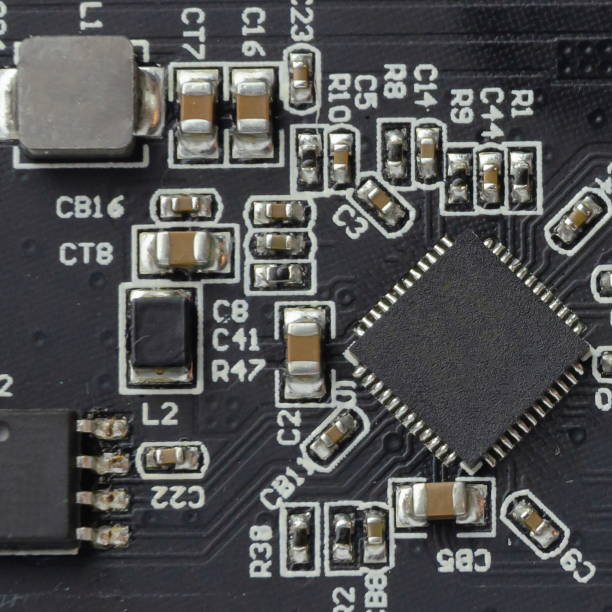
Medical imaging equipment may operate for extended periods and must deliver consistent performance. A PCB failure can result in equipment downtime and disrupt diagnostic workflows.
The PCB should therefore demonstrate:
- Stable electrical performance
- Strong insulation properties
- Good thermal resistance
- Reliable solder joints
- Strong layer-to-layer bonding
- Resistance to moisture and corrosion
- Consistent dimensional stability
Reliability should be considered throughout the entire product lifecycle rather than evaluated only through final inspection.
Safety and Environmental Compatibility
Medical electronics also place strict requirements on material safety, cleanliness, insulation, and environmental compatibility.
PCB manufacturers should select materials and processes according to the application environment and customer specifications. Proper process control can help reduce contamination, surface defects, and other potential reliability risks.
2. Material Selection for High-Frequency Medical PCBs
Material selection is one of the most important decisions in PCB manufacturing, particularly when the board is designed for high-frequency signal transmission.
Selecting the Appropriate Laminate
Different imaging systems can have different electrical and thermal requirements. Depending on the operating frequency and signal-integrity targets, engineers may use standard FR-4, low-loss materials, or dedicated high-frequency laminate systems.
Key material parameters include:
- Dielectric constant (Dk)
- Dissipation factor (Df)
- Thermal performance
- Dimensional stability
- Moisture resistance
- Copper adhesion
- Frequency stability
The objective is not simply to select a premium material, but to select a material system that matches the electrical and mechanical requirements of the application.
Copper and Auxiliary Materials
Copper thickness and copper quality affect conductor resistance, current capacity, and electrical consistency. For high-frequency circuits, variations in copper geometry can also influence impedance.
Other materials—including prepreg, solder mask, dry film, bonding materials, and surface-finish chemicals—must also be controlled.
A professional PCB supplier should establish incoming inspection procedures to verify material specifications before production begins.
3. Precision Manufacturing for Medical Imaging PCBs
A high-performance PCB requires manufacturing processes capable of translating the design specifications into consistent physical structures.
GOPCBA provides PCB Manufacturing services for applications ranging from prototypes to production, supporting different multilayer, high-frequency, HDI, rigid-flex, and other advanced PCB requirements.
Fine-Line Circuit Fabrication
High-frequency and high-density boards often require precise trace geometries.
The circuit fabrication process should carefully control:
- Trace width
- Trace spacing
- Copper thickness
- Etching uniformity
- Registration accuracy
- Line-edge quality
Excessive etching or dimensional variation can change the electrical characteristics of transmission lines and potentially affect impedance and signal integrity.
Multilayer and Hybrid Construction
Medical imaging equipment often requires multilayer PCBs because of complex signal-routing and power-distribution requirements.
Some advanced designs may combine different material systems within the same board structure. Hybrid constructions can be useful when engineers need to balance high-frequency electrical performance with mechanical, thermal, or cost considerations.
The lamination process must maintain accurate layer registration and consistent dielectric thickness. Poor lamination control can result in delamination, voids, warpage, or layer misalignment.
HDI Technology
As medical imaging equipment becomes more compact, PCB designers often need to accommodate more circuitry within a smaller area.
HDI technology can increase routing density and shorten electrical paths through microvias and optimized layer structures.
For suitable applications, this can help reduce board size while supporting complex signal-routing requirements.
4. Advanced Testing and Inspection
A comprehensive PCB quality control program is essential for medical imaging applications.
Final visual inspection alone cannot adequately verify all of the electrical and structural characteristics required by a high-frequency medical PCB.
Impedance Testing
Controlled impedance is particularly important for high-frequency signal paths.
Impedance testing can help verify whether manufactured transmission lines remain within the specified design range. This provides an additional level of confidence that the physical PCB matches the intended electrical design.
Optical and Dimensional Inspection
Automated optical inspection can identify manufacturing defects such as:
- Open or short circuits
- Trace defects
- Solder mask problems
- Surface contamination
- Registration errors
- Abnormal copper patterns
Dimensional inspection is also important because medical imaging PCBs must fit accurately within equipment assemblies.
Electrical Testing
Electrical testing can verify circuit continuity and insulation characteristics.
Depending on the product requirements, manufacturers may use flying-probe testing, fixture-based testing, impedance measurement, or other electrical verification methods.
For critical applications, testing strategies should be established according to the PCB design, customer specifications, and intended operating conditions.
5. Engineering Capability Is Essential
Producing a reliable medical imaging PCB requires more than advanced equipment. Engineering experience is equally important.
A capable PCB manufacturer should be able to evaluate the design before production and identify potential manufacturing risks.
Design for Manufacturing
Engineering review can examine:
- PCB stack-up
- Trace width and spacing
- Controlled impedance
- Via structures
- Material selection
- Layer registration
- Component placement
- Manufacturing tolerances
- Surface finish
- Thermal considerations
GOPCBA’s PCB Design & Layout service can help customers address design and manufacturability considerations before moving into fabrication.
Prototype Validation
For new medical imaging products, prototype production is an important step between design and volume manufacturing.
A prototype allows engineers to verify:
- Electrical performance
- Mechanical fit
- Signal integrity
- Component compatibility
- Assembly feasibility
- Thermal behavior
- Manufacturing tolerances
GOPCBA supports Prototype PCB Assembly for customers that need to validate PCB designs before scaling production.
6. Quality Management Throughout the Manufacturing Process
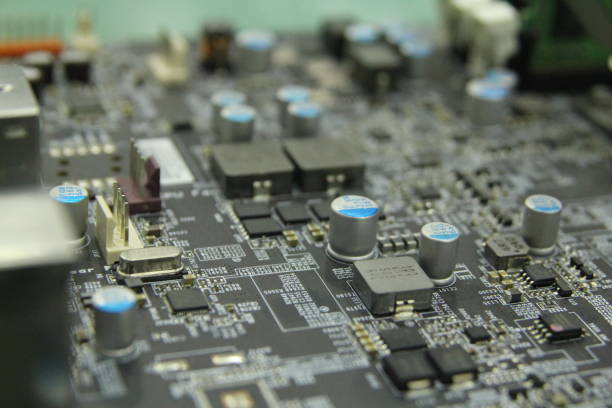
Reliable medical electronics require quality management at every production stage.
A practical quality-control system should include:
- Incoming material inspection
- Engineering review
- Process parameter control
- In-process inspection
- Electrical testing
- Dimensional verification
- Final inspection
- Production traceability
- Defect analysis
- Continuous process improvement
Rather than relying only on final testing, manufacturers should identify potential problems as early as possible.
For example, detecting a material or registration problem before subsequent processing can prevent significant waste and reduce the risk of defective assemblies.
7. PCB Assembly for Medical Imaging Equipment
PCB fabrication is only one part of the electronic manufacturing process. Once the bare board has been produced, component placement and soldering must also meet the reliability requirements of the medical application.
GOPCBA provides PCB Assembly services covering prototype, low-volume, and production requirements.
Assembly quality should consider:
- Component placement accuracy
- Solder joint quality
- Component availability
- Thermal profiles
- Moisture-sensitive components
- AOI inspection
- Electrical testing
- Assembly traceability
For projects requiring smaller production quantities or an intermediate stage between prototyping and mass production, Low Volume PCB Assembly can provide a practical manufacturing path.
8. Choosing the Right PCB Supplier
Selecting the right PCB supplier is particularly important for medical imaging applications because electrical performance, manufacturing consistency, and reliability all need to work together.
When evaluating a supplier, medical equipment developers should consider:
- High-frequency PCB experience
- Material sourcing capabilities
- Controlled impedance manufacturing
- Multilayer fabrication capabilities
- HDI and advanced PCB technologies
- Inspection and testing resources
- Prototype support
- Assembly capabilities
- Process traceability
- Engineering communication
- Production scalability
A supplier that can support both PCB fabrication and assembly can also simplify communication between design, manufacturing, component sourcing, and testing teams.
Conclusion
The performance of medical imaging equipment depends heavily on the stability and precision of its electronic systems. As one of the key hardware platforms, the medical imaging PCB must provide reliable signal transmission, stable electrical characteristics, strong insulation, and long-term mechanical reliability.
Producing a high-quality high-frequency PCB requires appropriate material selection, precise circuit fabrication, controlled impedance, reliable multilayer processing, and comprehensive PCB quality control.
For medical equipment developers, working with an experienced PCB supplier from the early design stage can help identify manufacturing risks, improve prototype validation, and establish a reliable path from initial development to production.
GOPCBA combines PCB manufacturing and assembly capabilities to support customers throughout the electronics development process, helping transform complex medical electronics designs into manufacturable and reliable PCB solutions.