
High Mix Low Volume SMT: Scheduling Many Products on One Line
A line that builds the same product for a month is a line that runs at its highest efficiency and its lowest flexibility. A line that builds a different product every day is the opposite, and that is the reality for most contract assembly work today. High mix low volume production is not a degraded version of mass production; it is a different discipline with its own economics, and the way it is scheduled determines whether the customer receives a competitive price or an apology. This is how that discipline is applied.
Why the Mix Changed
The change came from the market rather than from the factory. Products now proliferate into variants, a product family may be sold in six configurations that differ by a module and a firmware revision, and the demand for each variant is small enough that building it in a dedicated campaign means holding either too much stock or too little. At the same time the electronics themselves have become more reliable, so the volume that used to be needed to absorb a setup is no longer available for most products.
The result is that the changeover, once an occasional interruption, is now a routine operation. A plant that cannot change over quickly cannot accept small orders at a sensible price, and since a large share of development and industrial work arrives as a small order, that limitation becomes a commercial one rather than a technical one.

What a Changeover Actually Consists Of
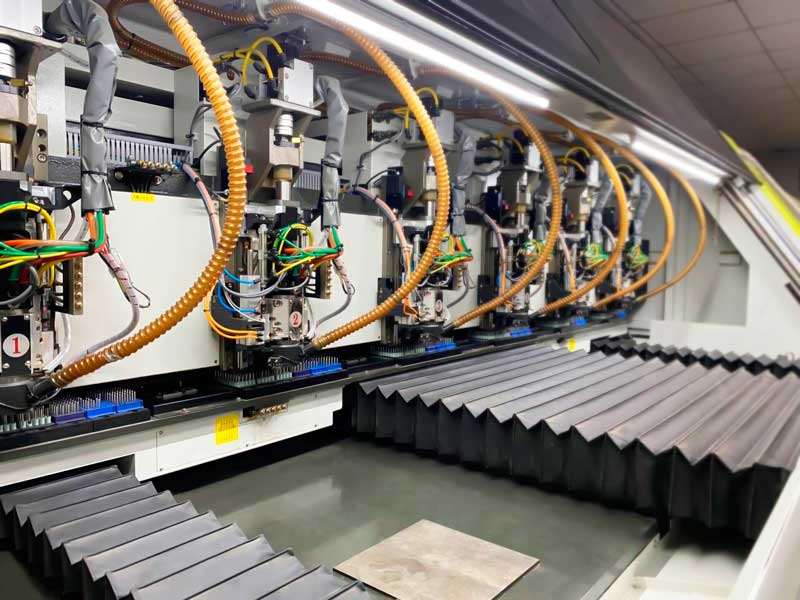
The visible part of a changeover is the machine: the stencil is exchanged, the feeders are removed and replaced, the placement programme is loaded and the reflow profile is selected. That part is the shortest. A well prepared changeover on a modern line can be completed in a fraction of an hour because the feeders were loaded offline, the programme was already written and the profile was already measured.
The invisible part is the preparation, and it is where the time is actually saved or spent. If the stencil for the incoming product is not in the building, if the material is not staged beside the line, if the programme has not been verified against the coordinate file, or if the previous product’s material has not been cleared and reconciled, the changeover becomes a search rather than a sequence of steps.
The third part is the verification. After the setup is complete, the first article confirms that the stencil, the programme, the material and the profile are all correct for the product that is about to run. Skipping that confirmation to save fifteen minutes is the most expensive economy available, because a setup error found after a full panel has been produced costs the panel, the material and the time.
Preparing Offline
The single most effective measure is to move every task that can be done away from the machine away from it. Feeders are loaded and verified in a preparation area, with the part number, the station and the pickup direction confirmed before the trolley reaches the line. Programmes are written and simulated from the coordinate data in advance, so that the machine receives a verified file rather than an unverified one. Stencils are inspected and stored with an identification that ties them to a product revision.
Material staging follows the same principle. The components for the next order are picked and delivered to the line before the previous order finishes, so that the changeover is a sequence of placements rather than a wait for the warehouse. Where a product needs a fixture or a test programme, both are prepared during the run of the previous product rather than after it.
Sequencing the Orders
The order in which products are run matters as much as the speed of an individual changeover. Products that share a stencil, a panel arrangement or a family of components can be sequenced together so that the setup between them is reduced to a programme change and a partial feeder reload. A product that demands a complete setup is placed where a longer interruption is least costly, which is usually adjacent to a scheduled maintenance window rather than in the middle of a delivery week.
The scheduling also considers the material. Two products that use the same component from the same reel are cheaper to run adjacently because the reel stays on the machine, and two products whose materials would be confused if left on the line simultaneously are deliberately separated. Material discipline and scheduling are the same activity under two names.
Where the Yield Goes Wrong
The characteristic defect pattern of a high mix operation is the setup error rather than the process drift. A stencil for the previous revision left in the printer, a feeder loaded with the part used by the previous product, a programme that was not updated after a design change, a profile that was selected by product name rather than by revision. Each of those produces a batch of defects that a continuous single product line would never see.
The defence is the first article, supported by whatever checks can be automated. Confirming the stencil identification against the order before printing, scanning the feeder when it is mounted and comparing the part number with the programme, and checking the displayed programme revision against the work instruction are all small habits that remove the largest source of risk in a mixed environment.
What It Means for the Customer
A customer placing a small order in a mixed environment should expect a sensible process rather than a compromise. The stencil is still designed for the product, the paste deposit is still measured, the first article is still confirmed and the joints are still inspected. What changes is the size of the run and the frequency of the setup, not the standard applied to the product.
What the customer can do is help the schedule. Consistent package types across a family, a forecast that arrives before the order, a single revision of the artwork rather than a stream of small changes, and a realistic quantity that accounts for the setup all reduce the work the line has to do. Our low volume PCB assembly route is built for exactly this class of work, the larger programmes run through high volume PCB assembly, SMT assembly covers the placement, and the records are held under quality management with component procurement handling the material.
The Economics of a small batch
A small batch carries the same fixed costs as a large one, and those costs have to be divided among fewer units. The stencil, the programme, the feeder setup, the reflow profile, the first article and the test fixture are incurred once whether the order is fifty boards or five thousand, and the price per unit reflects that arithmetic rather than any difference in the standard of work.
The practical consequence is that the quantity placed on a small order matters more than the price per board. Doubling a small quantity spreads the same setup over twice as many units and can reduce the unit price more than any negotiation on the components. A customer who expects to need more boards within a few months will usually do better by placing the larger quantity now and holding the surplus than by ordering twice.
The second consequence is that reducing the fixed cost is worth more than reducing the variable cost on a small run. A design that shares a stencil with an existing product, uses packages already set up on the machine and avoids a new test fixture can be built for appreciably less than one that requires a setup of its own, which is an argument for designing a product family around a common panel rather than treating each variant as a new design.
FAQ
Is a small order treated differently from a large one? The process standard is the same. The setup is proportionally larger, which is why the price per unit is higher on a small run.
What reduces the changeover most? Preparation away from the machine. Feeders loaded offline, programmes verified in advance and material staged before the line is available.
Why does the sequence of orders matter? Because products that share a stencil or a component family can be run adjacently with a much smaller setup between them.