How to Clean Flux Residue from a PCB: PCB Design, PCB Manufacturing & Flux Cleaning Guide
Flux residue is a common byproduct of soldering and PCB Assembly. While flux is essential for improving solderability and reducing oxidation during soldering, residues left on the PCB can create reliability concerns if they are incompatible with the application or are not properly controlled.
Depending on the flux chemistry, residual material can contribute to corrosion, surface leakage, electrochemical migration, contamination, or poor adhesion of conformal coatings. These risks become more significant as PCB layouts become denser and electronic products are used in demanding environments.
However, not every PCB requires the same level of cleaning. Whether flux residue should be removed depends on the type of flux, the assembly process, component sensitivity, PCB design, cleanliness requirements, and the final operating environment.
This guide explains what soldering flux is, when PCB flux cleaning is necessary, the most common cleaning methods, how to select a suitable process, common cleaning mistakes, and important safety considerations.
What Is Soldering Flux?
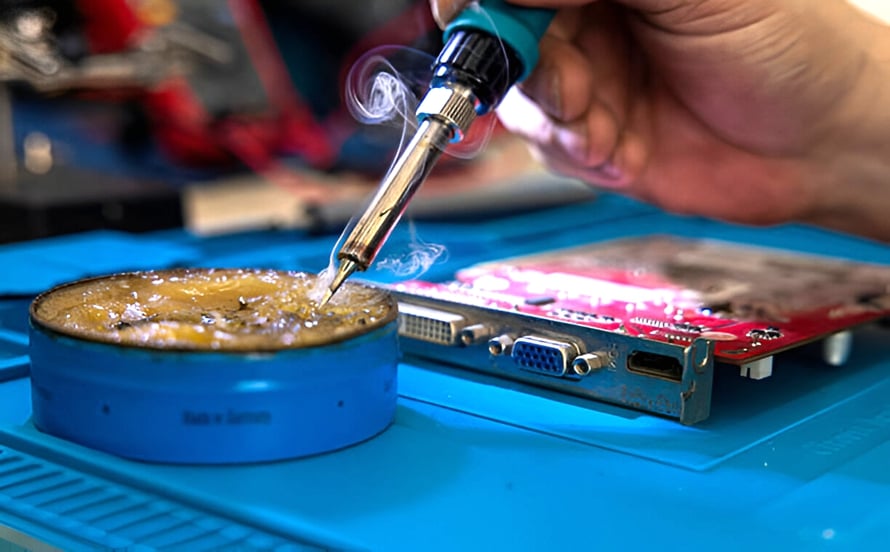
Soldering flux is a chemical material used during soldering to improve wetting and help prevent or remove metal oxides from solderable surfaces.
Flux is available in several forms, including liquid flux, paste flux, and flux incorporated into solder wire or solder paste. Its formulation may contain a combination of a flux base, activators, solvents, and other additives.
During soldering, flux performs several important functions.
Removing Oxides
Oxide films can form on copper, solder, and component leads. These films can interfere with solder wetting and prevent the solder from forming a reliable metallurgical bond.
Flux chemically interacts with or helps remove these oxides, allowing molten solder to wet the surface more effectively.
Protecting Surfaces During Soldering
Flux also helps limit oxidation while the soldering process is taking place. This is particularly important during high-temperature processes such as reflow soldering and wave soldering.
What Is Flux Residue?
Flux residue is the material left behind after soldering. Depending on the flux formulation and process conditions, the residue may contain flux base materials, activators, additives, and other reaction products.
The amount and chemical activity of the residue depend on the flux type, soldering temperature, thermal profile, and assembly process.
What Are the Main Components of Flux?
Although formulations vary between manufacturers, soldering flux commonly contains several functional components.
Flux Base
The flux base provides a medium in which the active ingredients can work. Traditional formulations may use rosin, while other systems use synthetic resins or organic formulations.
Activators
Activators help remove metal oxides and improve solder wetting. They may include organic acids, salts, or other chemically active compounds.
Highly active fluxes can provide strong oxide removal but may also leave residues that require more careful cleaning.
Additives
Additives can be used to adjust characteristics such as viscosity, spreading behavior, stability, and process compatibility.
Solvents
Solvents dissolve or disperse the flux ingredients and help achieve the required viscosity for application. Many solvents evaporate during heating, although the exact behavior depends on the flux formulation.
Why Should Flux Residue Be Removed from a PCB?
As PCB Design becomes more compact, the distance between conductors and components continues to decrease. This makes PCB cleanliness increasingly important.
Residues trapped between closely spaced pads, traces, component leads, and packages can become a reliability concern, particularly when moisture or electrical bias is present.
Potential problems associated with inappropriate or excessive flux residue include:
- Corrosion
- Surface leakage
- Electrochemical migration
- Reduced insulation resistance
- Poor conformal-coating adhesion
- Contamination-related reliability problems
- Difficulty during inspection or rework
For demanding applications such as automotive, medical, aerospace, industrial, and other high-reliability electronics, the required cleanliness level should be defined according to the product’s operating environment and applicable specifications.
Types of PCB Flux
The type of flux used during PCB Manufacturing and assembly strongly influences whether post-solder cleaning is necessary.
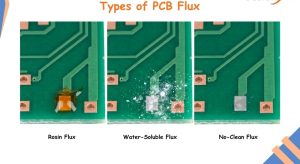
Rosin-Based Flux
Rosin flux is traditionally based on natural resin or modified rosin formulations.
After soldering, it can leave visible or semi-visible residues on the PCB. Some rosin residues may be relatively benign under controlled conditions, while activated rosin systems may require cleaning depending on the application and reliability requirements.
For high-reliability products, the manufacturer’s flux documentation and the applicable cleanliness requirements should be followed rather than assuming that all rosin residues are acceptable.
Water-Soluble Flux
Water-soluble fluxes are formulated to be removed using water-based cleaning processes.
They often contain organic acids or other active ingredients that provide strong oxide removal and good solderability. Because the remaining residues can be relatively active and potentially corrosive, water-soluble fluxes generally require thorough cleaning after soldering.
A typical cleaning process may include aqueous cleaning followed by rinsing with suitable-quality water and thorough drying.
No-Clean Flux
No-clean fluxes are formulated to leave relatively low levels of residue that can often remain on the PCB under specified conditions.
However, “no-clean” does not mean “never clean.”
Whether a no-clean PCB should be cleaned depends on the flux manufacturer’s specifications, the residue characteristics, assembly process, environmental conditions, conformal coating requirements, and reliability requirements.
For example, cleaning may still be appropriate when residues could interfere with conformal coating, adhesive bonding, electrical testing, optical inspection, or high-reliability performance.
When Should Flux Residue Be Removed?
Not every PCB requires the same cleaning process. Unnecessary cleaning can increase production time and cost and may introduce mechanical, chemical, or moisture-related risks.
The decision should be based on the flux manufacturer’s data, the PCB assembly process, cleanliness requirements, and the final application.
Situations Where Cleaning May Be Necessary
Flux cleaning should be considered when:
- Water-soluble flux has been used.
- Activated flux leaves residues that could affect reliability.
- The product is designed for high-reliability applications.
- A conformal coating will be applied after assembly.
- Adhesives or protective coatings must bond directly to the PCB surface.
- The PCB will operate in high-humidity or corrosive environments.
- Residues could interfere with electrical testing.
- The product has very small conductor spacing or sensitive circuitry.
- The assembly specification requires a defined level of ionic cleanliness.
Situations Where Cleaning May Not Be Required
Cleaning may not be necessary when:
- A qualified no-clean flux has been used.
- The flux manufacturer specifies that the residue is acceptable without cleaning.
- The PCB operates in a relatively benign environment.
- Residues do not interfere with coating, bonding, testing, or inspection.
- The assembly process has been validated for the intended application.
The key point is that cleaning decisions should be based on the complete process rather than simply on whether residue is visible.
Best Methods for PCB Flux Cleaning
The appropriate PCB Cleaning method depends on flux chemistry, board complexity, component sensitivity, production volume, equipment availability, and cleanliness requirements.
Manual Cleaning with Isopropyl Alcohol (IPA)
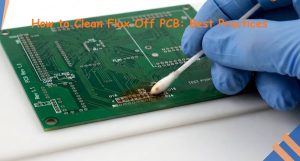
Isopropyl alcohol (IPA) is commonly used for localized PCB cleaning and rework.
A suitable lint-free wipe or ESD-safe brush can be used with an appropriate cleaning agent to remove accessible residues.
Best for:
- Prototypes
- PCB repair and rework
- Small-batch production
- Localized residue removal
Advantages:
- Simple process
- Relatively low equipment requirements
- Convenient for localized cleaning
- Suitable for many common flux residues when validated
Limitations:
- Labor-intensive
- Difficult to achieve consistent results across large production volumes
- Not automatically suitable for every flux formulation
The exact solvent compatibility should always be verified before cleaning the complete assembly.
Ultrasonic Cleaning
Ultrasonic cleaning uses high-frequency acoustic energy in a cleaning solution to help remove contaminants from difficult-to-reach areas.
The process can be effective for complex boards with residues beneath components or in narrow spaces.
Best for:
- Certain complex assemblies
- Boards with difficult-to-reach contamination
- Applications where the components and materials have been validated for ultrasonic exposure
Advantages:
- Can reach areas that are difficult to clean manually
- Suitable for certain batch-cleaning applications
- Can provide relatively uniform cleaning when properly controlled
Limitations:
- Not suitable for every component or assembly
- Some fragile, loose, MEMS, crystal, or other sensitive components may be affected
- Cleaning chemistry and ultrasonic energy must be validated for the specific assembly
Ultrasonic cleaning should therefore never be treated as universally safe for all populated PCBs.
Aqueous Cleaning
Aqueous cleaning uses water-based cleaning chemistry to remove flux and other contaminants.
It is particularly suitable for water-soluble fluxes and can be integrated into automated production lines.
Best for:
- Water-soluble flux
- High-volume PCB Assembly
- Automated production environments
Advantages:
- Suitable for large-scale production
- Can provide repeatable cleaning
- Avoids the use of some flammable solvent systems
Limitations:
- Requires appropriate rinsing
- Requires effective drying
- Cleaning chemistry must be compatible with components and materials
- Equipment and wastewater management may be required
Thorough drying is especially important because residual moisture can create electrical and corrosion-related problems.
Flux Remover Spray
Flux remover sprays provide a convenient option for localized cleaning and field service.
The cleaner is applied to the contaminated area and the dissolved residue is removed with an appropriate lint-free wipe or ESD-safe brush.
Best for:
- Localized cleaning
- PCB repair
- Rework
- Field service
Advantages:
- Convenient
- Portable
- Requires limited equipment
Limitations:
- Less consistent than validated automated cleaning processes
- Not ideal for large-scale production
- Overspray and solvent compatibility must be considered
PCB Flux Cleaning Method Comparison
| Cleaning Method | Best For | Main Benefits | Key Considerations |
|---|---|---|---|
| Manual IPA Cleaning | Prototypes, repair, rework, small batches | Simple and convenient for localized cleaning | Labor-intensive; solvent compatibility must be verified |
| Ultrasonic Cleaning | Suitable complex assemblies and batch cleaning | Can reach difficult areas | Component compatibility must be validated |
| Aqueous Cleaning | Water-soluble flux and production lines | Scalable and repeatable | Requires rinsing, drying, and wastewater management |
| Flux Remover Spray | Repair and localized cleaning | Fast and portable | Not ideal for high-volume production |
How to Choose the Right PCB Flux Cleaning Method
Selecting the appropriate cleaning process requires more than simply choosing the strongest solvent.
Match the Cleaner to the Flux
First identify the flux chemistry.
Water-soluble flux generally requires a compatible aqueous cleaning process, while rosin and other flux formulations may require specialized solvent or semi-aqueous cleaners.
The flux manufacturer’s technical documentation should be the primary reference for cleaning compatibility.
Consider PCB Design and Assembly Complexity
PCB layout also influences cleaning requirements.
High-density PCB Design may contain:
- Fine-pitch components
- Small gaps between conductors
- Bottom-terminated components
- BGAs
- Microvias
- Components with limited access
These features can make manual cleaning difficult and may require a validated automated cleaning process.
Consider Production Volume
For prototypes and repair work, manual cleaning can be practical.
For high-volume PCB Manufacturing, automated aqueous or other validated batch/in-line cleaning systems may provide better process consistency.
Evaluate Cleaning Effectiveness
Visual inspection can identify obvious residue, but visual inspection alone cannot establish ionic cleanliness.
Depending on the application, manufacturers may use ionic contamination testing, such as an appropriate cleanliness or ion chromatography-based test method, as well as other validated inspection techniques.
The required test method should be selected according to the applicable product and process requirements.
Control Cleaning Parameters
Important process parameters may include:
- Cleaning-agent concentration
- Temperature
- Cleaning time
- Spray pressure
- Agitation
- Rinse quality
- Drying temperature and time
These parameters should be validated rather than adjusted arbitrarily.
Common PCB Flux Cleaning Mistakes
Several common mistakes can reduce cleaning effectiveness or damage the assembly.
Using an Incompatible Solvent
A solvent that does not dissolve the specific flux residue may spread contamination instead of removing it.
It may also attack plastics, labels, coatings, adhesives, or other materials.
Always verify chemical compatibility before using a cleaning agent.
Excessive Scrubbing
Aggressive mechanical cleaning can damage solder mask, labels, delicate components, or solder joints.
Use an appropriate ESD-safe brush or lint-free material and apply only the mechanical force required to remove the residue.
Cleaning No-Clean Flux Without a Defined Reason
Cleaning a no-clean assembly simply because residue is visible can add unnecessary processing.
If cleaning is required for coating, bonding, reliability, or testing, the process should be validated for the specific assembly.
Leaving Cleaning-Agent Residue
A PCB is not considered clean merely because visible flux has disappeared.
Residual cleaning chemicals can themselves become contaminants.
Proper rinsing and drying should therefore be included when required by the cleaning chemistry.
Energizing a Wet PCB
Never power an assembly before it has been thoroughly dried and verified as safe.
Residual moisture can contribute to leakage currents, corrosion, and short circuits.
Ignoring ESD Protection
Cleaning operations can generate electrostatic charge.
Sensitive electronic assemblies should therefore be handled using an appropriate ESD-controlled workstation, including suitable grounding and ESD-safe tools.
PCB Flux Cleaning Safety Tips
Use Appropriate ESD Protection
Use an ESD-controlled workstation, suitable grounding, ESD-safe tools, and appropriate handling procedures when working with populated circuit boards.
Wear Suitable Protective Equipment
Gloves, safety glasses, protective clothing, and other PPE should be selected according to the cleaning chemical’s SDS and workplace risk assessment.
Gloves also help prevent fingerprints and skin oils from contaminating the PCB surface.
Ensure Adequate Ventilation
Solvent-based cleaners can produce vapors. Use adequate ventilation or local exhaust according to the chemical manufacturer’s requirements.
Store Flammable Solvents Properly
Flammable solvents such as IPA should be stored and handled according to applicable fire-safety requirements and the product SDS. Keep them away from ignition sources and incompatible materials.
Allow the PCB to Dry Completely
After aqueous or solvent cleaning, ensure that the board is completely dry before electrical testing or powering the assembly.
For complex assemblies, drying requirements may be more demanding because moisture can remain beneath components or inside enclosed structures.
PCB Cleaning and Manufacturing Quality
PCB flux cleaning should be considered part of the overall PCB Manufacturing Process, rather than an isolated post-soldering activity.
A well-controlled cleaning process can contribute to:
- Improved surface cleanliness
- More reliable conformal-coating adhesion
- Reduced ionic contamination
- Better long-term insulation resistance
- Improved assembly reliability
- More consistent production quality
At the same time, cleaning should be balanced against material compatibility, production cost, environmental requirements, and potential damage to sensitive components.
For this reason, cleaning specifications should ideally be established during the design and process-development stages rather than added only after manufacturing problems appear.
Conclusion
Flux is essential for reliable soldering, but the residues left after soldering must be managed according to the flux chemistry and the requirements of the finished product.
Water-soluble flux generally requires thorough cleaning, while qualified no-clean fluxes may be designed to remain on the assembly when their residues have been validated for the intended application. Rosin and activated fluxes require an assessment based on residue activity, reliability requirements, coating or bonding processes, and the operating environment.
Common PCB Cleaning methods include IPA-based manual cleaning, ultrasonic cleaning, aqueous cleaning, and flux-remover sprays. The right choice depends on the flux formulation, PCB Design, component sensitivity, production volume, and required cleanliness level.
For reliable PCB Manufacturing and PCB Assembly, cleaning should be treated as a controlled process rather than simply removing visible residue. Proper chemical selection, validated cleaning parameters, ESD protection, ventilation, rinsing, and complete drying all contribute to a more reliable finished assembly.
Kingda can support customers with PCB fabrication and assembly requirements where cleanliness, solderability, reliability, and manufacturability need to be considered together.