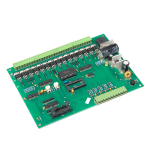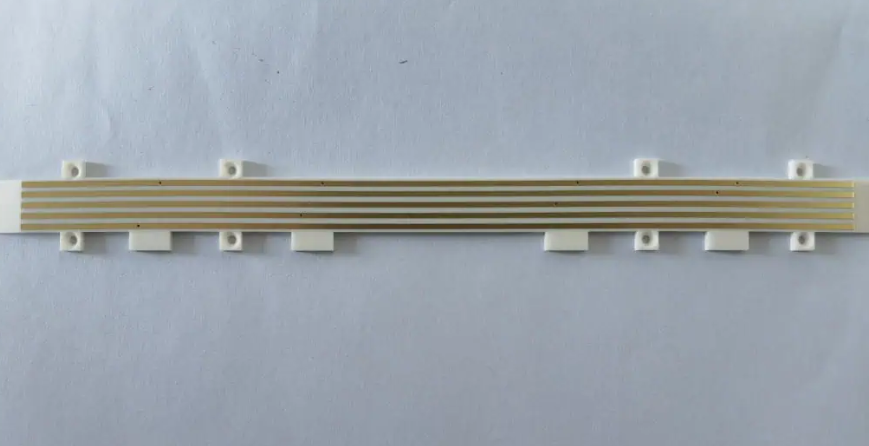
Choosing an Industrial Control PCB Design Partner: What Really Matters
Industrial control hardware punishes optimism. A board that works on the bench has to keep working for a decade inside a cabinet that is hot, dirty and electrically noisy, and the cost of a failure is not the price of the board but the downtime of the machine it controls. That is why the choice of an industrial control PCB design partner matters far more than the quoted price of the layout work, and why a team that has only shipped consumer products often underestimates what the job requires.
Why Industrial Control Design Is a Different Discipline
Consumer electronics is optimised for cost and time to market. Industrial control electronics is optimised for availability, service life and immunity to whatever the plant environment does to it. Four requirements separate the two, and each one changes decisions at the schematic level, not just in the layout.
The first is the environment. Temperature swings, humidity, vibration, dust, and the electrical noise generated by contactors, relays and motor drives are all part of normal operation. Components that are comfortable in a phone are marginal in a control cabinet, and derating rules are tighter for a reason.
The second is life cycle. An industrial product may stay in service for ten years or more, and the bill of materials has to survive that period without a redesign. A part chosen for a few cents of saving today can force an unplanned redesign in year three when it reaches end of life, and the cost of that redesign is paid when the product is already in volume production.
The third is interface compatibility. Industrial equipment talks over RS-485, CAN, Modbus, EtherCAT, 4-20 mA current loops and a long list of vendor protocols, and the field wiring that carries those signals is frequently long, unshielded and connected to equipment the designer does not control. Understanding how those interfaces fail is part of the design work.
The fourth is EMC. The immunity requirements for industrial equipment are strict, and the tests are run on the finished product once. A design that treats EMC as a layout polish rather than an architectural decision fails certification, and each failed cycle costs weeks.
What a Serious Partner Delivers
A conversation about industrial control PCB design should begin with requirements, not with a schematic. A capable team will ask about the operating environment, the expected service life, the interfaces present, the enclosure, the volume ramp, and the certification targets before drawing anything, because those answers decide the architecture: isolation strategy, supply topology, connector family and the level of protection on each input.
The deliverables matter as much as the design itself. A factory-grade project should hand over a schematic with calculated values, a layout database, a fabrication package with stackup and impedance targets, an assembly package with BOM and pick-and-place data, approved alternates with manufacturer part numbers, a test plan, and design notes that record the reasoning behind the critical choices. Projects that ship only a set of Gerber files leave the next owner guessing, and the guessing is expensive. Deliverables of this kind are standard for a professional PCB design and layout service, and they should be agreed before work starts.
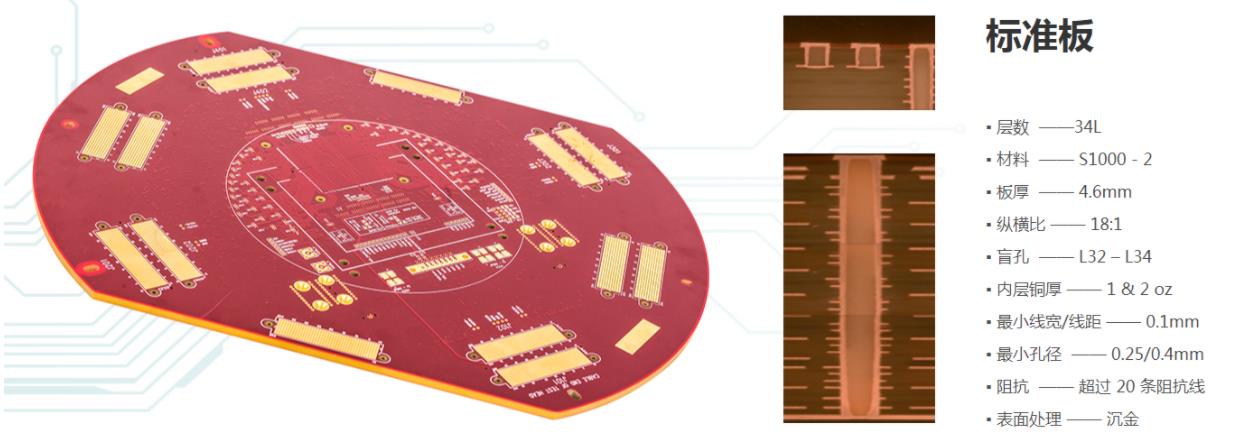
Manufacturability belongs in the same conversation. A design that is elegant on paper but awkward to assemble will be quietly expensive in production, and the difference is usually a handful of choices about clearances, panelisation, fiducials and test access. When design and manufacturing are handled by one team, those choices are made once and verified before the first prototype run, which shortens the path from layout to a working unit.
Finally, circuit design outsourcing only works when the interface is defined. Who owns the firmware, who owns the test specification, who approves a deviation, and how are changes controlled after the first build. The answers should be written down, because industrial projects run for years and people move.
Five Questions That Reveal Real Experience
Have they solved your class of problem before? Data acquisition, motion control, power conversion and safety logic demand different skills and different instincts. A team that has designed a multi-channel analog front end will recognise the grounding problems in your data logger immediately, while a team whose experience is in high-speed digital may not.
What exactly is in the delivery package? Ask for a sample from a previous project, and read the design notes. The quality of the documentation tells you how the project will survive its first field failure.
How is component risk managed? Good component procurement practice means second sources are qualified during design, not after a shortage appears, and the alternates are electrically reviewed rather than merely pin compatible.
How will the design be proven? A prototype build with functional testing, thermal soak, and where relevant HALT or environmental screening, is how confidence is built. The test scope should be agreed in advance, and PCBA testing should be planned around the failure modes the design actually has.
Can they build what they design? An engineering team that also runs industrial PCBA manufacturing will catch assembly problems at design review, when they cost nothing to fix. It also removes the argument between designer and manufacturer about where a defect came from.
Design Choices That Decide Field Reliability
Most field failures in control electronics trace back to a small set of design decisions, and they are all cheap to make correctly at the start.
- Protection on every field connection. Transient suppressors, series impedance, reverse polarity protection and current limiting belong on any input that a technician can touch, because long cable runs collect surges.
- Power margin and thermal derating. Supplies should be sized for the worst-case load at the highest ambient temperature, and every regulator and resistor should be checked against its derated rating, not its headline number.
- Predictable start-up behaviour. Brown-out detection, watchdog timing and reset sequencing have to be defined so that a partial power event does not leave outputs in an undefined state.
- Grounding that matches the signal reality. Return paths for analog sensing and for switching currents must not share copper where the current will modulate the measurement.
- Environmental protection. Conformal coating, gaskets and connector sealing extend life in humid or dusty plants, but they only work if the layout leaves room for them.
- Connector strategy. Field-wired terminals need strain relief and clear labelling; board-to-wire connectors should be selected for the number of mating cycles the product will actually see.
Lessons From Field Failures
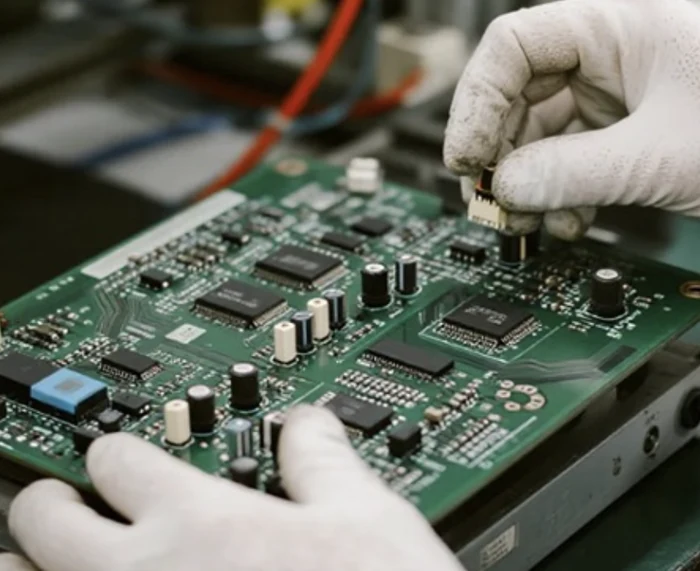
The failures that reach the customer are rarely exotic. EMC problems appear at certification because the return path for a switching supply was left to chance. Analog readings drift because the sensor ground shares a trace with a relay coil. A connector develops intermittent contact because the wiring harness pulls on the board rather than on the chassis. A power supply overheats in summer because the enclosure was assumed to be open.
Every one of those outcomes is decided long before the first prototype, and design for reliability is the discipline of deciding them deliberately. It shows up as a checklist that is actually used: protection on every field line, a thermal review of every dissipating part, a grounding review that follows the current, and a review of what the product does during power loss and recovery.
FAQ
Should the design and the manufacturing be handled by the same partner? It is not mandatory, but it removes a class of disputes and shortens the prototype cycle. If they are separate, agree on the data package and the change process first.
How long should an industrial control board last? Most programs design for ten years of service, which means the bill of materials must be checked for long-term availability and the design should tolerate a substitute part without a board revision.
Is EMC work extra, or part of the design? It is part of the design. Filtering, grounding and shielding decisions are architectural, and retrofitting them after a failed test is the most expensive way to pass.
What does a good PCB design house need from the customer? A specification: environment, interfaces, mechanical envelope, volumes, certification targets and a definition of done. If the customer does not have one, the first task of the project is to write it together.
How can a customer judge quality before the product ships? Ask for the design review records, the test plan and the traceability of the parts. A partner who can show those is a partner who can survive an audit.
Summary
Industrial control design rewards teams that think in decades rather than quarters. Choose a partner that asks about the environment and the life cycle before quoting, delivers documentation that can be maintained, plans component availability, and can carry the design into volume production without handing it to strangers. The technical work is difficult, but it is the process around it, from requirements review to field support, that decides whether the product is still working in year ten.
If you are planning an industrial control platform, start with the quality management system of the partner you are considering, because the way a supplier controls change is the best predictor of how your product will age.