Legend Print: 6 Rules for Board Marking Quality
Legend print is the silkscreen layer that identifies components, pin one positions, connectors and orientation, and it is the only part of the board a human reads directly. It does not carry current and it does not affect impedance, which is exactly why legend print is often treated as an afterthought in design and in process control until an assembly problem appears on the line. A little design attention at the layout stage is far cheaper than reworking boards that carry text a technician cannot read.
That attitude shows up later. A legend print that is too small to read, that sits on a pad or that rubs off during handling turns an assembly instruction into a guess, and a board that is assembled with a part reversed can cost far more than the printing step ever saved.
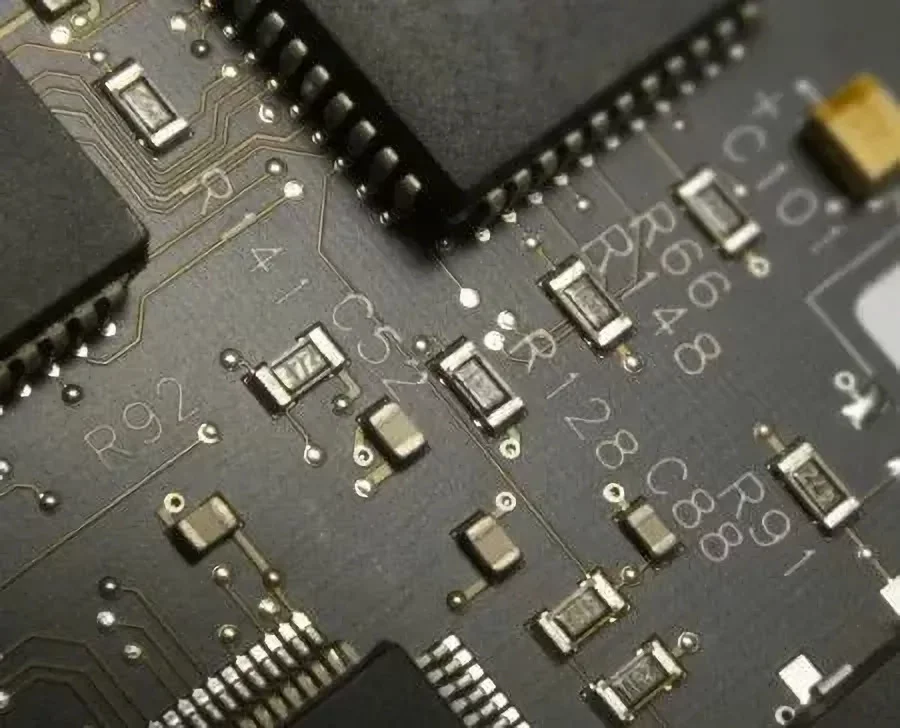
What Legend Print Has to Survive
The ink is applied over cured solder mask, then cured again, and after that it faces assembly reflow, cleaning chemistry and handling. Where the board is coated, the legend may also be buried under a conformal coating that changes its appearance but must not dissolve it.
Each of those steps stresses adhesion rather than appearance, and a legend that looks perfect at fabrication can flake during an aqueous wash or lift under a conformal coating that follows. The durability requirement should be stated on the drawing rather than assumed from the ink datasheet.
Line Width and Character Height Limits
Print resolution sets the minimum feature, and character legibility follows directly from it. Screen printing typically holds a line of about 150 microns, and inkjet can reach smaller lines with a suitable surface, while the practical limit on a rough mask is set by how the ink spreads after deposition.
Character height then follows from line width. A readable character needs a stroke that is legible at arm’s length under normal lighting, and a common rule is a minimum height of about 0.8 mm with a stroke of 0.15 mm. Shrinking the legend print to clear a dense area produces text that meets the drawing and cannot be read on the line.
Clearance to Pads, Vias and Mask Openings
Ink over a pad is a defect, because it contaminates the joint and can prevent wetting. The legend therefore has to be placed with clearance to every exposed copper feature, and that clearance should be larger than the printing registration tolerance so that normal variation cannot push ink onto the pad.
Mask openings behave the same way as pads, because ink that lands in an opening sits on bare copper or finish. The keepout rules used for mask windows apply to legend placement as well, and the assembly drawing should be checked against them before release.
Screen Printing, Inkjet and Laser Marking
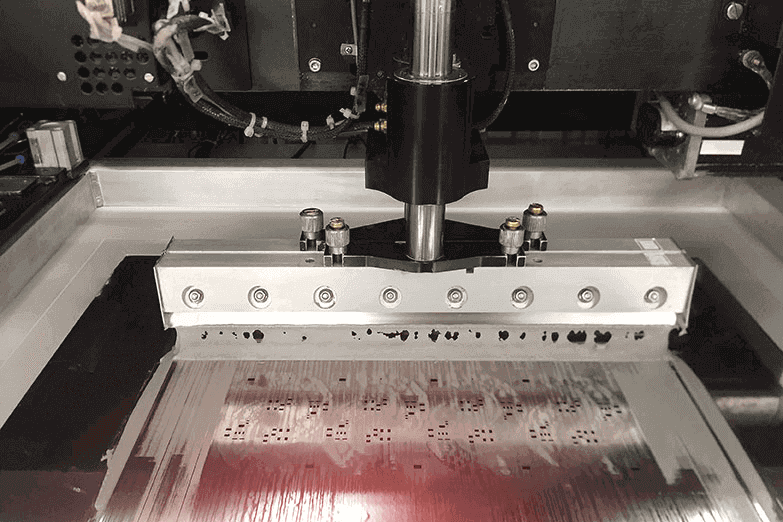
Screen printing is the traditional method, fast and inexpensive, with good opacity on a flat surface. It needs a screen per revision and it struggles where the mask surface is uneven, because the squeegee cannot follow the topography and the ink thickness varies.
Inkjet printing needs no screen, so a revision costs nothing to apply and the data comes straight from the design files. Laser marking removes or alters the mask surface itself, which produces a permanent mark with excellent contrast on a dark mask, and it is often used for serial numbers alongside the legend.
Contrast, Colour and Solder Mask Interaction
Legend print contrast is a function of the ink colour and the mask colour beneath it. White on green is the classic combination, and white on black or on a matte dark mask gives the highest contrast for automated reading as well as for human eyes.
The mask finish matters too. A glossy mask reflects inspection lighting and reduces apparent contrast, while a matte mask scatters it and makes small text easier to see. The choice should be made with the solder mask application process in mind, because ink adhesion differs between finishes.
Cure, Adhesion and Abrasion Resistance
Legend print ink has its own cure schedule, usually a thermal cure that is separate from the mask cure. Under cured ink smears during handling and rework, while over cured ink becomes brittle and chips at the edges of fine characters.
Adhesion is checked with a tape test on a sample, and abrasion resistance with a rub test where the customer requires it. Both are destructive, so they run on coupons or on a sample panel, and the result belongs in the quality record with the ink lot and cure profile.
Registration and Placement Accuracy
The legend has to land where the drawing says, relative to the pads and the outline. Registration errors of a few tenths of a millimetre put a component designator beside the wrong part, which is worse than an unreadable one because it is confidently misleading.
The registration tolerance should be stated and measured against the same datum used for the copper layers. Where the legend is printed on a panel that will be routed to shape, the datum should survive the routing so that the position on the finished board is the one that was checked.
Common Defects: Bridging, Bleeding and Missing Text
Bridging appears where two characters are close and the ink flows between them, usually because the screen is worn or the ink is too thin, and it is a character legibility failure as much as a process fault. Bleeding is a soft edge that comes from too much ink or too much squeegee pressure, and it closes up small gaps in the same way.
Missing legend print is usually a screen defect, a blocked inkjet nozzle or an image that was never placed on the panel. All three are caught by comparing the printed board with the release data, and the check belongs in the same review as the design release package.
Drawing Callouts, Samples and Inspection
The drawing should state the ink colour, the required line width and character height, the clearance to exposed copper and the durability test the board must pass. Where a customer supplies a logo or a marking standard, quote the document and the revision rather than describing it.
Inspection compares the board with a boundary sample under defined lighting, and the fabrication notes should record the comparison. The marking and legibility requirements in the IPC documentation give the acceptance language for that record.
FAQ
How small can legend print be? It depends on the process and the mask finish, but a character height below about 0.8 mm with a 0.15 mm stroke becomes hard to read and hard to print reliably. Miniaturising a legend usually solves a layout problem by creating an assembly problem.
Can legend print sit on a pad if the pad is not used? No. Ink on any exposed copper feature risks contamination of a joint or an exposed surface, and the clearance rules should treat every mask opening the same way regardless of whether the pad is populated.
Does conformal coating damage the legend? A cured legend ink is normally unaffected by coating, but an under cured one can be softened by the solvent in the coating. Where a board is coated, the cure of the ink should be confirmed before the coating step adds another variable.