
Legend Printing and Silkscreen Quality Control on PCBs
The legend is the printed information on the surface of a board: reference designators, polarity marks, pin one indicators, part outlines and sometimes the board name and revision. It carries no electrical function, which is why it is often treated as an afterthought, and yet a legend that is illegible, misregistered or missing is one of the most common reasons an assembly is rejected at final inspection or reworked during service.
What the Legend Does
A good legend lets an operator place a part without looking at a drawing, lets an inspector confirm that the correct component is fitted, and lets a technician identify a test point or a connector without a schematic. In repair and field service the legend is often the only documentation available, so its accuracy has a direct effect on the cost of ownership.
The legend also has to coexist with everything else on the surface. It must not cover a pad, it must not sit on a solder mask opening, and it must not obscure a fiducial or a test point. Those constraints are what make legend design a layout problem rather than an artistic one.
Silkscreen Ink Types and Cure
Legend is applied with an epoxy based ink, most often white, that is screen printed and then cured. The ink has to adhere to the solder mask, survive the thermal excursion of assembly, resist cleaning chemicals and remain legible for the life of the product, and those requirements pull against each other when the cure is set.
Under cured ink can smear or lift during handling and can release solvent into the reflow oven. Over cured ink becomes brittle and tends to chip at the edges of characters. The cure has to be verified on the production ink and mask combination rather than assumed from the supplier data sheet.
Line Width and Character Height
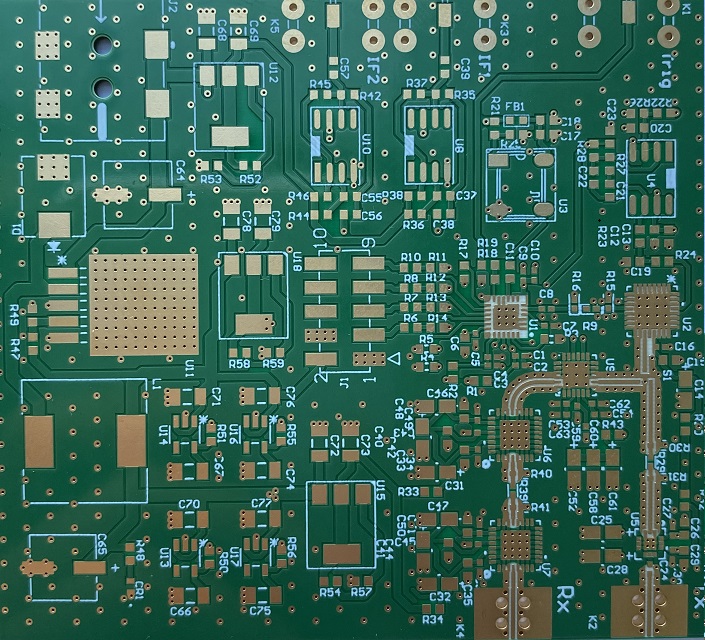
Character height and stroke width determine whether the legend can be read at all. A character that is too small for the printing process fills in at the corners, and the result is an unreadable blob that also fails an automated inspection. A character that is too large takes space that the layout needs for copper.
A practical rule is that the stroke width should be at least as large as the printing process can resolve reliably, and the character height should be several times the stroke width so that the shape of the letter or digit is preserved. Every fabrication shop has its own minimum, and the minimum should be stated in the fabrication notes rather than discovered after the first article.
Print Resolution and Mesh Selection
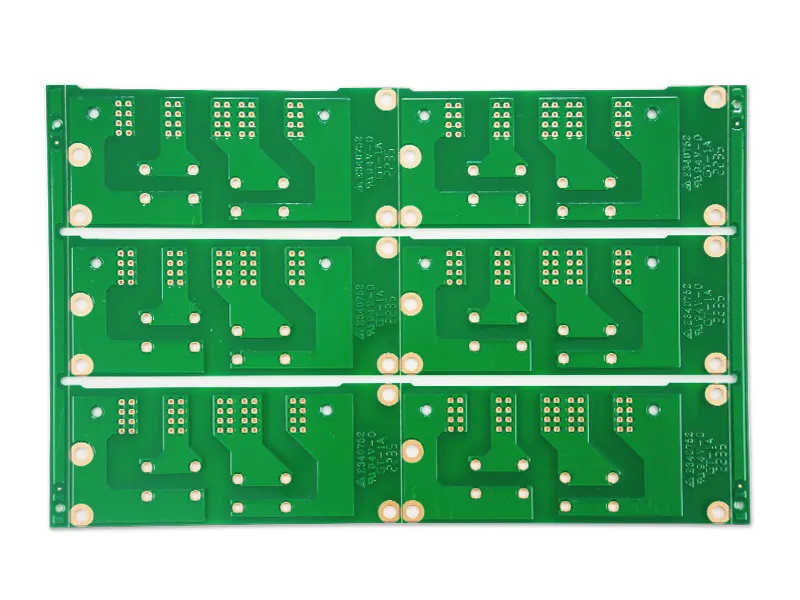
Print resolution is set by the mesh count of the screen, by the thickness of the emulsion and by the ink rheology. A finer mesh gives better resolution and a thinner deposit, while a coarser mesh gives a heavier deposit that is more likely to spread. The choice is a compromise between legibility and durability.
The screen itself is a consumable. Tension falls with use, emulsion edges wear, and a worn screen produces characters with rounded corners and inconsistent stroke width. Screens should be inspected before each run, and the printing parameters should be recorded so that a change in appearance can be traced to a specific cause.
Registration to Copper and Mask
The legend is printed after the solder mask, so its position depends on the registration of both the mask and the print. A shift that is harmless for the mask can push a reference designator onto a pad, and at fine pitch there may be very little room for that shift before the legend becomes a defect.
Registration is verified against the copper, not against the mask, because the copper is what the legend is describing. Coupons that carry a registration pattern help, and the same measurement can be made on the panel itself with an optical system once the feature sizes fall below what the eye can judge.
Solder Mask Openings and Legend Clearance
Silkscreen ink must not be printed across a solder mask opening, because ink on a pad prevents soldering. The clearance between the legend and the opening has to accommodate the registration tolerance of both processes, and it must be defined as a keep out in the layout tool rather than left to the designer to remember.
The same rule applies around vias that are not tented and around holes that will be used for tooling. A legend that encroaches on a via can be lifted by the solder during assembly, and a lifted character leaves a bare area that no longer matches the drawn outline.
Common Printing Defects
The usual defects are missing characters, filled in characters, heavy or thin strokes, smearing along the print direction and ink printed over a pad. Each points to a different cause, from a blocked screen and a wrong cure to a registration error or a design that placed the legend too close to copper.
Because the defects are visible, they are often corrected by rework rather than by process change, and the underlying cause is left in place. Where the same defect recurs across lots, the cause is almost always in the screen, the parameters or the design clearance rather than in the operator.
Inspection of the Legend
Inspection should confirm presence, legibility and position. An automated optical system can check the position against the design data and can detect a missing character reliably, but it will not judge whether an operator can read the plate under the lighting used on the line, so a visual check still has a role on the first article.
The inspection criteria should be written down, with examples of acceptable and unacceptable prints, because legibility is otherwise a matter of individual judgement. The same principle of defining the criteria before measuring applies throughout the process, as described in the guide to judging PCB quality.
Design Rules and Documentation
The fabrication drawing should state the legend colour, the minimum character height and stroke width, the required clearance from pads and openings, and the revision of the legend data. Where the legend carries a revision number, the board revision and the legend revision are separate items and both should appear.
Changes to the legend should go through the same release process as changes to the copper. A reference designator that moves after the design is released can make an existing assembly instruction wrong, and the cost of that confusion is far higher than the effort of reviewing the change. The checks that support a controlled release are listed in the guide to the PCB design release checklist.
Additional Considerations for This Build
Practical attention to legend printing pays for itself here, because it decides whether the finished board behaves as the drawing intended. Where the requirement is not stated on the fabrication drawing or in the assembly notes, the shop has to assume a default, and that default is rarely the value the design was simulated with. Stating legend printing explicitly, together with the tolerance that applies, removes the assumption and keeps the result predictable from batch to batch.
Related reading: our fabrication notes, board quality and design release notes cover the same ground.
FAQ
How small can legend characters be? The limit comes from the printing process rather than from the design intent. Every shop has a minimum character height and stroke width that it can hold consistently, and both should be stated in the fabrication notes. Below that limit characters fill in and become unreadable.
Can the legend be printed over a via? It should not be printed over a pad or an opening in the solder mask, and the clearance should allow for registration error on both the mask and the print. A tented via is normally acceptable, provided the ink adheres and the via is fully covered.
Why does the legend sometimes disappear after assembly? Ink that was under cured can be lifted by flux and cleaning, and ink that was printed over a mask opening is exposed to solder. Both cases are process or design faults rather than a problem with the ink itself, and both are visible on the first article if the checks are made.