Low to Medium Volume PCBA: What the Quotation Should Include
R&D teams rarely move from a prototype straight into high volume. The next step is usually a pilot batch: enough units to run a real test, satisfy an early customer, or support a certification submission, and not enough to justify a dedicated production program. Low to medium volume PCBA orders sit in that gap, and they are quoted badly more often than any other kind of work.
The reason is that the price per placement appears to be the whole story. It is not. At this scale the dominant costs are engineering, material readiness, programming and test, and the way a supplier handles those is what determines whether the batch lands on time or spends a week waiting for a decision.
Why Small Orders Behave Differently
A production line is efficient when it runs the same program for a long time. A pilot batch runs a program once, verifies it, and then changes. The line still has to be set up, the stencil still has to be made, the first article still has to be inspected, and the programming file still has to be loaded.
That structure is why the material and engineering content of a small order dominates its cost. A supplier that treats a pilot batch as a smaller version of a production order misses the point: the batch is a test of the data chain, and the value of the work is in the verification, not in the number of components placed.

What a Complete Quotation Covers
A quotation that can be compared with another one has to define the same scope. The following items are the ones that most often appear as surprises later.
- PCB fabrication, or the assumption about who supplies the bare boards and at which revision.
- Component cost under a defined BOM scope, including whether the supplier sources or the customer consigns.
- Stencil and tooling, with the panelisation that the stencil is designed for.
- Assembly labour, including any hand placement, selective soldering or rework allowance.
- Programming, functional test coverage and the fixture arrangement.
- Inspection, first article confirmation, coating, assembly and packing.
- Attrition allowance, surplus material handling and the rules for shortages or substitutions.
A turnkey PCBA service that lists those items can be compared against another. A price that mentions only placement cost cannot, because the difference will be recovered somewhere else.
Engineering Review and First Article
The engineering review happens before the line starts, and it is where most delays are prevented. It confirms that every footprint in the design matches the part that was purchased, that the coordinates agree with the reference designators, and that the polarity and orientation conventions are consistent.
First article inspection then confirms the physical result. The useful record identifies the part, the location, the orientation and the revision that was built, because a first article that cannot be traced to a revision is of limited value when the design changes.
Both steps belong to PCBA project management rather than to any single machine. Someone has to own the open questions list, chase the answers and decide when the batch can proceed, and that ownership is what customers actually pay for in a pilot order.
BOM Kitting and Material Readiness
BOM kitting is the process of turning a list of parts into a kit that can be placed on the line. Done properly, it catches the problems that would otherwise stop the assembly: a part number that does not exist, a package that does not match the footprint, a minimum order quantity that exceeds the build, an obsolete device with no approved alternate.
Where the supplier sources the material, the kitting report should state what was purchased against which line, what was substituted and who approved the substitution. Where the customer consigns, the report should state what was received, what was short and how the balance will be handled.
The most useful output of this stage is a short list of open items with owners. A batch that starts with three known open issues is manageable. A batch that starts with three unknown ones is a guaranteed interruption.

Stencil Design and Panelisation
Stencil design is a technical decision that is often treated as a purchase. Aperture size, area ratio, step-downs for connectors, and the treatment of large thermal pads all affect paste release, and paste volume is the single largest influence on joint quality.
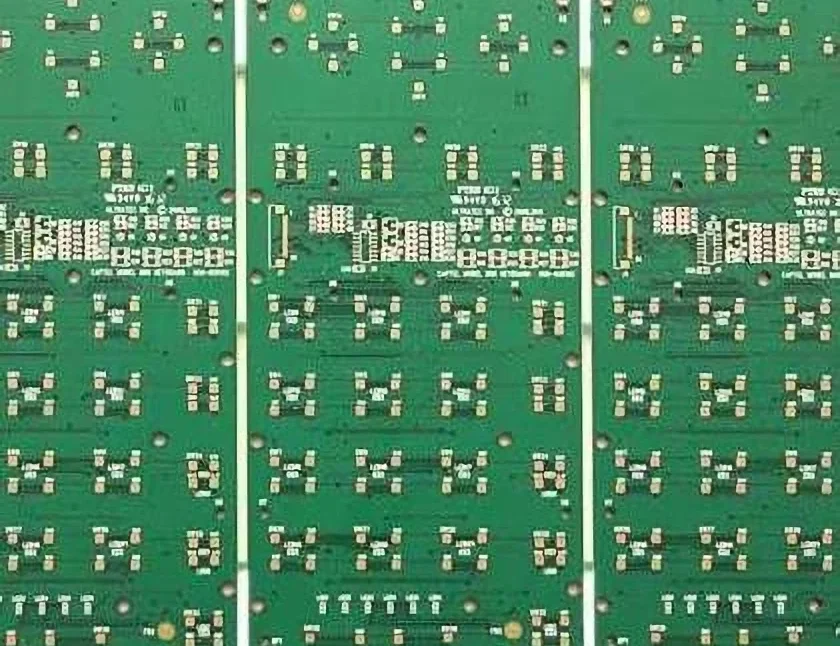
Panelisation interacts with the stencil and with handling. The panel has to fit the printer and the oven, carry fiducials that the machine can see, and provide enough material around each board for the conveyor. Where the design has components close to the edge, the panel design may be the constraint that decides whether tooling is required.
Asking who designs the panel and who approves the stencil is a useful way to identify whether the assembly partner is engineering the process or only executing it.
Programming and Test Coverage
Programming and functional test coverage are where a pilot batch earns its keep. A prototype that has been powered up manually has proven that the hardware can work; a batch that has been programmed and tested with a defined fixture has proven that the process can produce working units repeatedly.
Agree in advance what is programmed, what is tested, what the pass criteria are, and what happens to a unit that fails. The boundary between repair, rework and scrap should be written down, since the handling of a failed unit is one of the most common sources of argument at the end of a small order.
Choosing the Right Model for Your Order
The suppliers that serve pilot quantities fall into two groups, and the right choice depends on how much engineering conversation the project needs.
A platform model works when the data is standard: the board is a routine build, the parts are available from the platform catalogue, the assembly is a normal surface mount process and the test requirement is visual inspection. Pricing is fast to obtain and the process is predictable, and the trade-off is that anything outside the template becomes a special case.
An engineering-led model suits the opposite situation. The files still need review, components need substitution with a documented rationale, the panel and stencil have to be designed around an awkward connector, or the batch will be programmed and functionally tested before it ships. These orders cost more in engineering time and less in surprises, which is usually the better trade at pilot scale.
A practical compromise is to start with a supplier that can handle the low volume PCB assembly stage and carry the same revision into production later. The BOM, the panel design and the test fixture then remain valid as the quantity grows, and the qualification work is done once. Where the material needs to be sourced and substituted carefully, choosing a partner that also runs components procurement keeps that work inside the same process, and access to PCBA testing under the same roof makes the test boundary easier to define.
FAQ
At what quantity does assembly become economic? There is no fixed threshold. What matters is whether the engineering, tooling and material effort is amortised over a quantity that the project can justify, which is why the scope of the order should be decided before the price is compared.
Is a stencil reusable across batches? Yes, provided the panel and the board revision do not change. A revision change usually requires a new stencil.
Should the pilot batch use production test fixtures? If the fixture exists or can be built economically, using it early shortens the path to volume and produces comparable data.
What should be agreed about surplus components? Who owns them, how they are stored, and whether they can be applied to the next batch.
Summary
A pilot batch is bought on scope rather than on unit price. Define the fabrication revision, the kitting rules, the stencil and panel design, the programming and test boundary and the handling of failures before the order is placed, and choose a turnkey PCBA service that reports against that scope. The assembly and packing steps at the end of the flow are part of the same agreement, and they are easier to plan when the same team owns the whole build.