Medical PCB Manufacturing Requirements and Quality Control Standards
The reliability and safety of medical equipment are directly related to patient health and life safety. As the core component responsible for electrical connection and signal transmission, printed circuit boards (PCBs) play a critical role in medical devices.
Compared with standard industrial circuit boards, Medical PCB Manufacturing requires stricter standards in material selection, manufacturing processes, quality inspection, cleanliness control, and regulatory compliance.
Medical PCBs must maintain stable operation under complex conditions, including high humidity, temperature variations, repeated sterilization processes, chemical exposure, and long-term continuous operation.
Material Selection: Meeting the Special Requirements of Medical Applications
Medical equipment often operates in demanding environments involving heat, moisture, sterilization chemicals, and frequent cleaning procedures. Therefore, PCB materials must provide excellent stability, durability, and environmental resistance.
For substrate selection, materials with high glass transition temperature (Tg) are commonly preferred. High Tg materials can withstand heat generated during long-term operation and prevent dimensional deformation that may affect circuit performance.
For example, high-frequency ultrasound equipment requires PCBs capable of handling continuous power output. High Tg materials help reduce thermal stress and maintain structural stability during extended operation.
For medical devices that frequently undergo disinfection or direct contact with users, such as patient monitors and infusion pumps, PCB substrates and surface finishes must provide excellent corrosion resistance.
Chemical-resistant copper-clad laminates and lead-free surface finishing technologies help prevent harmful material release and improve long-term safety.
For implantable medical devices, PCB materials may require biocompatibility characteristics to ensure that contact with human tissue does not cause adverse reactions. These materials must pass strict biological safety evaluations before application.
Selecting appropriate Medical PCB materials is the foundation for achieving safe and reliable medical electronic systems. Medical PCB
Manufacturing Process: Ensuring Precision and Stability
Medical PCBs often feature high component density, fine traces, and complex circuit structures. Therefore, manufacturing precision is one of the most important factors affecting product reliability.
Precision Drilling Technology
During PCB drilling processes, manufacturers must maintain accurate hole diameter and positioning accuracy.
Incorrect hole locations may cause poor interlayer connections, affecting signal transmission reliability.
For example, if a medical electrocardiogram (ECG) device PCB has small drilling errors, signal acquisition accuracy may be affected, potentially influencing diagnostic results.
Advanced drilling technologies, including laser drilling and microvia fabrication, help achieve the precision required for modern medical electronics.
Reliable Plating Technology
PCB plating processes must provide uniform copper thickness and strong adhesion.
Medical equipment PCBs often experience repeated temperature changes and mechanical vibration. Defects such as pinholes, peeling, or uneven copper deposition may result in electrical failures.
Advanced technologies such as pulse electroplating improve copper layer density and reliability. At the same time, strict control of plating solution composition and temperature is necessary to prevent impurities from affecting conductivity and durability.
Flexible PCB Manufacturing
Flexible circuits used in wearable medical devices require excellent bending performance.
Manufacturers must optimize substrate materials and adhesive structures to ensure that flexible PCBs maintain stable electrical performance after repeated bending cycles.
For wearable healthcare products and compact medical devices, professional Rigid Flex PCB solutions provide both flexibility and mechanical reliability. Rigid Flex PCB
Quality Inspection: Strict Control Throughout the Entire Process
Medical PCB quality inspection must cover the complete manufacturing process, from incoming materials to final product delivery.
Raw Material Inspection
Before production begins, raw materials must be carefully tested for:
- Electrical properties
- Mechanical strength
- Environmental resistance
- Material consistency
Only qualified materials should enter production to prevent potential reliability issues.
Manufacturing Process Inspection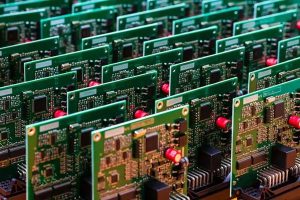
During PCB production, automated optical inspection (AOI) systems are widely used to perform comprehensive circuit inspections.
AOI technology can identify defects including:
- Open circuits
- Short circuits
- Trace width deviations
- Pattern defects
This ensures defective products are detected before proceeding to the next manufacturing stage.
Final Reliability Testing
Finished medical PCBs require reliability testing that simulates actual operating environments.
Common tests include:
- High temperature and humidity testing
- Vibration and shock testing
- Insulation resistance testing
- Thermal cycling testing
High temperature and humidity testing verifies PCB stability during sterilization and cleaning environments.
Vibration and shock testing simulate transportation and operational stress to ensure mechanical reliability.
Insulation resistance testing prevents electrical leakage risks that could affect patients and medical professionals.
For implantable medical electronics, additional biological compatibility testing and long-term reliability verification may be required.
Cleanliness Control: Preventing Contamination Risks
Medical electronic equipment requires extremely high PCB cleanliness standards. Even small contaminants can affect electrical performance or create safety risks.
During manufacturing, production environments must maintain strict cleanliness levels. Dust-free workshops help prevent particles, fibers, and other contaminants from attaching to PCB surfaces.
After soldering processes, flux residues must be completely removed. Remaining flux may cause corrosion under high humidity conditions or release unwanted substances inside medical equipment.
Professional cleaning processes use environmentally friendly cleaning agents with minimal residue. After cleaning, advanced inspection equipment can verify surface cleanliness and ensure compliance with medical standards.
For PCBs used in sterile medical environments, additional sterilization procedures may be required. Methods such as ethylene oxide sterilization must be carefully controlled to prevent negative effects on PCB performance.
Compliance Management: Meeting Medical Industry Standards
Medical PCB manufacturing must comply with strict industry regulations and quality standards.
Manufacturers need to establish comprehensive quality management systems and obtain relevant certifications such as ISO13485 medical device quality management certification.
A professional quality system ensures:
- Standardized manufacturing procedures
- Complete production documentation
- Full product traceability
- Continuous process improvement
Each PCB production batch should maintain complete records, including:
- Raw material information
- Manufacturing parameters
- Inspection results
- Quality verification data
If a medical device experiences a failure, traceability systems allow manufacturers to quickly identify production history, determine root causes, and implement corrective actions.
For medical equipment manufacturers, reliable PCB Manufacturing Services help ensure compliance, consistency, and long-term product performance. PCB Manufacturing Services
Advanced Reliability Requirements for Medical PCBs
Medical applications require circuit boards with exceptional reliability because failures can directly affect patient safety.
Key requirements include:
- Stable electrical performance
- Long operational lifespan
- Strong environmental resistance
- High manufacturing consistency
- Complete quality traceability
Advanced High Reliability PCB technologies provide the foundation for medical devices such as imaging systems, monitoring equipment, diagnostic instruments, and wearable healthcare products. High Reliability PCB
Conclusion
Medical PCB manufacturing is a highly demanding process that requires strict control over materials, fabrication technologies, inspection procedures, cleanliness standards, and regulatory compliance.
Every manufacturing stage, from substrate selection and precision processing to reliability testing and quality management, directly influences the safety and performance of medical equipment.
By applying advanced manufacturing technologies and comprehensive quality systems, PCB manufacturers can provide reliable circuit board solutions that support the development of safer, smarter, and more effective medical devices.