One-Stop PCBA Manufacturing: What Turnkey Service Really Covers
Splitting a product across three suppliers looks cheap on paper. Fabrication goes to the board shop, assembly goes to a contract manufacturer, and components are bought wherever the price is lowest that week. The quotation is lower, the schedule looks acceptable, and then the first build arrives. Boards are three days late because the fabricator was waiting on a stackup confirmation, the assembler is holding a reel that arrived with the wrong tolerance, and nobody wants to own the fault. That is the pattern that pushes engineering teams toward one-stop PCBA manufacturing.
Why Single-Source Manufacturing Changes the Economics
The first benefit is responsibility. When fabrication, BOM sourcing and assembly sit inside one organisation, a defect has one owner. There is no argument about whether a solder defect came from a contaminated pad or a bad paste profile, because the same engineering team sets both processes.
The second benefit is time. Boards do not wait in a shipping queue between stages, and questions about the data package are answered internally. In practice this shifts the build from weeks of coordination to days.
The third is cost control that is invisible in a line-by-line quote. A single supplier can choose a component alternates list that is easy to assemble, adjust panelisation to suit the line, and buy parts at the volume the whole project justifies rather than the volume of one stage.
What Genuine Turnkey PCB Assembly Covers
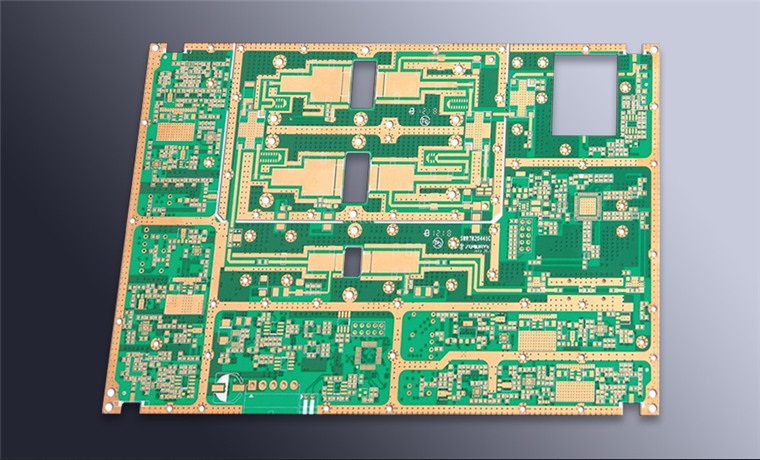
A real single-source service covers the complete path from data to tested product. That means PCB fabrication with a controlled stackup, component sourcing with approved alternates, SMT and through-hole assembly, inspection, functional test, and often conformal coating and box build.
Each of those stages has a deliverable that the next stage consumes, and the value of integration is that those interfaces are checked once. A fabrication house that also assembles will flag a 0.4 mm pitch land pattern before the boards are etched rather than after 500 panels have been produced. The same logic applies to the sourcing stage: an engineering team that knows the assembly line will not release a part that arrives in a package the line cannot place reliably.
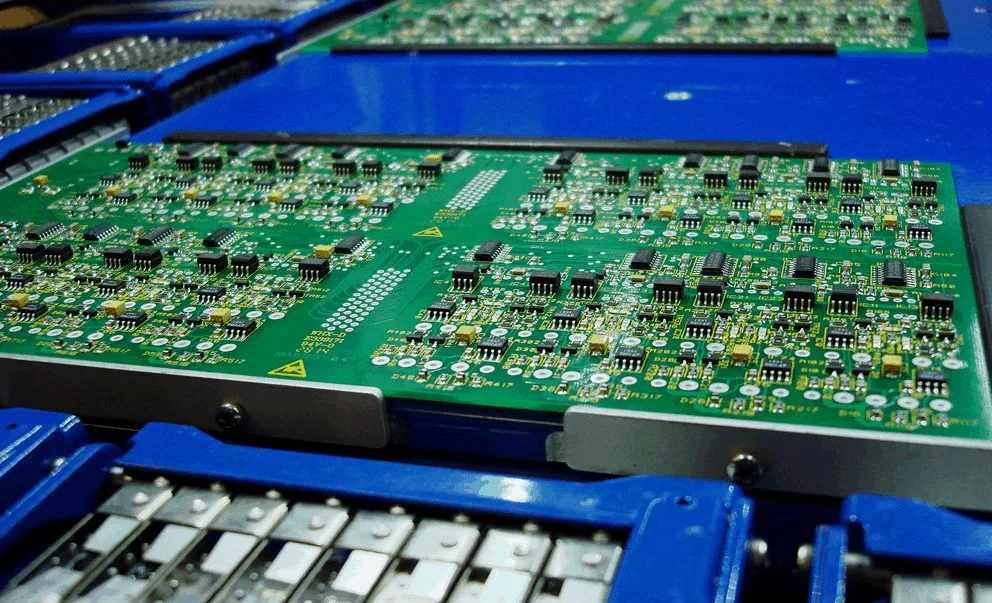
Turnkey PCB assembly also changes the quoting conversation. Because one team sees fabrication, materials and labour together, it can explain what drives the price. That transparency matters when the design changes, since the customer can see which decisions reduce cost and which only move it around.
Where the Handoffs Hurt Most
Most schedule losses in a split supply chain happen at three interfaces.
The first is design to fabrication. Stackup, copper weight, impedance targets and surface finish have to be translated into a fabrication package, and every translation is an opportunity for a mismatch between what the designer simulated and what the shop builds.
The second is BOM sourcing. A bill of materials that is complete but unbuildable, with obsolete parts, minimum order quantities that exceed the build, or packages that need hand soldering, turns into a week of email. A proper components procurement process resolves this before the kit is released.
The third is fabrication to assembly. Panelisation, fiducials, tooling holes and solder mask clearances are fabrication decisions with assembly consequences, and when two companies are involved, each assumes the other checked them.
How to Qualify a One-Stop Partner
Ask whether each stage is genuinely in-house or subcontracted, and ask for the specific line, not a general capability statement. A supplier that runs its own SMT assembly line will be able to describe its placement accuracy, its paste inspection routine and how it handles a first article.
Ask what the data package has to contain before work starts. A serious partner will list the files it needs and will return a DFM report with the quotation, not after an order is placed.
Ask how the prototype stage connects to volume. The prototype PCB assembly run should produce the same documentation, test coverage and traceability that the volume build will use, so that the move to production is a scale change and not a redesign.
Finally, ask what happens when something goes wrong. Response time, failure analysis and the willingness to return a repaired unit with a written root cause are the parts of a manufacturing relationship that customers only notice when they are needed.
What It Looks Like in Practice
A typical program starts with a data review covering the schematic-derived netlist, the stackup, the BOM and the mechanical envelope. Fabrication is released once the impedance and materials are confirmed, and the sourcing team works the long-lead items in parallel rather than after the boards arrive.
Assembly then runs as a controlled process: stencil and paste volume verification, first article inspection, in-process optical inspection, and functional test with the fixtures agreed up front. Because the kit, the program and the test specification all come from the same project file, a revision change is a controlled event instead of a scramble.
The turnkey PCB assembly model is not only about convenience. It removes the interfaces where schedule and quality are lost, and it puts one team in a position to see the whole cost of a decision.
Where One-Stop Service Pays Off Least and Most
Simple, high-volume boards with stable designs can be split across suppliers and still run smoothly, because the interfaces do not change. Complex boards, mixed technology assemblies, products with tight mechanical constraints and anything moving through a fast prototype to production cycle benefit far more, because the number of decisions crossing company boundaries is high.
For teams that build medical, industrial or automotive electronics, the documentation requirement is the deciding factor. Change control, traceability and inspection records have to survive an audit, and a single supplier that owns quality management end to end produces a coherent record instead of three partial ones.
Inspection and Test Belong to the Same Plan
Inspection is where a fragmented supply chain becomes visible. Fabrication measures what it can measure on a bare board: copper thickness, hole quality, registration and surface finish. Assembly measures what it can measure on an assembled board: paste volume, placement accuracy, fillet quality and joint integrity. A finished product, however, fails for reasons that cut across both, such as a via that is within tolerance but not sealed, or a pad that is acceptable on its own but placed next to a component that traps flux.
When one team owns the whole path, the test plan is written once. Solder paste inspection, automated optical inspection and X-ray are chosen according to the failure modes the product actually has, not according to the equipment available in one workshop. A board with bottom-terminated packages needs X-ray coverage; a board with fine-pitch connectors needs a defined inspection method for the heel fillet; a board with a large thermal mass needs a reflow profile that is verified rather than assumed.
Functional test is the same story. The fixture, the firmware version, the pass criteria and the record of what was tested should be agreed before the first production batch, and they should not change between the prototype build and the volume build unless the change is deliberate and documented.
Three Questions That Reveal Whether Integration Is Real
The first is who reviews the design for manufacturability, and when. If the review happens after the order is placed, the supplier is describing a service, not a process.
The second is where the kit is kitted. A supplier that pulls parts from its own stock and can show the incoming inspection record is behaving differently from one that forwards a purchase order and waits.
The third is how a change is handled once boards exist. A revision that arrives mid-build should trigger a documented decision about whether to scrap, rework or continue, with the cost visible to both sides.
FAQ
Is one-stop service always cheaper? Not always line by line. It usually wins on total cost once coordination, freight between stages, and the engineering time spent resolving mismatches are counted.
Can a single supplier handle both prototypes and volume? It should, and the value comes from the prototype documentation being reusable. If the volume line is a different company, the qualification work starts again.
What should be checked first when comparing quotations? The scope behind the price: which stages are included, what the data package must contain, what inspection is standard, and what is quoted as an extra.
Summary
One-stop PCBA manufacturing is worth evaluating on three questions: whether the stages are genuinely in-house, whether the data interfaces are checked before production rather than after, and whether the prototype documentation is good enough to carry into volume. If the answers hold, the lower coordination cost is real and the price premium, if any, usually disappears in the first revision cycle.