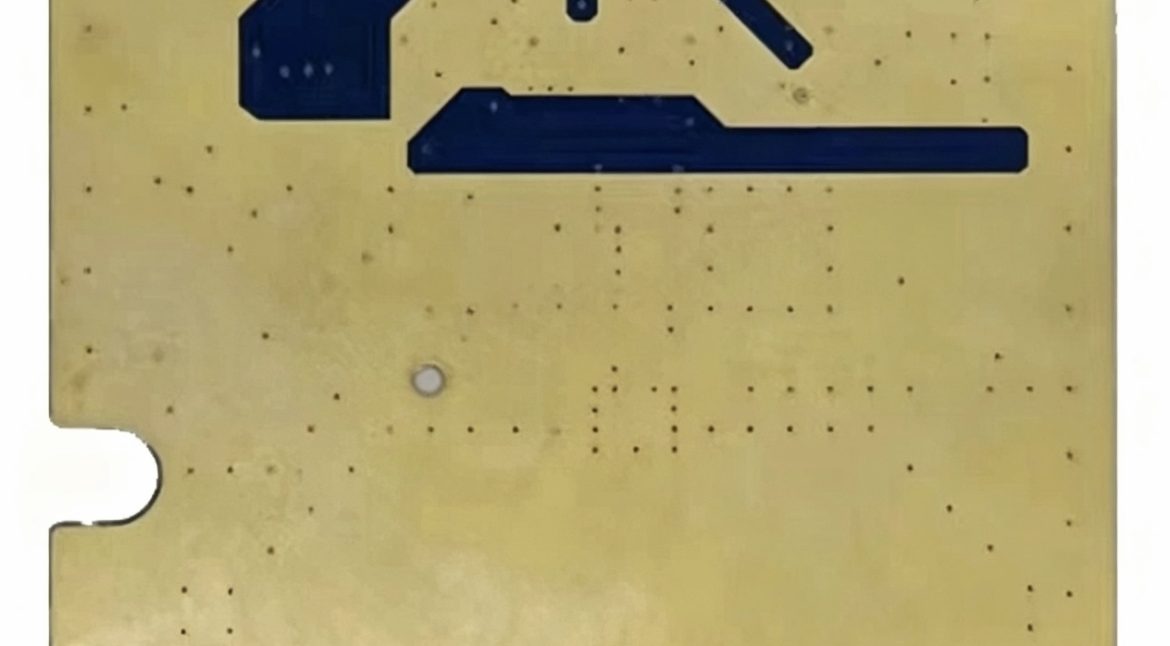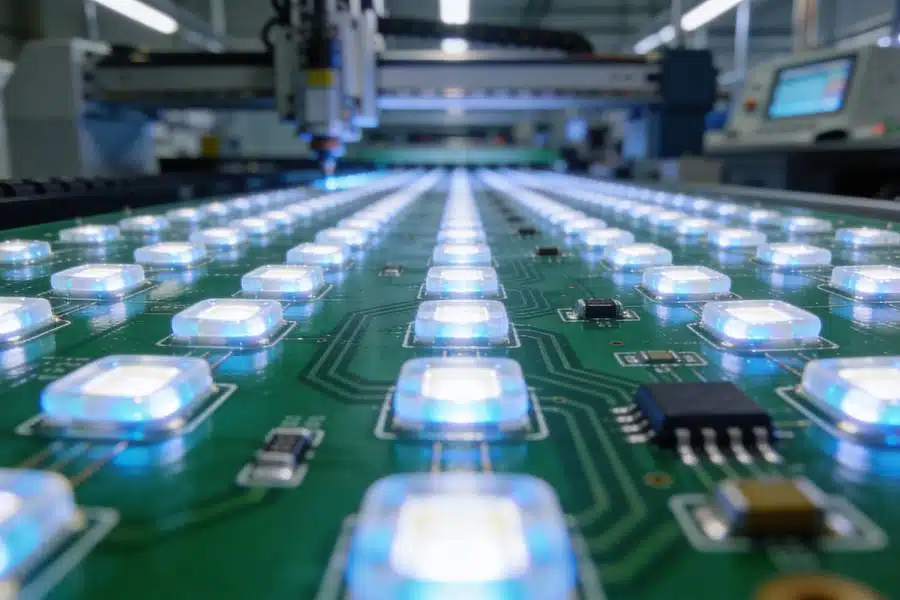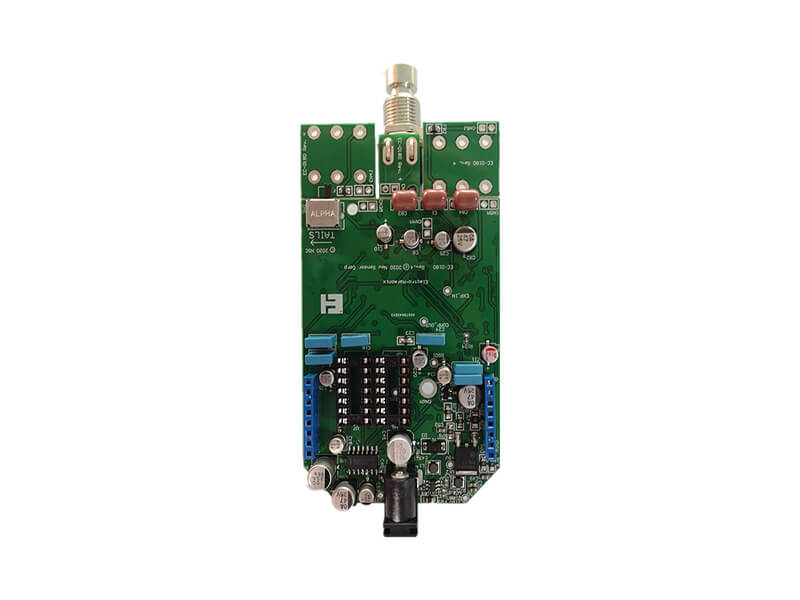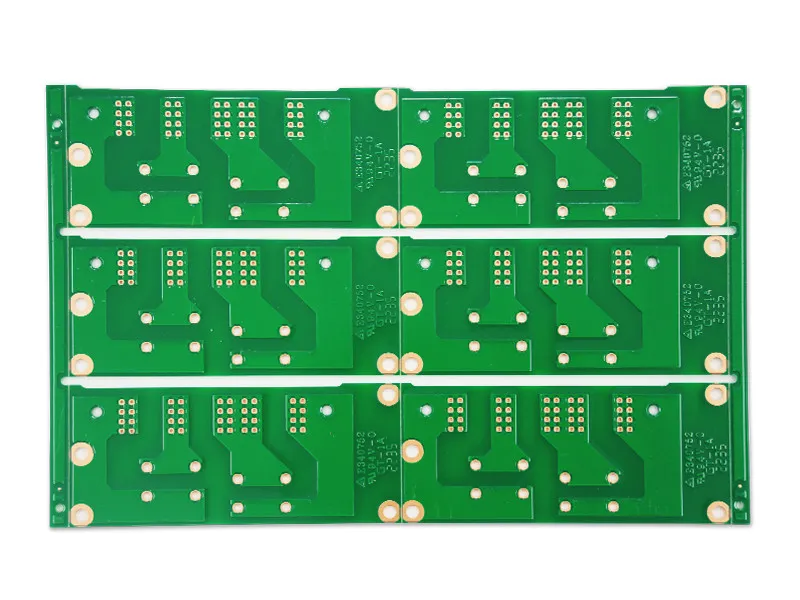
Ceramic PCB Substrates: Materials, Metallisation and Applications A ceramic PCB swaps the glass-reinforced epoxy that carries most circuits for a sintered ceramic tile, then builds the conductor pattern on top of it. The substrate is the structural element, the insulator and the heat spreader at once, and that single decision…
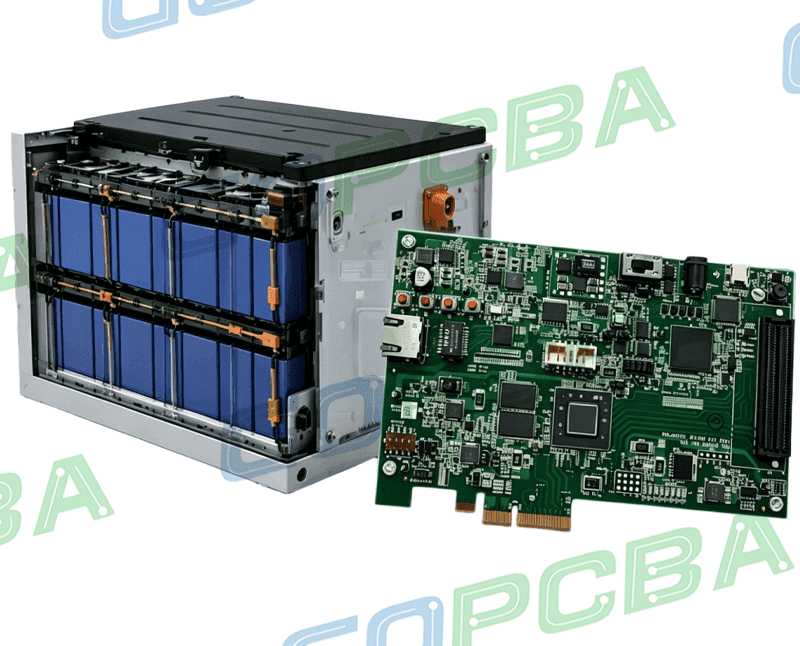
Lead-Free PCB vs Halogen-Free PCB: What the Labels Mean Lead-free and halogen-free sound like two ways of saying the same thing, and in specifications and purchase orders the two labels are quoted interchangeably. They are not the same requirement, they are not enforced by the same regulation, and satisfying one…
PTFE PCB: Properties, Grades and Applications Teflon is a trade name that has become a shorthand for a family of materials, and in printed circuit work it usually means a laminate built on polytetrafluoroethylene. The reason it appears in electronics is that PTFE has a combination of properties no ordinary…
PCB SPI Data Feedback: A Factory-Floor Review Modern electronics depend on boards that are assembled correctly the first time. Every product – a phone, a charger, a medical instrument or an industrial controller – relies on thousands of solder joints that must conduct current for years. This article explains PCB…
PCB 3D AOI for Joints: Key Process and Quality Checks Electronics manufacturing has become a discipline of small details. Solder paste volumes, placement accuracy, temperature profiles and inspection limits all add up to the final result. This guide looks at PCB 3D AOI for joints from the perspective of a…
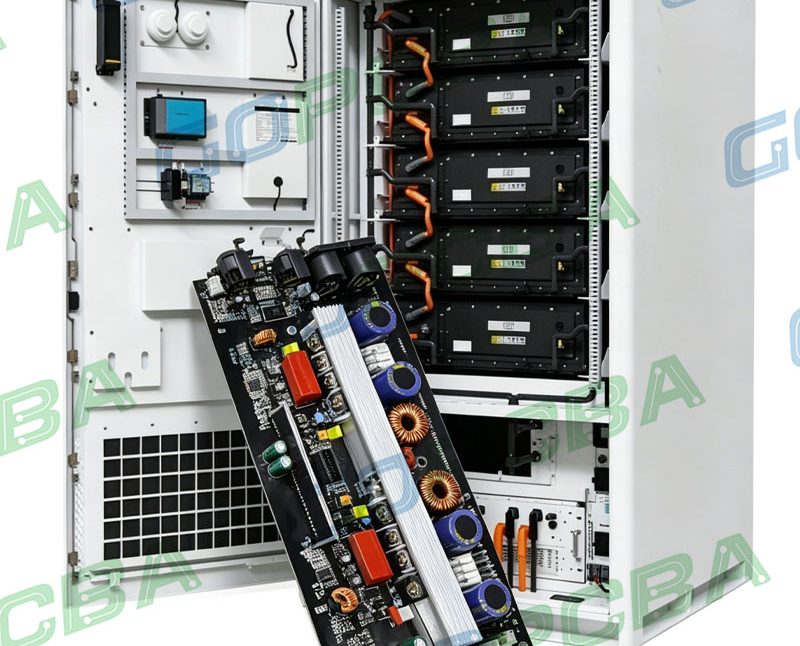
Power Supply PCB Design Cost Drivers: What Raises the Price A power supply PCB costs more than a signal board of similar size, and the difference comes from four design requirements: current, heat, isolation and safety compliance. Each of them changes the fabrication route, and they interact with one another.…
PCB ESD Control on the Line: From Design to Repeatable Production Modern electronics depend on boards that are assembled correctly the first time. Every product – a phone, a charger, a medical instrument or an industrial controller – relies on thousands of solder joints that must conduct current for years.…
Capacitive PCB: Electrode Design for Touch and Proximity Sensing A capacitive PCB turns the board itself into a sensor. Electrodes are formed in copper on the surface or on an inner layer, and a controller measures the small change in capacitance caused by a finger approaching the electrode. There is…
Semiflex PCB: Rigid Boards With a Controlled Bend Region A Semiflex PCB is a rigid FR-4 board that has been locally thinned so that it can be bent once during assembly. It uses the same materials and the same fabrication sequence as an ordinary multilayer board, which is what makes…
Satellite Communication PCB: Manufacturing and Design Guide A satellite communication terminal is a radio that must work once, in a place where it cannot be repaired, after a launch that subjects it to levels of vibration and acoustic energy that no terrestrial product sees. The board inside it is designed…