Across Regions: Total Cost, Not Unit Price Quotations for the same board from factories in different places often differ by more than the buyer expects, and the explanation is rarely only wages. Each location carries a different combination of overhead, supply-chain depth, transport and skill, and those differences land in…
Micro-Component Batches: Where They Are Used and What They Cost The smallest passives in production have moved from being an experiment to being a component that appears in ordinary designs. A part measuring two tenths of a millimetre by one tenth is now used where board area and thickness are…
PCB Cable Routing Inside the Product: Wires in the Case Wires inside a finished product fail for boring reasons. A cable rubs a sharp edge, sits too close to a hot part, or bends tighter than its conductor allows. The board itself may be perfect, yet the unit returns from…
High-Frequency Material Systems and Lamination Control When a design moves into the range where signal behaviour matters, the board stops being a mechanical support with copper on it and becomes part of the circuit. The dielectric properties of the material, the geometry of the traces and the way the layers…
Prototype Lead Time: Where the Days Actually Go A prototype schedule is usually quoted as a single number of days, and the number is treated as a property of the supplier. In practice it is the sum of several steps, each with its own floor, and knowing which of them…
PCB Final Assembly Torque Control: Tightening Without Breaking Buyers and engineers often focus on the finished product and forget the production line behind it. In practice, most field failures can be traced back to process decisions made during assembly. Understanding PCB final assembly torque control gives you a practical advantage…
Small Orders Deserve Full Process Control There is a particular failure in batch assembly that rarely appears on a formal list: the board that would have been built correctly if the order had been large. Where a supplier’s schedule is organised around volume, a small quantity can be treated as…
Ultra-Small Passives: Building Boards With 008004 Parts Each generation of portable and wearable electronics moves a step further in the same direction: less space, less thickness, more function. The component families follow, and the smallest passives now in volume production are around two tenths of a millimetre in length and…
PCB Box Build Process: Putting It in the Case Modern electronics depend on boards that are assembled correctly the first time. Every product – a phone, a charger, a medical instrument or an industrial controller – relies on thousands of solder joints that must conduct current for years. This article…
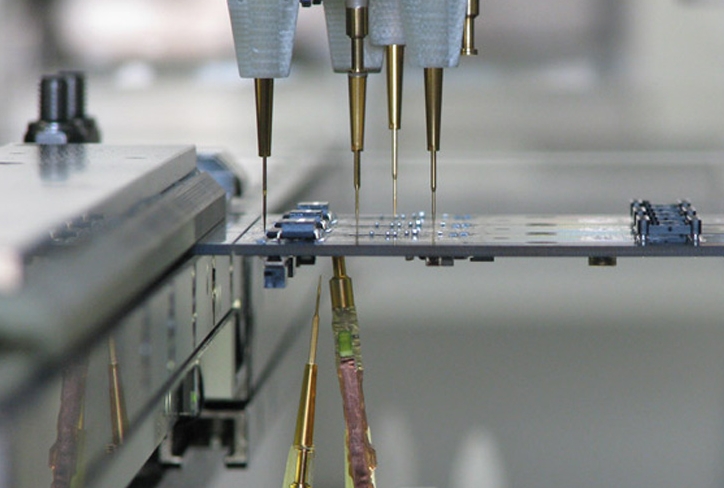
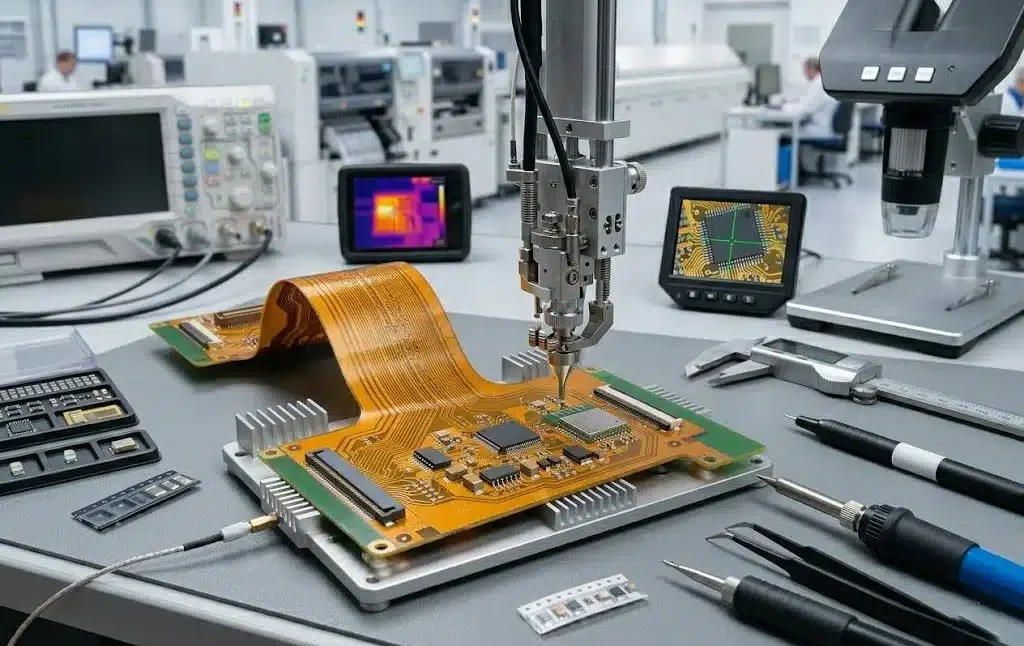
PCB Sub Assembly Testing: Testing Before the Final Build Electronics manufacturing has become a discipline of small details. Solder paste volumes, placement accuracy, temperature profiles and inspection limits all add up to the final result. This guide looks at PCB sub assembly testing from the perspective of a PCBA factory…