PCB Creepage for Mains: Design and Assembly Considerations Modern electronics depend on boards that are assembled correctly the first time. Every product – a phone, a charger, a medical instrument or an industrial controller – relies on thousands of solder joints that must conduct current for years. This article explains…
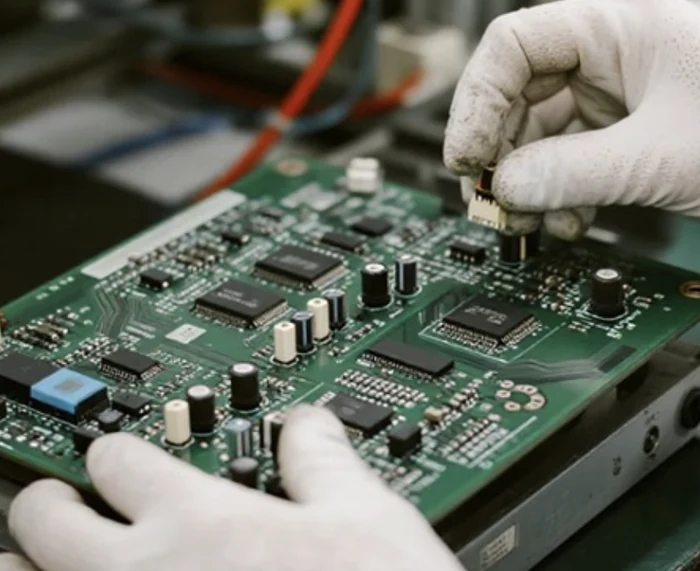
PCB Inductor Selection: A Practical Manufacturing Guide Buyers and engineers often focus on the finished product and forget the production line behind it. In practice, most field failures can be traced back to process decisions made during assembly. Understanding PCB inductor selection gives you a practical advantage when you choose…
PCB Buck Converter EMI: A Practical Review for Manufacturing Teams Modern electronics depend on boards that are assembled correctly the first time. Every product – a phone, a charger, a medical instrument or an industrial controller – relies on thousands of solder joints that must conduct current for years. This…
PCB Handling Damage and Scratch Prevention in Assembly Most boards are damaged before they are tested. A panel dragged across a bench edge, a stack slid without interleaving, or a connector dropped onto a rail leaves marks that may be cosmetic, may be repairable, or may have broken a trace…
Ionic Contamination: Moisture, Contamination and Cleaning of Assemblies Moisture and contamination are the two mechanisms that account for most of the electrochemical failures in electronic assemblies, and both are managed by the same discipline: keep the surface clean and keep it dry. The discipline is procedural, and it is easily…
Controlled Impedance: What Sets It and How It Is Verified Impedance is the property that links the physical layout to the electrical behaviour of a trace, and it is the one parameter that cannot be adjusted after the board is made. Understanding what sets it makes the constraint manageable rather…
Design For SMT Assembly: What The Line Needs A board is assembled by machines that have requirements of their own, and those requirements are cheaper to satisfy during layout than to work around during production. Design for assembly is not a set of arbitrary rules; each one comes from a…
Single Sided PCB vs Double Sided PCB for Prototypes The difference between a single sided and a double sided board is not just one more layer of copper. It changes how the circuit is grounded, how the board is assembled, how much it costs and how quickly it can be…
PCB Oscillator Grounding: A Factory-Floor Review Modern electronics depend on boards that are assembled correctly the first time. Every product – a phone, a charger, a medical instrument or an industrial controller – relies on thousands of solder joints that must conduct current for years. This article explains PCB oscillator…
PCB MOSFET Gate Resistor Placement: Practical Process Controls Electronics manufacturing has become a discipline of small details. Solder paste volumes, placement accuracy, temperature profiles and inspection limits all add up to the final result. This guide looks at PCB MOSFET gate resistor placement from the perspective of a PCBA factory…