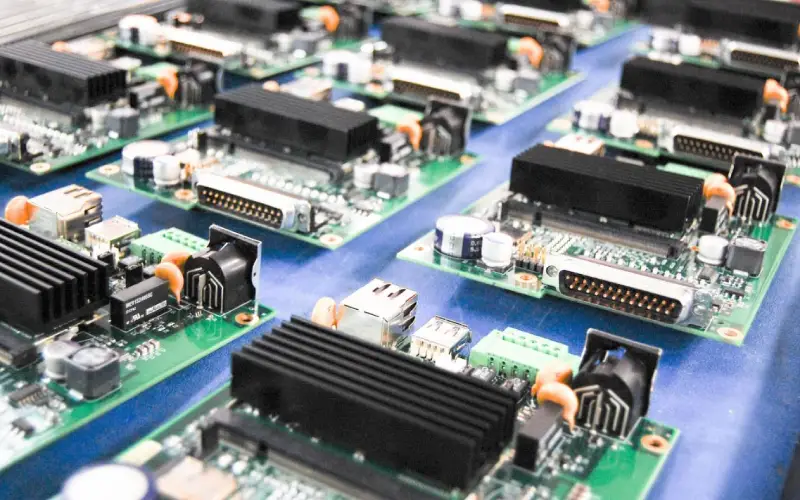
Metal Core PCB and Ceramic Substrates: Thermal Paths Compared When a design has to remove heat from a component, two substrate families are usually considered: a metal core construction, in which an aluminium or copper base acts as the heat spreader, and a ceramic substrate, in which the material itself…
PCB Capacitive Touch Pad: A Factory-Floor Review Modern electronics depend on boards that are assembled correctly the first time. Every product – a phone, a charger, a medical instrument or an industrial controller – relies on thousands of solder joints that must conduct current for years. This article explains PCB…
PCB Insulated Metal Substrate for Power: Heat Path Design Power boards fail for thermal reasons more often than for electrical ones. An insulated metal substrate changes the path that heat takes, because a thin dielectric sits between the copper and an aluminium base. That layer must block current and still…
PCB Thick Film Ceramic: Practical Process Controls Electronics manufacturing has become a discipline of small details. Solder paste volumes, placement accuracy, temperature profiles and inspection limits all add up to the final result. This guide looks at PCB thick film ceramic from the perspective of a PCBA factory floor, covering…
Crystal Oscillator Layout for MCU Clock Circuits A microcontroller is a complete small computer on one chip: processor, memory, timers and counters, and input and output interfaces all fabricated together. What makes it run is the clock. Digital logic advances one step for each clock edge it receives, so the…
LDI in PCB Fabrication: Laser Direct Imaging for Fine Lines For decades, printed circuit patterns were transferred the way photographs were printed: a transparent film carried the image, and light passed through it onto a photosensitive coating. That approach served the industry well, but it has a physical ceiling. As…
Solder Defects Behind Most Board Failures When a prototype behaves erratically, the search usually starts in the software and works back toward the design. In practice a large share of hardware failures originate at the solder joint, and a joint that is marginal produces symptoms that look exactly like a…
SMT Inspection Methods: Visual, AOI, X-Ray and ICT Surface mount assembly has many steps, and any one of them can introduce a defect. Paste printing, placement, reflow and handling each have their own failure modes, and the defects they produce look different and hide in different places. That is why…
PCB Flexible Heater Element: From Design to Repeatable Production Modern electronics depend on boards that are assembled correctly the first time. Every product – a phone, a charger, a medical instrument or an industrial controller – relies on thousands of solder joints that must conduct current for years. This article…
PCB Yield and Process Control: Reducing Defect Rates Yield is the number that tells a fabricator and a customer whether a process is under control. It is not a single figure: first pass yield counts only the boards that pass every operation without rework, while final yield counts those that…